
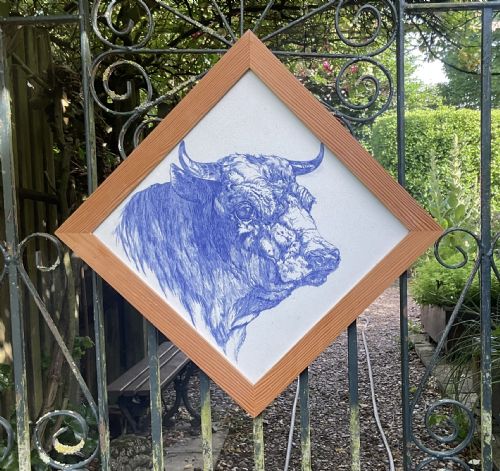


Antique Bovine Wall Art
Antique bovine wall art brings the historic pastoral landscape directly into your interior, offering charming portraits of cattle and rural life that anchor a room.
Antique Bovine Wall Art
When you search for antique bovine wall art, you are looking at historic depictions of cattle rendered in oil paint on canvas, wood panels, or incorporated into ceramic tiles and powder horns. These pieces capture rural scenes, riverbanks, and highland pastures from the eighteenth, nineteenth, and early twentieth centuries.
The versions you are most likely to meet on this page span the Victorian and Edwardian eras, taking the form of framed oil paintings depicting cattle drinking, grazing, or resting near landmarks. Styles range from Victorian pastoral and animalier to the British school, reflecting a deep historical appreciation for agricultural life.
Beyond standard canvas works, the selection includes decorative tiles such as large butcher's shop examples and carved horn objects that broaden the category. Each piece serves as a window into past rural economies and the artistic interpretation of livestock across British and American traditions.
Materials and construction
Painters worked primarily with oil paint on stretched canvas or wooden panels, applying layers of pigment to build depth in the depiction of animal hides and natural landscapes. These canvases were frequently housed within decorative timber frames, including giltwood mouldings that enhanced the visual weight of the composition.
Ceramic pieces utilised moulded clay bodies finished with glaze, seen specifically in large decorative tiles produced by established potteries for commercial or interior display. Organic materials like pine and horn were carved and shaped for utilitarian items that double as wall decorations.
Cattle appear to have spent centuries staring calmly past the painter while contemplating their next patch of grass.
Assessing quality
Quality in these works rests upon the anatomical accuracy of the cattle and the naturalism of the surrounding landscape, distinguishing skilled observation from mechanical reproduction. Master painters captured the texture of a Hereford coat or Highland cattle with confident brushwork and nuanced handling of light.
The integrity of the original materials, from the stability of the canvas and paint layer to the craftsmanship of the giltwood frame, defines the preservation standard. Finer pieces demonstrate superior composition, where the animals integrate harmoniously with the atmospheric depth of the pastoral setting.
Mintons·William Huggins·William Sidney Cooper·Thomas Baker of Leamington·John W Morris
The Antique Bovine Wall Art Glossary
- Giltwood
- Wood that has been coated with gold leaf or a gold-coloured finish. This technique was commonly applied to nineteenth-century picture frames to elevate the status of the artwork.
- Animalier
- A nineteenth-century artistic genre dedicated to the realistic portrayal of animals. Artists working in this style focused closely on the form and behaviour of livestock.
- Pastoral
- A style of art that idealises rural life and agricultural scenes. These compositions typically feature cattle, rivers, and tranquil countryside vistas.
- Glaze
- A glassy coating fused to ceramic objects through firing. On decorative tiles, it provides a protective and glossy finish to the painted surface.
Antique Bovine Wall Art: Frequently Asked Questions
What periods do these paintings come from?
The works span the eighteenth, nineteenth, and early twentieth centuries, encompassing Georgian, Victorian, and Edwardian aesthetic movements.
Most surviving pieces originate from the nineteenth century, reflecting the era's strong interest in pastoral realism and animal portraiture.
How were these artworks traditionally displayed?
Oil paintings were housed in substantial wooden and giltwood frames designed to project the artwork outward from domestic walls.
Ceramic tiles and powder horns served both functional and decorative purposes within commercial interiors and private homes.
How do I distinguish Victorian from Edwardian pieces?
Victorian pastoral works often employ dramatic lighting and deep romantic tones to idealise the British countryside and its livestock.
Edwardian and later pieces tend toward lighter palettes and looser brushwork associated with the British school of landscape painting.
Can I hang oil paintings on canvas in any room?
Canvas paintings require stable environmental conditions away from excessive moisture and direct heat sources to preserve the oil pigment.
Properly framed works on canvas or wood panels remain durable for domestic display when protected from rapid temperature fluctuations.