

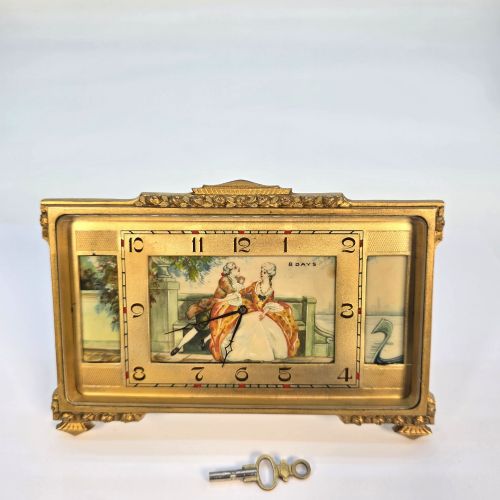


Antique Boudoir Clock
An antique boudoir clock brings intimate elegance to a dressing table or desk, combining precise horology with decorative artistry.
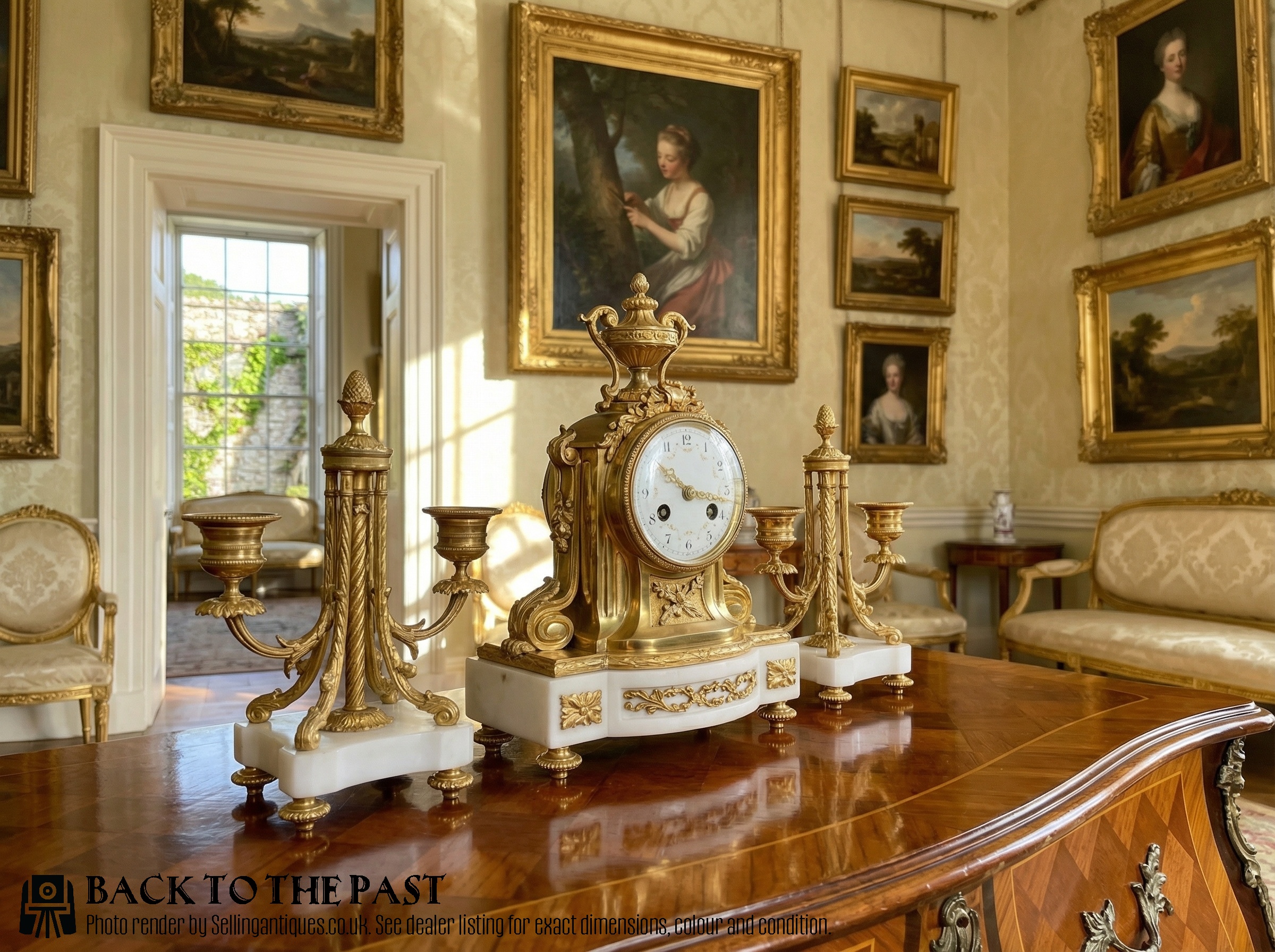
Antique Boudoir Clock
An antique boudoir clock is a small timepiece designed for private rooms, travelling, or dressing tables, frequently encountered in miniature carriage, bedside, or strut easel formats. These pieces appear across the nineteenth century and into the twentieth century, reflecting the changing tastes of the Victorian, Edwardian, and Art Deco periods.
The selections span distinct stylistic revivals, notably French Rococo and Victorian Gothic, alongside clean geometric Art Deco designs. Buyers searching for an antique boudoir clock will find diminutive longcases, clock garnitures, and travelling timepieces constructed for personal use rather than grand public rooms.
How they were made
Maker's workshops utilised metals such as brass, gilt bronze, ormolu, and sterling silver to form structural cases, often embellished with champleve or guilloche enamel work. Glass panels protect delicate dials, whilst specialised porcelain plaques from factories like Sevres or Vienna provide painted visual backdrops.
Movements relied on precise mechanical engineering, sometimes incorporating eight-day capacities or platform escapements suited for portable travel clocks. Artisans chased metal surfaces by hand and applied mercury gilding or modern electroplating to achieve lasting lustre on small-scale surfaces.
Antique Boudoir Clock Retail Price Guide 2026
Typical asking prices for boudoir clock among the pieces listed under this phrase on Sellingantiques today, from the lower quarter to the upper quarter. They describe what is for sale here now, not the wider market.
One late nineteenth-century gilt ormolu advertising clock carries a sporting presentation inscription.
What varies in quality
Quality rests in the crispness of the hand-chased ornamentation on the metal case and the integrity of the vitreous enamel. Superior examples maintain intact, flawless enamel panels without hairline cracks and crisp metal detailing that retains its original gilding.
The sophistication of the internal movement and the reputation of the maker or retailer distinguish standard pieces from exceptional ones. Heavier gauge silver, substantial ormolu castings, and fully signed mechanical movements demonstrate superior workshop output.
William Comyns·J Batson And Son·Henry Matthews·Vincenti
The Antique Boudoir Clock Glossary
- Guilloche enamel
- Enamel decorated with intricate geometric patterns machine-turned into the underlying metal surface. This technique creates a luminous, shimmering effect beneath translucent coloured glass.
- Carriage clock
- A small, portable spring-driven clock designed for travelling during the nineteenth century. These items typically feature a glass-panelled brass case and a folding handle on top.
- Ormolu
- Finely ground high-carat gold mercury-gilded onto a bronze base object. The technique creates a rich, matte yellow finish characteristic of French decorative arts.
- Strut clock
- A timepiece supported by a hinged prop or stand attached to the rear of the case. They are intended to sit upright on a desk or dressing table without requiring a wall mount.
- Champleve
- Enamel work created by cutting troughs into a metal plate and filling them with coloured vitreous paste before firing. The resulting design shows metal lines dividing distinct fields of colour.
Antique Boudoir Clock: Frequently Asked Questions
Can I travel with an antique travel clock?
Many of these pieces were originally constructed for transit in protective leather or velvet cases. However, modern motion can disrupt delicate vintage escapements.
If you transport the clock, secure the internal balance wheel if possible and keep it padded within luggage to absorb sudden impacts.
How do I date an Edwardian boudoir clock?
Examine the piece for hallmarks on silver cases, which indicate the specific assay office and year of production under British hallmarking laws. Stylistic clues like pastel guilloche enamel also point directly to the Edwardian era.
Unmarked continental pieces rely more on stylistic markers, such as specific rococo revival motifs popular around the turn of the century.
Where should I place a boudoir clock at home?
These small timepieces suit stable, flat surfaces away from direct sunlight, moisture, and extreme temperature fluctuations. A bedroom dressing table or a quiet study desk provides an ideal environment.
Keep them positioned where the ticking mechanism will not disturb sleep, whilst remaining easily visible for daily timekeeping.