
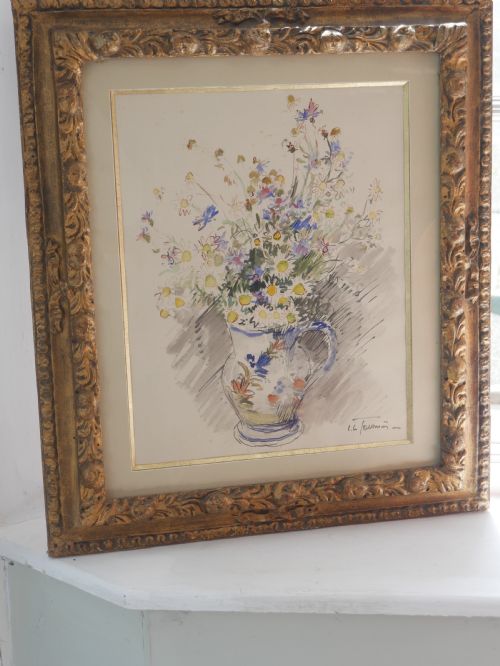


Antique Botanical Ceramic Pitcher
An antique botanical ceramic pitcher brings floral form and colour directly to the table, offering both decorative presence and functional service.
Antique Botanical Ceramic Pitcher
When buyers search for an antique botanical ceramic pitcher, they find vessels shaped as ewers, jugs, and wash basin sets adorned with floral and plant motifs. These pieces span periods from the Regency era through to the mid-twentieth century, capturing shifting aesthetic movements.
The selections on this page most frequently present Victorian and Art Nouveau stylistic influences. Earthenware and porcelain serve as the primary ceramic bodies for these botanical vessels, decorated with hand-painted or glazed floral arrangements.
Forms range from small cream jugs to large pedestals and ewers. Each piece reflects the nineteenth and twentieth-century fascination with natural specimens translated into domestic ceramics.
How they were made
Potters shaped these vessels using earthenware and porcelain bodies, often employing mould-casting or studio pottery techniques. The resulting forms provided a smooth canvas for botanical decoration.
Makers applied enamel, glaze, and gilding to render floral panels, poppies, sunflowers, and bullrushes. Metallic lustres and rich enamel pigments brought depth and colour to the botanical subjects.
Listings feature ceramics spanning the nineteenth and twentieth centuries, incorporating both earthenware and porcelain bodies decorated with enamel and gilding.
What varies in quality
The distinction between standard domestic wares and superior production lies in the precision of the botanical painting and the integration of the floral theme with the vessel form. Finer pieces demonstrate careful brushwork in rendering natural details like petals and stems.
The application of gilding and enamel work also defines the tier of quality. Superior examples feature well-preserved metallic accents and complex glaze effects that complement the ceramic body rather than mask it.
H and R Daniel·Sir Edmund Elton·Livesley Powell and Co·Rockingham·George Jones·Royal Worcester·Crown Derby
The Antique Botanical Ceramic Pitcher Glossary
- Ewer
- A large jug with a wide spout and handled shape, traditionally used for pouring water or wine. Many botanical examples function primarily as decorative vases.
- Gilding
- The application of gold leaf or gold powder to ceramic surfaces for ornamentation. It frequently highlights rims, handles, and floral borders.
- Majolica
- A type of earthenware glazed with tin enamel and painted with brightly coloured metallic oxides. It supports relief moulding of natural forms like bullrushes and lilies.
- Porcelain
- A ceramic material made by heating raw materials, generally including kaolin, in a kiln. It yields a vitrified, translucent body suited to delicate botanical painting.
- Ironstone China
- A type of durable earthenware patented in the nineteenth century. It provides a robust body for heavy-use botanical jugs and wash sets.
Antique Botanical Ceramic Pitcher: Frequently Asked Questions
What periods do these pitchers come from?
These ceramic pieces date across the nineteenth and twentieth centuries, encompassing Regency, Victorian, and Art Nouveau periods. Makers produced them from the 1825 era onward.
Design characteristics shift across these decades, moving from neoclassical Regency elegance to organic Art Nouveau curves and robust twentieth-century earthenware.
How were botanical jugs used historically?
Many served practical functions on dining tables for cream, milk, or water, while larger ewers formed parts of wash basin sets for bedroom hygiene.
Over time, many of these vessels transitioned into purely decorative roles, displayed as vases or cabinet pieces to showcase their floral artwork.
Are these pitchers made of porcelain or earthenware?
Makers utilised both ceramic bodies depending on the factory and the intended function of the vessel. Fine cabinet pieces often employ porcelain.
Larger utility jugs and wash sets typically utilise durable earthenware or ironstone, which accommodated heavier relief moulding and robust daily handling.
How do I identify Art Nouveau pitchers?
Art Nouveau examples date around 1900 and feature flowing, asymmetrical lines inspired by natural plant stems and flower buds. Their forms often integrate the botanical motif directly into the handle and spout.
These pieces contrast sharply with the more formal, geometric symmetry found in earlier Regency and mid-nineteenth-century designs.