

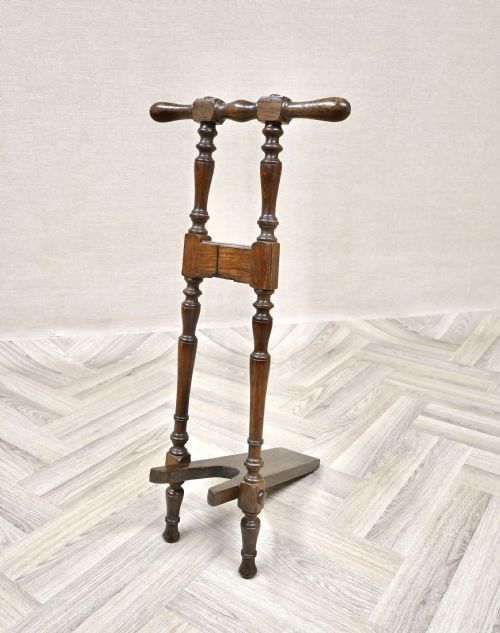


Antique Boot Stand
An antique boot stand organises muddy riding gear and heavy footwear in the hallway with practical design.
Antique Boot Stand
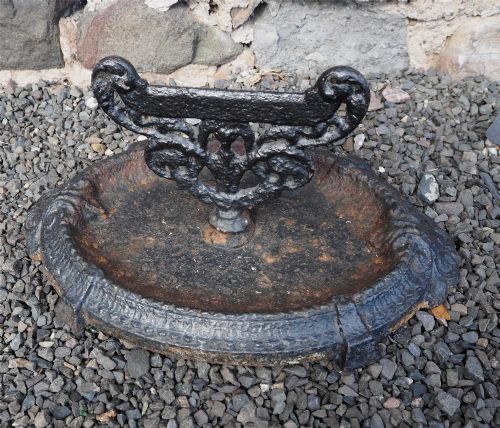
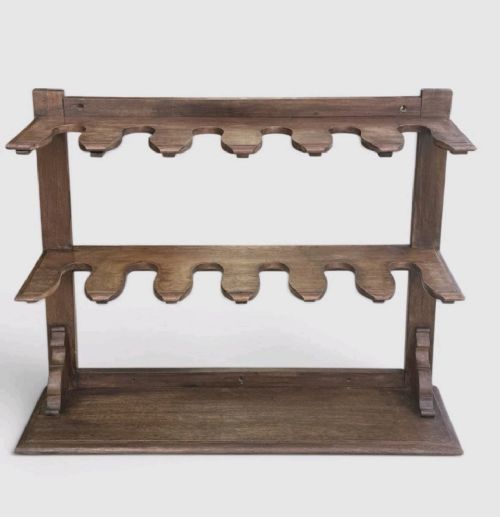
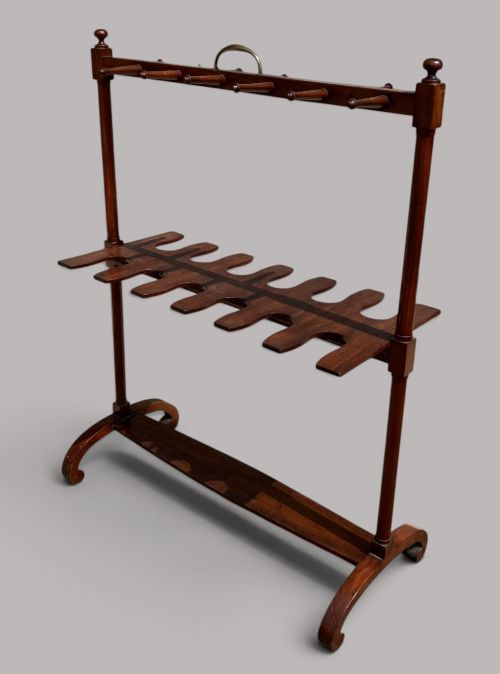
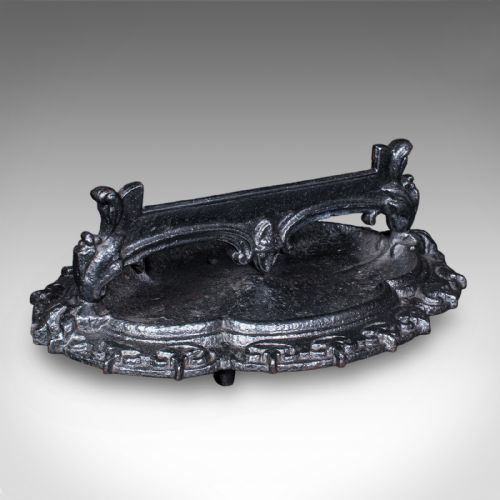
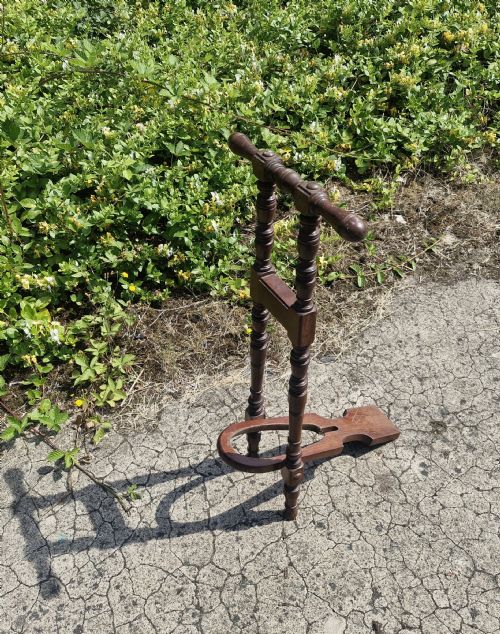
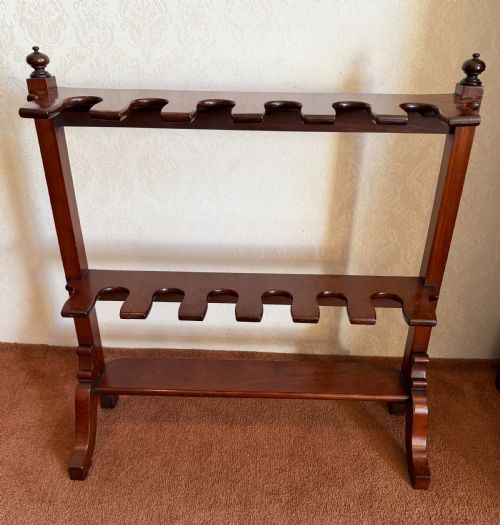
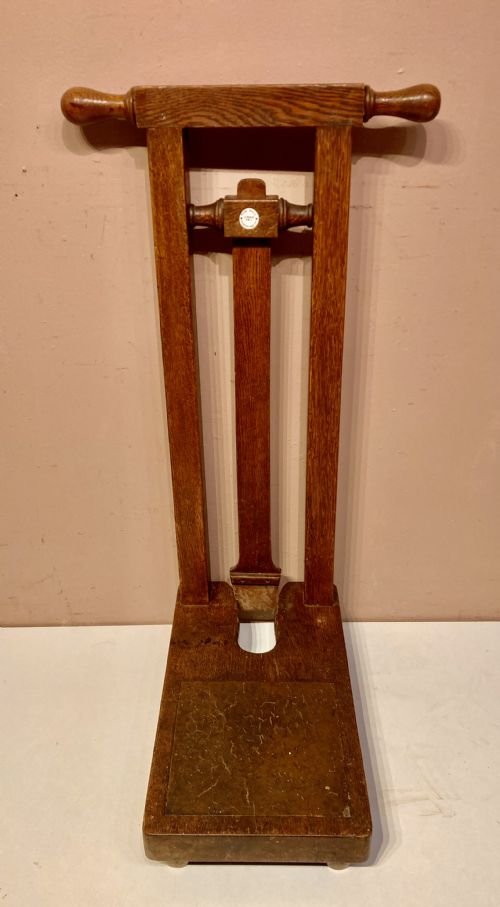
An antique boot stand serves the entrance hall, boot room, or stable yard by holding footwear, whips, and coats. Buyers looking for an antique boot stand encounter various forms, from simple folding boot jacks to large mahogany racks and combined umbrella stands.
The pieces on this page span the Georgian, Regency, and Victorian periods, extending into the early twentieth century. Mahogany and oak dominate the timber selections, frequently paired with brass mountings and cast iron.
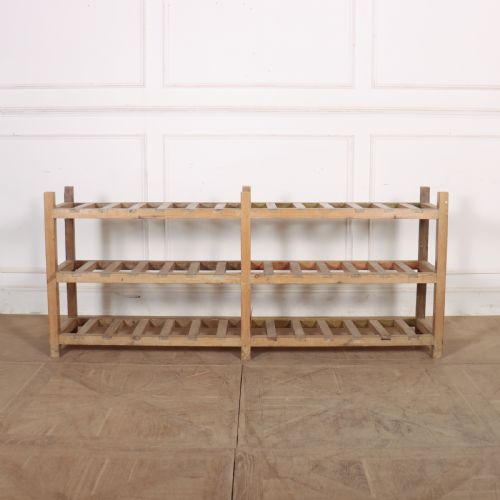
Functional variants include revolving stands, wall-mounted racks, and hall benches with integrated shoe storage. Country house and rustic vernacular styles appear alongside formal Regency and Victorian library or hallway pieces.
Materials and construction methods
Cabinet makers utilised dense hardwoods like mahogany, walnut, and oak to withstand the heavy weight of riding boots and daily hallway use. Pine and stained timber appear in regional vernacular pieces, while cast iron and brass provide robust weight for scrapers and folding jacks.
Joinery techniques involve sturdy pegging, dovetailing, and mortise and tenon joints necessary for items subjected to leverage and strain. Turned uprights, carved details, and integrated brass handles demonstrate standard workshop practices of the nineteenth century.
Distinctions in craftsmanship and design
Quality rests in timber selection, grain figure, and the cleverness of mechanical folding actions on boot jacks. Superior pieces display refined turning, original brass fittings, and substantial structural integrity without unnecessary restoration.
Simpler vernacular examples rely on utilitarian pine or basic cast iron, where the utility outweighs decorative flourishes. The presence of maker marks, provenance, or combined whip and umbrella racks elevates certain pieces above standard functional items.
Tom Hill·Waring & Gillow
The Antique Boot Stand Glossary
- Boot jack
- A V-notched device used for removing boots without stooping. Most folding examples utilise a hinged block and tail piece.
- Boot scraper
- An iron blade mounted near an exterior doorway for removing mud from footwear soles. Early versions screw directly to stone steps or timber thresholds.
- Whip rack
- Upright or wall-mounted fittings featuring designated notches for riding crops and hunting whips. These frequently integrate directly into boot stands and umbrella holders.
- Vernacular
- Objects built by regional craftsmen using local traditions rather than metropolitan pattern books. These pieces typically employ native timbers such as oak, ash, or pine.
- Cheval mirror
- A floor-standing mirror mounted in a swiveling frame between upright posts. They appear in dressing rooms and boot makers' workshops.
Antique Boot Stand: Frequently Asked Questions
Where should I place an antique boot stand?
An antique boot stand belongs in an entrance hall, boot room, or porch where muddy footwear and riding gear collect. Placing the piece on a solid floor protects delicate carpets from damp timber or iron bases.
Allow enough clearance around folding boot jacks or revolving racks for comfortable daily use. Keep these items away from direct heat sources to prevent the timber from splitting.
How do I use a folding boot jack?
Place the boot jack flat on the floor and hold the tail end down with one foot. Insert the heel of your muddy boot into the V-notched end and pull your foot upward.
Fold the hinged support back down after use for compact storage in a hallway corner. This mechanism allows hands-free removal of tight riding boots.
How do I clean and maintain mahogany boot stands?
Dust the timber regularly with a soft, dry cloth to prevent grit from scratching the polished surface. Apply natural beeswax periodically to nourish the mahogany and maintain its deep sheen.
Avoid placing wet footwear directly onto untreated wooden surfaces to prevent water rings and staining. Wipe cast iron and brass fittings gently with a dry cloth.