


Turned Mahogany Hall Stand
A turned mahogany hall stand gives an entranceway practical storage with the rich grain and sturdy form characteristic of nineteenth-century woodwork.
Turned Mahogany Hall Stand
A turned mahogany hall stand is an entrance piece designed for hanging coats, hats and storing walking sticks or umbrellas. These pieces belong primarily to the nineteenth century, including Victorian, Edwardian and Georgian examples.
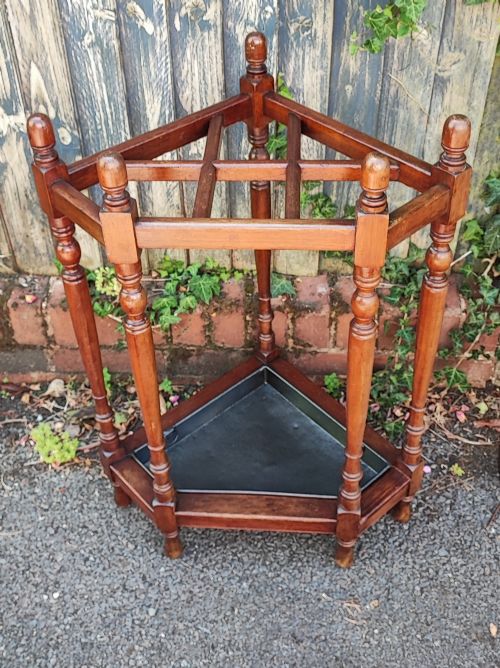
The form encompasses umbrella stands, coat stands, hall trees and hat racks fashioned from timber and occasionally fitted with brass elements. Buyers meet variations that range from corner stick stands to tall pole hat and stick hallstands.
Makers utilised dense timber to create functional furniture for the hallway, often combining peg hooks with lower wells for wet umbrellas. Such items served the domestic need for organising outdoor wear near the front door.
How they were made
Craftsmen shaped solid timber using lathe turning to produce the characteristic spindles, columns and upright poles of these stands. Mahogany served as the primary material, prized for its deep colour and durability in high-traffic household areas.
Workshops integrated brass fittings such as hooks, rails and drip pans to withstand the daily moisture from wet umbrellas and heavy outdoor garments. Metal components were screwed or inset directly into the turned wooden frame for structural stability.
The listings show pieces spanning the Victorian, Edwardian, and Georgian periods, constructed primarily from mahogany with brass and metal additions.
What varies in quality
The refinement of the lathe work and the selection of timber grain distinguish standard examples from finer pieces. Superior items display crisp turnings and well-balanced proportions that maintain stability under the weight of heavy coats and sticks.
The presence of original brass fixtures, such as intact drip trays and secure coat hooks, influences the integrity of the piece. Subtle details in the turning and joinery separate ordinary hall furniture from more accomplished items.
The Turned Mahogany Hall Stand Glossary
- Hall tree
- A freestanding piece of hallway furniture combining coat hooks, a mirror or hat compartments, and umbrella storage. These items became central to nineteenth-century domestic interior organisation.
- Turned
- Wood shaped on a lathe by rotating the material against cutting tools to create symmetrical columns, spindles, and decorative rings. This technique defines the upright supports of the furniture.
- Mahogany
- A durable, reddish-brown tropical hardwood favoured by cabinetmakers for its rich grain and resistance to warping. It forms the structural body of these stands.
- Aesthetic Movement
- A late nineteenth-century design style that emphasised visual beauty and craftsmanship over heavy historicism. Pieces from this period often display simpler, cleaner lines.
Turned Mahogany Hall Stand: Frequently Asked Questions
What is a turned mahogany hall stand used for?
These pieces provide dedicated storage in an entrance hall for outdoor garments, hats, and walking sticks. They keep daily wear organised and accessible near the doorway.
The lower sections typically accommodate umbrellas and walking sticks, often with metal pans to catch moisture, while upper hooks hold coats and headwear.
How do I date a turned mahogany hall stand?
Dating relies on observing stylistic markers, construction methods, and the specific period characteristics present in the turning and timber. Pieces span from the Georgian era through the Victorian and Edwardian periods.
Changes in decorative motifs, such as the transition from heavy Victorian carving to simpler Edwardian forms, help establish the approximate decade of manufacture.
Are these stands suitable for small hallways?
Certain configurations, such as corner stick stands or compact side designs, fit into narrower entrance spaces without obstructing movement. Selecting the right footprint ensures functionality in restricted areas.
Measuring the available floor space and checking the height of the coat hooks ensures the piece accommodates both the room and the items stored.
How do I care for mahogany hall furniture?
Regular dusting with a soft, dry cloth preserves the finish and prevents surface grime from dulling the timber grain. Periodic application of appropriate wood polish maintains the moisture balance of the mahogany.
Placing the stand away from direct heat sources and damp exterior walls protects the wood from warping and keeps the brass components free from tarnish.