
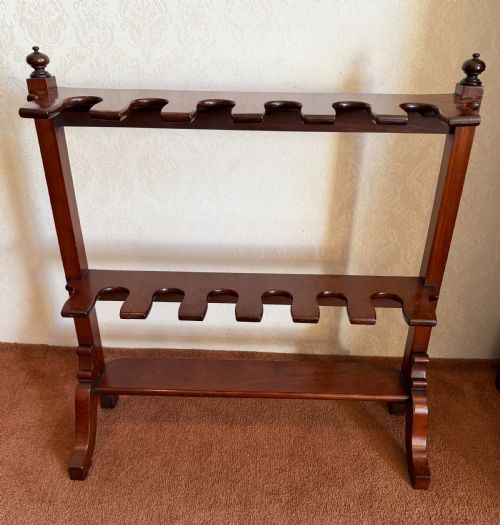


Mahogany Equestrian Stand
A mahogany equestrian stand is a practical piece of country house furniture designed for organising riding gear, combining dark timber with brass fittings.
Mahogany Equestrian Stand
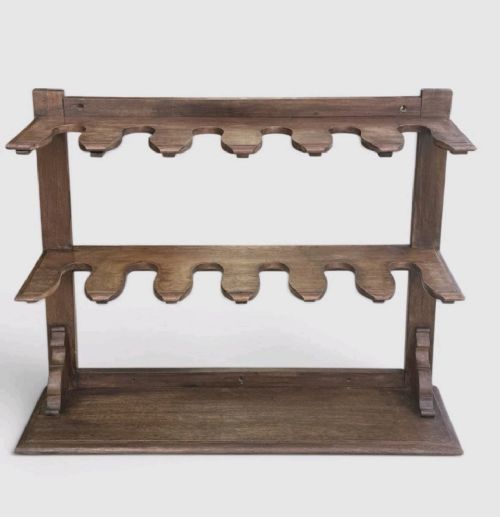
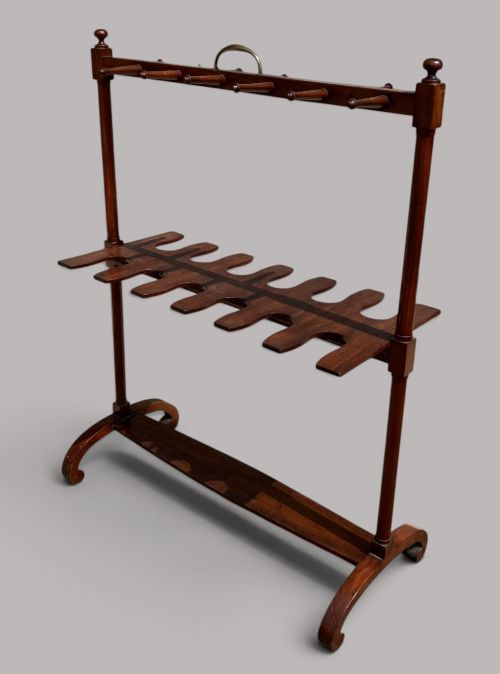
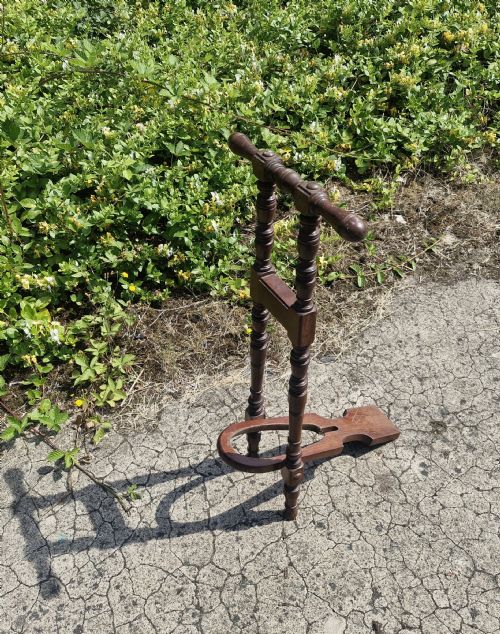
When you search for a mahogany equestrian stand, you are looking at specialised furniture designed to hold riding boots, whips, spurs, and other tack. These pieces come in various forms, including boot racks, boot jacks, whip stands, and combined boot and whip stands.
The versions you are most likely to meet on this page date from the Georgian, Regency, and Victorian periods, reflecting the heavy reliance on horses for transport and sport during those eras. They range from simple folding boot jacks to substantial revolving bootstands and hall racks made for country houses.
How they were made
Makers utilised solid mahogany and stained timber to build these stands, ensuring the wood could withstand the heavy daily use associated with riding boots and heavy footwear. Hand-carved details appear on nineteenth-century examples, showing the touch of the craftsman in shaping boot jacks and rack arms.
Metal components were essential to the construction, with brass employed for hooks, hinges, and decorative elements like horseshoe plates. Painted iron also appears in the hardware, providing sturdy reinforcement for items that held damp leather whips and spurs.
Listings feature mahogany, brass, oak, and stained timber across pieces spanning the Georgian, Regency, and Victorian periods.
What varies in quality
The quality of a mahogany equestrian stand rests upon the selection of the timber and the robustness of its joinery. Superior pieces display dense, well-figured mahogany and carefully turned or carved wooden elements rather than plain utility boards.
Hardware contributes significantly to the overall standard of the piece, with heavy, well-cast brass hooks and mounts marking out better examples. The presence of integrated elements, such as bevelled mirror plates or revolving mechanisms, indicates a higher grade of design and manufacture.
The Mahogany Equestrian Stand Glossary
- Boot jack
- A small device designed to help pull off tight riding boots without using hands. It typically consists of a V-shaped notch at one end.
- Tack room
- The storage space in a stable where saddles, bridles, whips, and riding boots are kept. Furniture made for this room is built for utilitarian strength.
- Regency
- An architectural and design period spanning the early nineteenth century, known for clean lines and classical influences. Pieces from this era often feature elegant proportions.
- Bevelled plate
- A mirror glass with edges cut and polished at an angle to create a framed, multi-dimensional reflection. This treatment appears on decorative horseshoe mirrors.
- Revolving bootstand
- A rotating furniture form that allows multiple pairs of riding boots to be accessed from a single stationary base. It represents a more complex mechanism than a fixed rack.
Mahogany Equestrian Stand: Frequently Asked Questions
What is a mahogany equestrian stand used for?
These stands were originally built to store and dry riding boots, whips, and spurs in country houses and stables. They kept heavy leather gear organised and accessible near the entrance.
Today, they serve a similar functional purpose in hallways or mudrooms, while also acting as decorative antiques with a strong equestrian theme.
How do I date a mahogany equestrian stand?
Dating relies on observing the timber, the style of the hardware, and the construction methods used by the maker. Georgian and Regency pieces often show simpler, classical lines, while Victorian examples can be more ornate or utilitarian.
Material choices like brass hooks and painted iron, alongside the specific form of the rack or boot jack, help narrow down the period of manufacture.
Where were these stands placed in a house?
Historically, equestrian stands lived in tack rooms, stable blocks, or back hallways where riders removed their muddy boots and wet gear after a day out. They were positioned to catch the mess before it reached the main living areas.
In modern homes, buyers usually place them in front hallways or boot rooms to store everyday footwear and umbrellas.
Are all equestrian stands made of mahogany?
While mahogany is the primary timber found in these listings, makers also utilised other materials such as oak, stained timber, and painted iron. Brass was frequently added for structural hooks and decorative accents.
The use of solid mahogany was favoured for its durability and rich dark colour, making it the standard choice for quality country house boot and whip stands.