
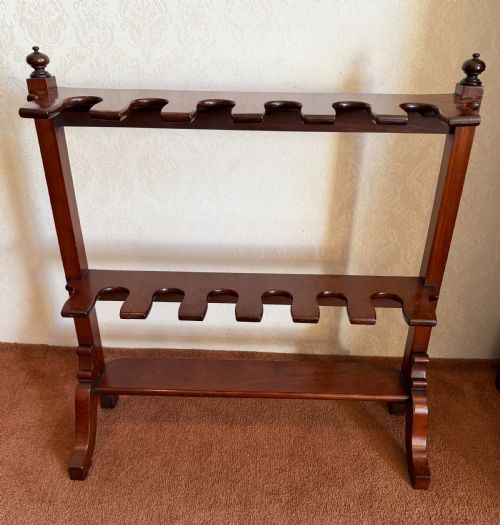


Vintage Equestrian Rack
A vintage equestrian rack brings the structured order of the stables into the hallway, offering sturdy metal and rich timber for boots, coats, and whips.
Vintage Equestrian Rack
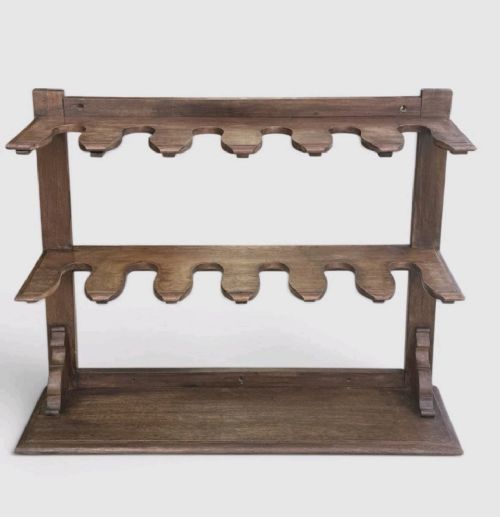
A vintage equestrian rack encompasses a range of hall stands, coat hooks, and boot racks drawn from the nineteenth and early twentieth centuries. These pieces combine practical utility with the distinctive aesthetic of the riding stable, featuring forms designed specifically for boots, whips, and riding gear.
Makers utilised dark timbers and robust metals to construct items that needed to withstand heavy daily use in entrance halls and boot rooms. The resulting objects serve today as functional hallway furniture with a clear lineage in equestrian tradition.
How they were made
Carpenters and metalworkers shaped these pieces using solid woods like mahogany, oak, and walnut, paired with cast iron and brass. Hand-carving appears on boot stands, while iron is worked into horseshoes and tack hooks.
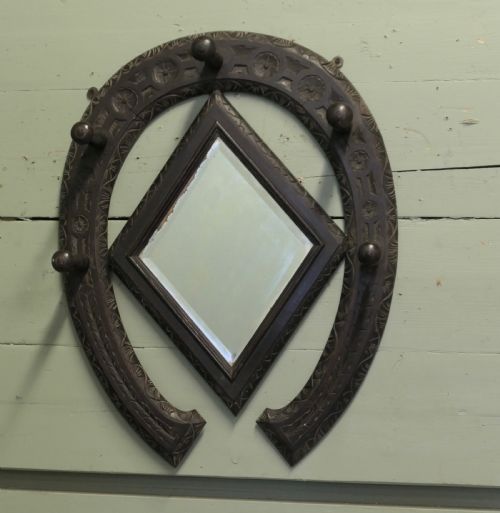
Structural elements rely on traditional joinery combined with metal fixings to support the weight of riding boots and heavy garments. Glass is integrated into mirror frames, often with bevelled edges set within horseshoe surrounds.
Listings feature items spanning the nineteenth and early twentieth centuries, constructed from mahogany, oak, brass, and cast iron.
What varies in quality
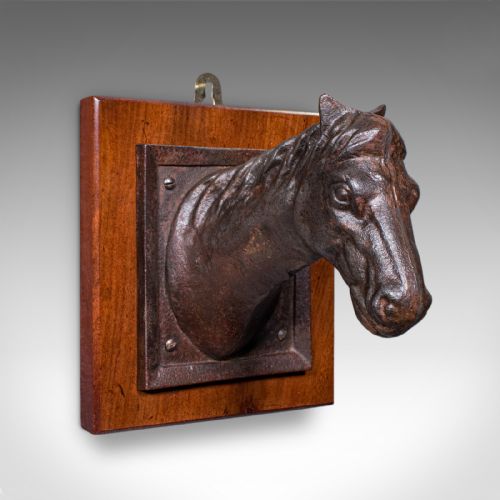
The distinction between standard examples and finer pieces lies in the crispness of hand-carving and the weight of the metals employed. Superior items display deliberate detailing in wooden boot supports and well-cast iron horse busts rather than mass-produced uniformity.
Provenance and materials also dictate standing, with select country house pieces demonstrating superior timber selection and integrated bevelled glass mirrors. The integration of functional elements like whip stands with dedicated boot racks shows a higher degree of bespoke design.
The Vintage Equestrian Rack Glossary
- Boot rack
- A piece of furniture designed with upright supports or shaped forms to hold riding boots upside down for drying and storage. They appear in freestanding formats or integrated into larger hall stands.
- Hay rack
- A metal framework traditionally mounted in a stable to hold fodder, adapted in decorative pieces for wall mounting in hallways. These typically feature cast iron construction.
- Hall stand
- A combined item of hallway furniture incorporating coat hooks, a mirror, and umbrella or boot storage. They often feature carved wood and iron tack hooks.
- Tack rack
- A wall-mounted fixture designed for hanging riding equipment such as bridles, reins, and bits. In decorative iterations, these incorporate horseshoe motifs and cast iron hooks.
- Bevelled mirror
- A plate glass mirror with edges cut and polished to an angled slope. This technique adds depth and decorative refinement to frames shaped like horseshoes.
Vintage Equestrian Rack: Frequently Asked Questions
What is a boot and whip stand?
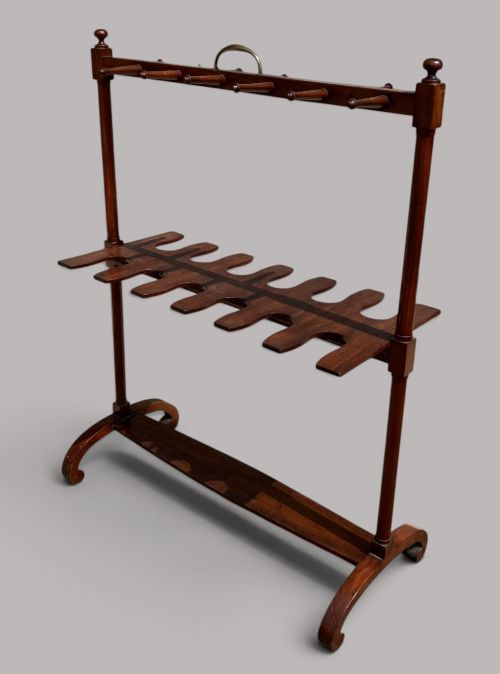
A boot and whip stand is a piece of furniture designed to hold riding boots upright alongside dedicated slots or hooks for riding crops and whips. These items were traditionally kept in country house boot rooms or entrance halls.
They combine wooden framing with specialised vertical supports to keep gear organised and accessible. Their construction reflects the practical needs of nineteenth-century equestrian life.
How do I date a Victorian hall mirror?
Dating a Victorian hall mirror involves examining the timber, the backing boards, and the characteristics of the glass plate itself. Pieces from this period often utilise oak or walnut with cast iron horseshoe motifs.
Clues also lie in the bevelled edge of the mirror and the style of the mounting hardware. Makers during the nineteenth century favoured robust construction suitable for heavy everyday use in entranceways.
Where were corner hay racks used?
Corner hay racks were originally manufactured for use in horse stables to hold feed neatly in the corner of a stall. Nineteenth-century examples utilise heavy cast iron construction to resist wear from animals.
In domestic settings, these pieces are repurposed as wall racks for storage or display in hallways and boot rooms. Their open metalwork provides a clear view of the wall behind them.
What woods were used for equestrian furniture?
Makers relied heavily on dense hardwoods such as mahogany, oak, and walnut to handle the physical demands of hallway furniture. These timbers offered durability and a dark, rich grain suited to country house interiors.
In some instances, simpler woods were utilised and finished to mimic more expensive materials. The choice of timber often corresponds to the specific period and the overall quality of the piece.