




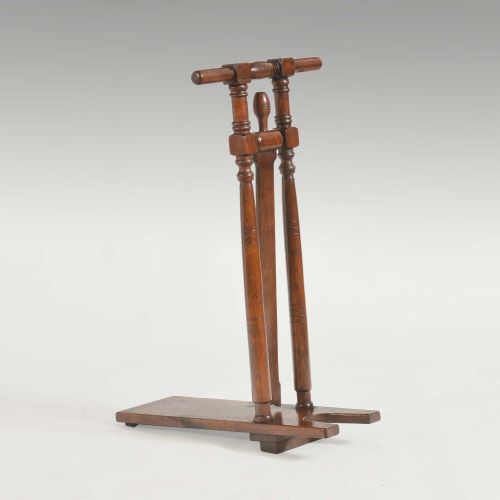

Country House Boot Stand
A country house boot stand organises muddy footwear and riding gear in a grand hallway, offering robust practicality alongside traditional charm.
Country House Boot Stand
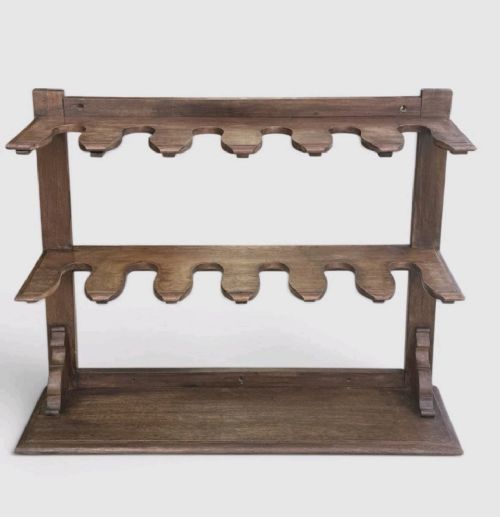
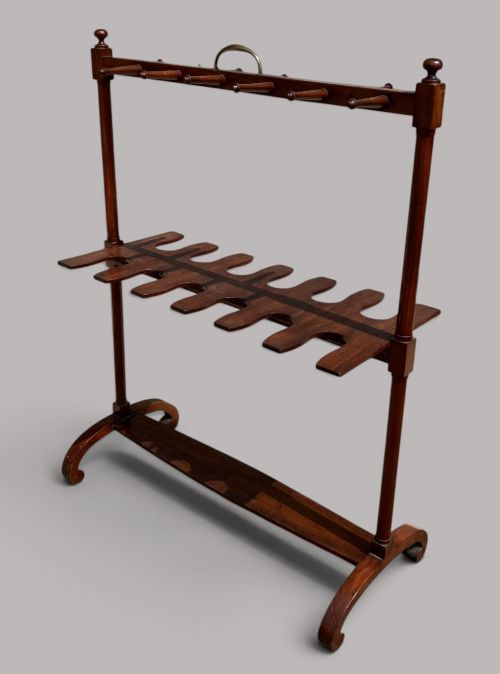
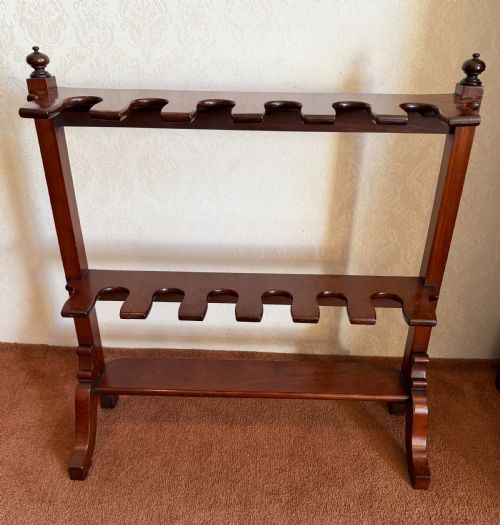
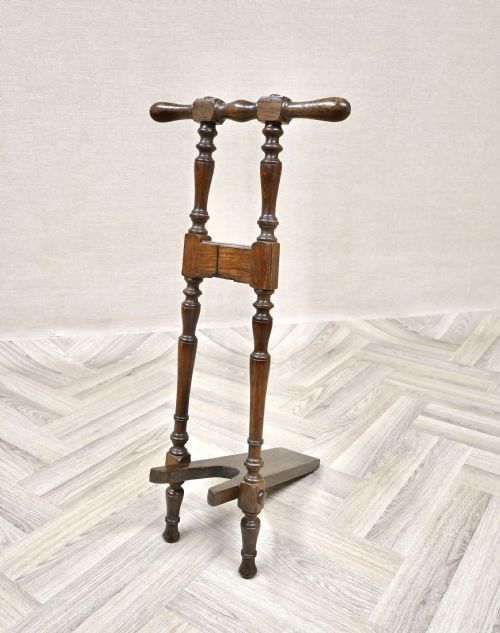
The versions most commonly met on this page span the Georgian, Regency, and Victorian periods. They take the form of boot racks, boot jacks, and combined whip and boot stands intended for the entrance hall or boot room.
Materials seen across these items include mahogany, oak, walnut, ash, and stained timber, frequently accented with brass. Their construction reflects the functional needs of nineteenth-century households where outdoor pursuits demanded dedicated storage.
How they were made
Cabinet makers utilised dense hardwoods such as mahogany and oak to withstand the heavy wear of muddy riding boots and daily estate life. Stained timber and walnut also appear, shaped into functional racks and folding shoe pulls.
Metal components, particularly brass mounts and fittings, reinforce high-stress joints and provide secure holders for riding whips. Hand-carving details on specific mid-nineteenth-century examples demonstrate traditional carpentry techniques applied to utilitarian furniture.
Several stands double as whip racks, proving that nineteenth-century riders had very tidy stables.
What varies in quality
The distinction between standard utility items and finer pieces lies in the selection of timber and the sophistication of the joinery. Mahogany and figured walnut examples with integrated whip racks and brass mounts sit at the upper end of the range.
Simpler oak or ash boot jacks represent the more functional side of country house utility furniture. The presence of documented provenance or attribution to prominent cabinet makers elevates the stature of a piece considerably.
Gillows
The Country House Boot Stand Glossary
- Boot rack
- A piece of hallway furniture designed to hold multiple pairs of boots upright for proper drying and storage. These stands often incorporate hooks for riding crops and whips.
- Boot jack
- A small wooden device placed on the floor that holds the heel of a boot so the wearer can pull their foot out without bending down. Many period examples fold flat for convenient storage.
- Hall stand
- A larger piece of entrance hall furniture that combines boot storage with coat hooks, umbrella wells, and sometimes a mirror or glove box.
- Regency
- An architectural and design period spanning the early nineteenth century, known for classical restraint and the use of dark tropical hardwoods like mahogany.
Country House Boot Stand: Frequently Asked Questions
What is a country house boot stand?
A country house boot stand is a piece of entrance hall furniture designed to store riding boots, shoes, and whips. These items range from simple wooden boot jacks to elaborate mahogany racks.
They were essential fixtures in grand country houses, keeping muddy footwear organised in boot rooms and hallways.
How were boot jacks used?
A boot jack is placed on the floor with the user inserting the heel of their riding boot into a V-shaped notch. By stepping on the base of the jack with the other foot, the wearer pulls their foot free easily.
Many period examples include folding mechanisms or brass mounts for convenience and durability.
What woods were used for boot stands?
Cabinet makers utilised durable hardwoods such as mahogany, oak, walnut, and ash to construct these items. Stained timber also appears frequently across nineteenth-century examples.
Brass fittings and mounts were commonly added to reinforce the structure and hold riding accessories.
How do I date an antique boot stand?
Dating relies on identifying the timber, construction methods, and stylistic cues associated with periods like the Georgian, Regency, and Victorian eras. Finer mahogany and rosewood indicate earlier Regency or Georgian origins.
Later Victorian pieces often feature simpler utilitarian designs in oak, ash, or stained timber.