
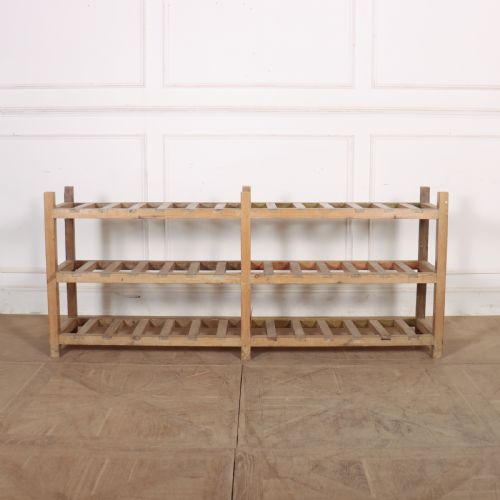


Antique Boot Rack
An antique boot rack brings order to hallways, crafted in mahogany, oak, or pine to hold footwear and riding gear.
Antique Boot Rack
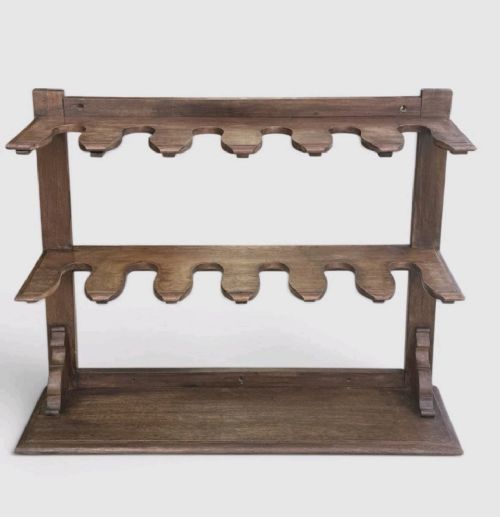
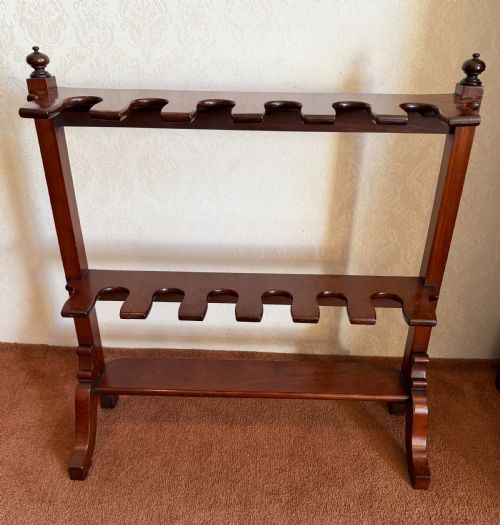
An antique boot rack serves as a dedicated hallway piece designed to store footwear and riding equipment in domestic and country settings. These items appear across periods including the Regency, Victorian, and Edwardian eras, reflecting the changing needs of period households.
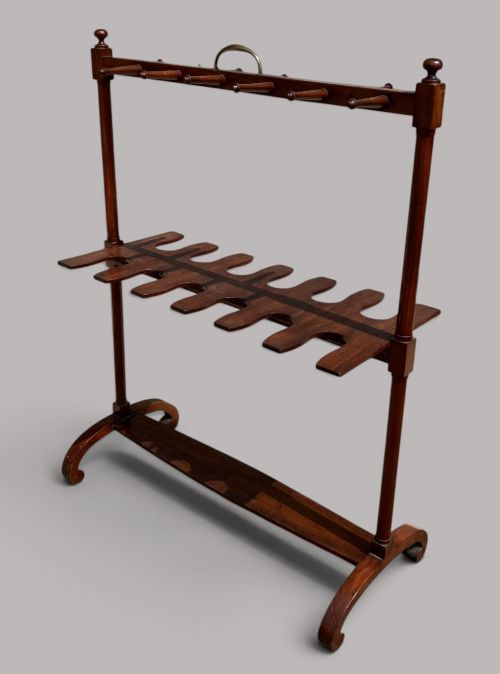
The pieces listed on this page encompass various forms, from revolving bootstands and combined whip racks to shoe racks and hall benches with integrated storage. Mahogany predominates among the surviving examples, alongside oak, walnut, pine, and timber.
Regional variations emerge within the selection, spanning Irish vernacular pieces, Scottish pine shoe racks, and rustic country designs. Buyers encounter both utilitarian boot stands and grand country house furnishings intended for prominent hallway placement.
How they were made
Cabinetmakers utilised dense timbers like mahogany, walnut, and oak to construct sturdy frames capable of supporting heavy riding boots. Joinery techniques varied from hand-carved details on mid-nineteenth-century stands to turned elements and twisted rope motifs.
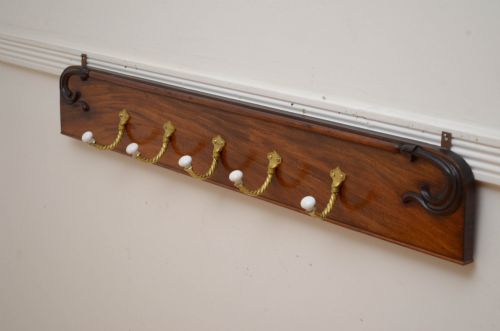
Metal fittings such as brass fixtures and ceramic components were integrated to hold whips, crops, or hanging items alongside the boot storage. Secondary woods like pine appear in regional items, reflecting local material availability.
Form variations in the inventory include revolving stands, bench seats with shoe storage, and combined whip racks.
What varies in quality
The calibre of an antique boot rack depends upon the selection of timber and the sophistication of its construction. Finely figured mahogany and intricate hand-carved elements distinguish superior examples from simpler utilitarian pine or regional timber items.
Proportion and functional integration also define the standard of a piece. Well-designed revolving mechanisms, secure brass fittings, and harmonious combinations of boot storage with whip racks or bench seating separate standard items from more ambitious workshops.
Waring & Gillow
The Antique Boot Rack Glossary
- Regency
- A period spanning the early nineteenth century characterised by classical revival influences and refined cabinetmaking. Pieces from this era often employ high-grade mahogany and restrained decorative motifs.
- Victorian
- Spanning the mid-to-late nineteenth century, this era produced diverse furniture styles ranging from functional hall stands to heavily carved riding boot racks. Mahogany remains the predominant material in these larger domestic pieces.
- Edwardian
- Spanning the early twentieth century, this period introduced lighter oak forms and practical luggage and boot storage solutions. Pieces often display simpler lines compared to earlier nineteenth-century designs.
- Vernacular
- Furniture built by local craftsmen using regional materials and traditional techniques rather than following metropolitan fashion. Irish and Scottish examples in this category utilise local timbers like pine and walnut.
- Revolving bootstand
- A specialised rotating form that allows access to multiple pairs of boots from a single stationary base. These stands often incorporate holders for riding crops and whips.
Antique Boot Rack: Frequently Asked Questions
What is an antique boot rack?
An antique boot rack is a hallway furnishing designed to hold riding boots, shoes, and sometimes whips or crops. These pieces date from the Georgian, Regency, Victorian, and Edwardian periods.
They range from revolving timber stands to combined hall benches and umbrella holders, constructed primarily in mahogany, oak, and pine.
How were boot racks used in period homes?
In country houses and urban residences, these stands were placed in hallways or boot rooms to organise outdoor footwear and riding accessories. The inclusion of whip holders points to their use by equestrian households.
Larger examples served communal family needs, while revolving versions maximised floor space in busier corridors.
What woods were used for boot racks?
Mahogany is the most frequent material found in these pieces, particularly among Regency and Victorian examples. Oak and walnut also appear in specific regional or later pieces.
Utility items and regional pieces, such as Scottish shoe racks, often employ pine and other domestic timbers.
How do I date an antique boot rack?
Dating relies upon stylistic markers, timber choice, and construction methods characteristic of different eras. Regency pieces display classical proportions, while Victorian items often feature heavier carvings and combined umbrella stands.
Edwardian examples tend to show lighter oak construction and practical hallway configurations.