
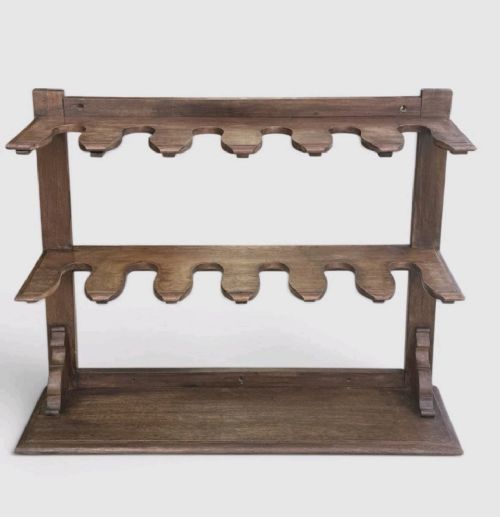
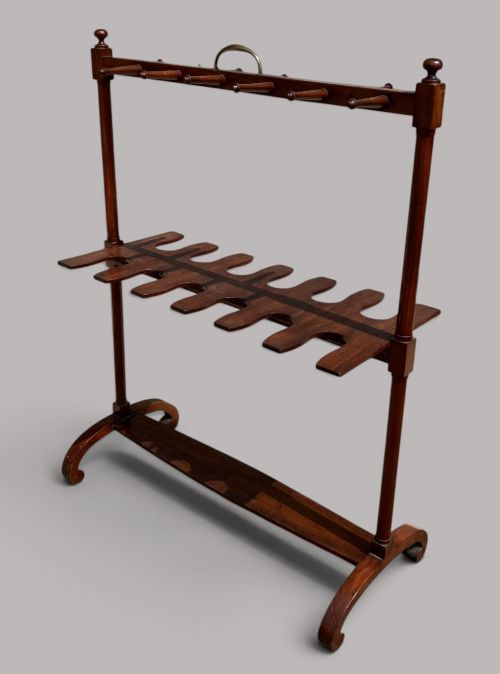
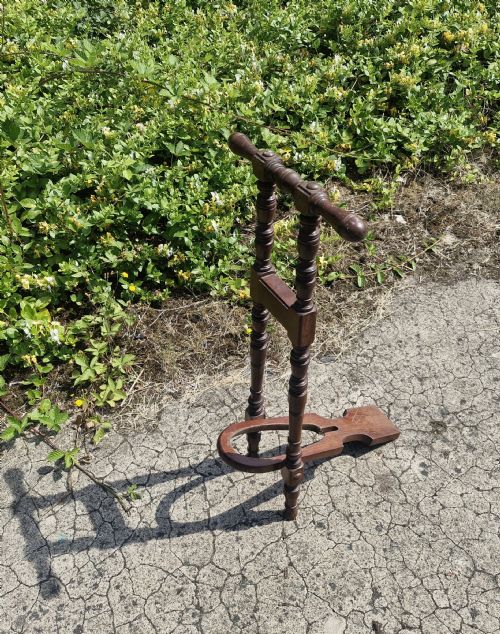
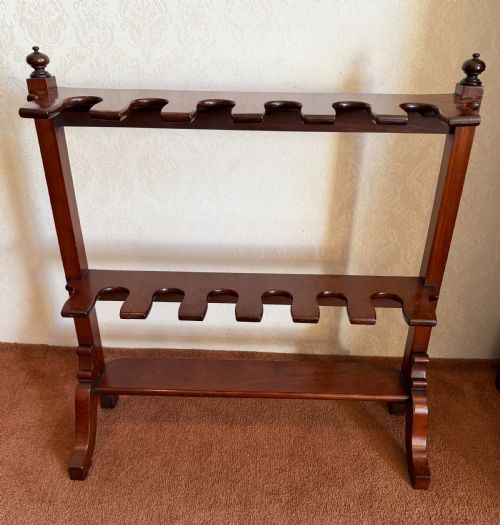


Mahogany Boot Stand
These mahogany boot stand pieces are sturdy hall furniture designed to hold riding gear and footwear.
Mahogany Boot Stand
A mahogany boot stand is a functional item of hallway furniture designed to store footwear and riding equipment in country houses and town residences.
The pieces met on this page span the Regency, Victorian, and Edwardian periods, appearing in forms such as racks, stands, and boot jacks.
Many examples combine storage for boots with specific provisions for riding whips and crops, reflecting the equestrian habits of their original owners.
How they were made
Makers relied principally on mahogany, sometimes supplemented by oak, stained timber, and brass fittings for hooks or mounts.
Construction techniques include hand carving and carpentry suited to heavy daily use in entrance halls and boot rooms.
What varies in quality
Quality rests on the choice of timber and the sophistication of the joinery, distinguishing utilitarian items from grander country house commissions.
The presence of integrated arrangements for whips, crops, or mirrors alters the character and ambition of the piece.
Gillows
The Mahogany Boot Stand Glossary
- Mahogany
- A durable hardwood prized for its rich reddish-brown tone and strength in furniture construction. It forms the primary material for the pieces listed.
- Boot jack
- A small device designed to help pull off boots without bending down. These range from simple boards to hinged wooden mechanisms.
- Regency
- An architectural and decorative style spanning the early nineteenth century. Pieces from this era often display classical restraint and refined proportions.
- Victorian
- The period of the nineteenth century associated with the reign of Queen Victoria. Furniture from this time frequently exhibits heavier proportions and practical hall designs.
Mahogany Boot Stand: Frequently Asked Questions
What is a mahogany boot stand?
A mahogany boot stand is a piece of hallway furniture designed to hold riding boots and whips.
These items were traditionally kept in entrance halls or boot rooms for daily use.
How were whip and boot stands used?
They kept riding gear organised and accessible for daily equestrian pursuits.
Specific racks held boots upright while integrated hooks stored whips and crops.
How do I date a boot stand?
Dating relies on stylistic clues, construction methods, and materials.
Regency pieces show classical restraint, whereas Victorian examples tend to be heavier and more utilitarian.
Where should I place one at home?
They suit hallways, boot rooms, and entrance spaces.
Their narrow footprint makes them practical for storing footwear in modern corridors.