
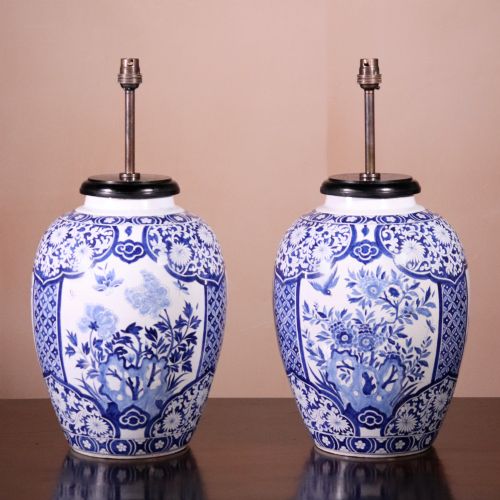


Antique Blue Vase Lamp
These antique blue vase lamps bring historic porcelain and enamel vessels into domestic rooms through careful wiring.
Antique Blue Vase Lamp
When you search for an antique blue vase lamp, you encounter historical ceramic and metal vessels adapted for modern illumination. These pieces originate from diverse workshops and periods, spanning centuries of global export and domestic manufacture.
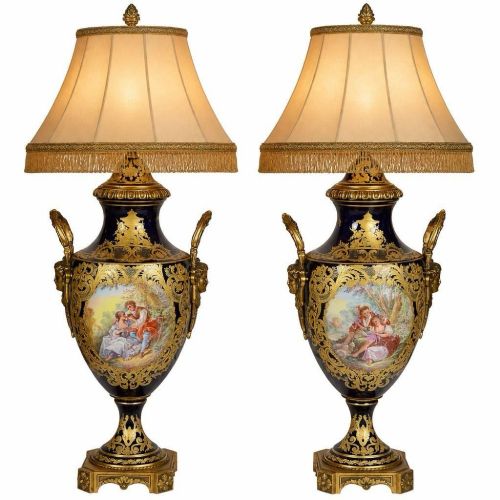
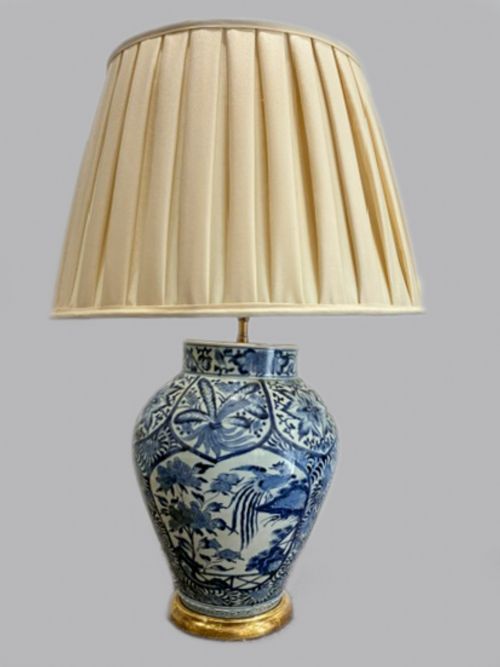
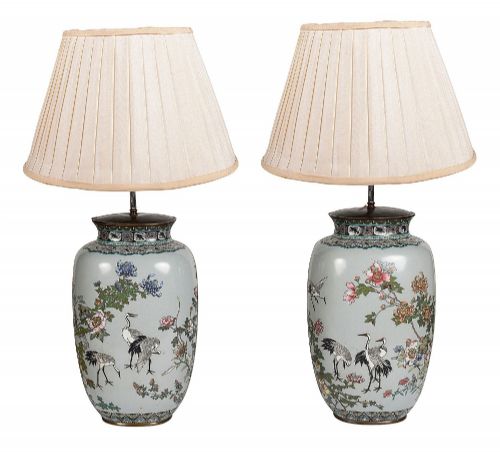
The most common examples on this page are 19th-century Chinese blue and white porcelain jars and Japanese cloisonné enamel vessels. Many of these items began as decorative display containers before receiving electrical fittings.
The selection includes matched pairs and individual table lamps alongside larger floor models. Each piece combines a traditional body with functional components designed for interior lighting.
Materials and conversion techniques
The bodies of these lamps utilise porcelain, pottery, and cloisonné enamel, often paired with brass or ormolu mounts. Artisans shaped clay and metal before applying cobalt glazes or enamel wirework to create the characteristic blue decoration.
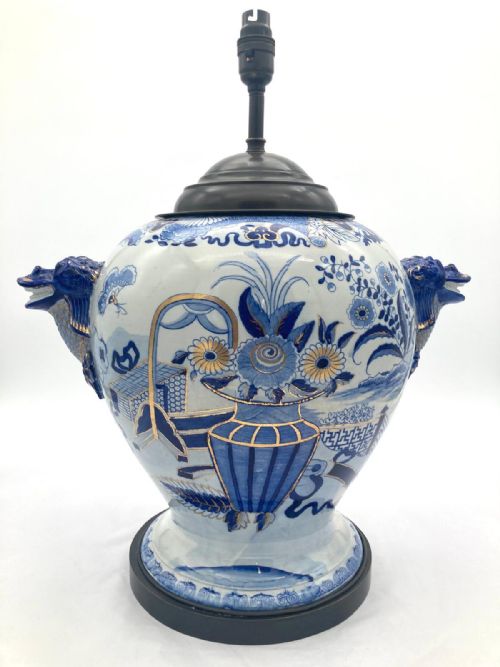
Conversion typically involves mounting the original vessel onto a wooden or metal base and running a cable through the centre. This process respects the historic integrity of the container while adapting it for electrical components.
Listings feature porcelain, brass, silk, and cloisonné enamel across 17th-century to 20th-century periods.
Distinctions in craftsmanship and condition
Quality in an antique blue vase lamp depends upon the precision of the original vessel's decoration and the discretion of the electrical conversion. Superior pieces display crisp cobalt painting, intricate enamel work, and stable mounts that do not damage the ceramic body.
The harmony between the lamp fittings and the proportions of the vase dictates the visual balance. Finer examples integrate the electrical hardware cleanly, preserving the artistic merit of the historic container.
Hicks and Meigh·Burmantofts Faience·Sevres
The Antique Blue Vase Lamp Glossary
- Cloisonné enamel
- A metalwork technique where thin wire partitions create cells filled with coloured paste and fired. This method produces intricate surface patterns on many Japanese and Chinese vase lamps.
- Ginger jar
- A wide-mouthed ceramic storage vessel originally used in China for spices. These sturdy forms frequently serve as the base for table lamps.
- Imari
- A style of Japanese export porcelain characterised by underglaze blue and contrasting iron red and gold details. Pieces in this style date from the 17th century onwards.
- Celadon
- A term for pottery featuring a pale green or grey-blue glaze resembling jade. Examples often feature subtle crackle effects in the fired surface.
Antique Blue Vase Lamp: Frequently Asked Questions
How are vase lamps wired safely?
Modern electrical components are threaded through the existing aperture or a custom-drilled base to avoid damaging the ceramic vessel.
Professional rewiring ensures the internal hardware meets current safety standards while retaining the original historic exterior.
Can I find matching pairs?
Many listings feature symmetrical pairs of lamps created from matching antique jars or vases.
These sets originate from matched decorative containers that share identical motifs, glazes, and dimensions.
How do I choose a lampshade?
Select a shade that complements the scale and palette of the blue ceramic body without overwhelming the painted details.
Simple silk or fabric shades in neutral tones often balance the visual weight of intricate cloisonné or blue and white porcelain.
What periods do these lamps date from?
The pieces span from the 17th century through the 19th century and into the early 20th century.
Earlier items represent historical East Asian export ware, whereas later pieces include European ceramic adaptations and 1890s Japanese enamel work.