

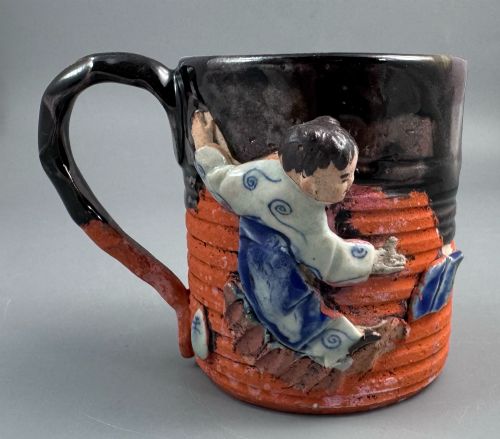


Antique Blue Tankard
An antique blue tankard brings domestic history to the table, offering drinking vessels shaped from tin-glazed earthenware, porcelain and ironstone.
Antique Blue Tankard
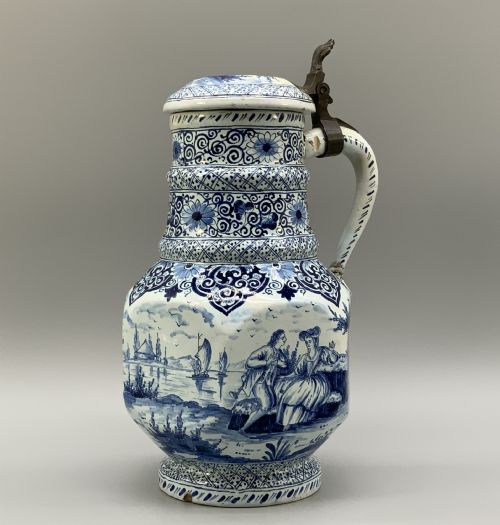
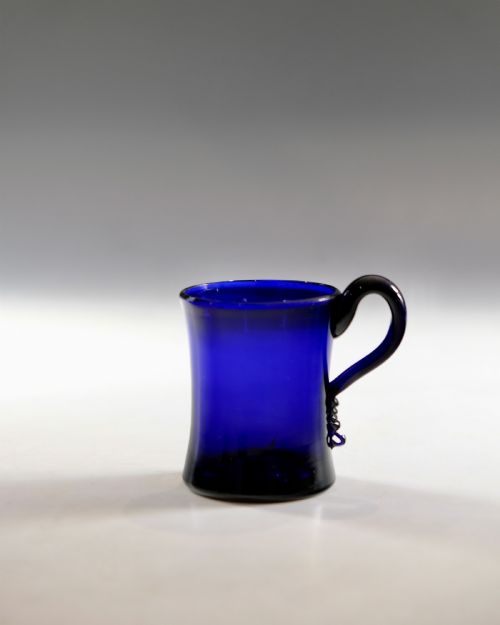
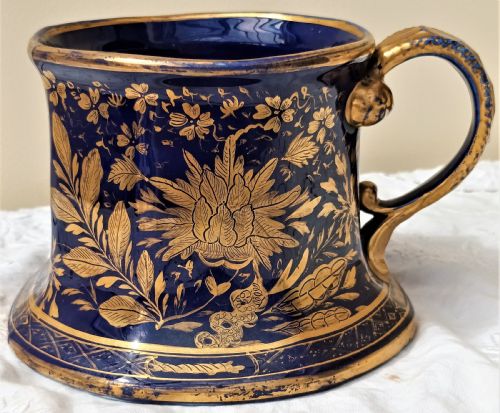
An antique blue tankard encompasses cylindrical drinking vessels and mugs produced across the eighteenth and nineteenth centuries. Examples span English ironstone and porcelain, Chinese export porcelain, and European tin-glazed earthenware.
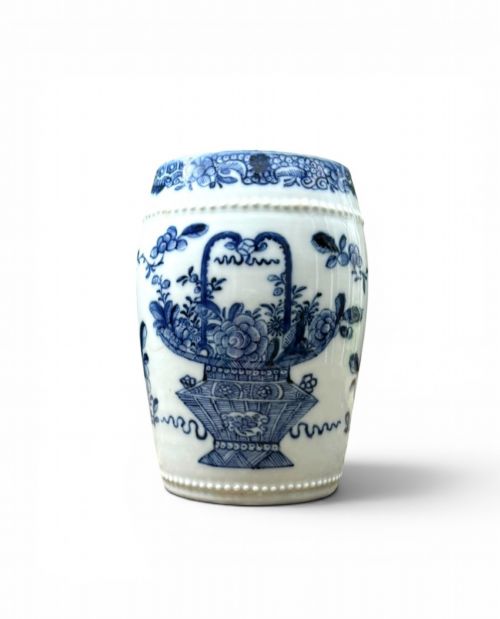
The version most commonly met on this page is the eighteenth-century ceramic mug or tankard, decorated in blue and white pigments. These pieces reflect Georgian forms alongside Chinese export and Dutch delftware traditions.
Makers ranged from large English factories like Worcester and Doulton Lambeth to continental potteries producing Westerwald stoneware. Forms vary from barrel-shaped porcelain mugs to large stoneware tankards.
Judging quality and execution
Quality reveals itself in the crispness of the cobalt painting and the stability of the ceramic body. Early porcelain and tin-glazed pieces show refinement in their potted walls and the depth of the blue pigment.
Execution depends on the control of the kiln firing and the precision of the hand-applied decoration. Superior examples maintain balanced proportions and clean glaze surfaces without heavy kiln distortion.
Antique Blue Tankard Retail Price Guide 2026
Typical asking prices for blue tankard among the pieces listed under this phrase on Sellingantiques today, from the lower quarter to the upper quarter. They describe what is for sale here now, not the wider market.
Geographic origins represented include English, Chinese export, Japanese and German workshops.
Mason's Ironstone·Worcester Porcelain·Doulton Lambeth·Sumida Gawa
The Antique Blue Tankard Glossary
- Tin-glazed earthenware
- Pottery covered in an opaque white tin glaze that accepts painted decoration, commonly seen in Dutch delftware. This technique creates a smooth canvas for blue pigments before a final transparent glaze firing.
- Stoneware
- A dense, impermeable ceramic fired at high temperatures until the body vitrifies. Westerwald examples utilise this robust material for utilitarian vessels.
- Ironstone
- A patented heavy earthenware developed in the nineteenth century for durability. English potteries used it to create robust mugs that resisted chipping.
- Cobalt
- A mineral oxide used by ceramicists to produce deep blue underglaze decoration. It withstands high kiln temperatures without losing intensity.
- Chinoiserie
- European artistic interpretation of Chinese decorative motifs. Eighteenth-century English and continental pieces frequently employed these fantastical landscapes on mugs.
Antique Blue Tankard: Frequently Asked Questions
What is an antique blue tankard made of?
These vessels appear in porcelain, ironstone, tin-glazed earthenware and stoneware. Cobalt is the primary pigment used to achieve the blue decoration across these ceramic bodies.
Pewter occasionally appears as a material for fitted lids on European earthenware jugs.
How do I date an eighteenth-century mug?
Dating relies on material composition, potting techniques and the style of the cobalt painting. Eighteenth-century pieces often display Chinese export patterns or Dutch delftware characteristics.
Examining the foot rim and glaze pooling provides further clues regarding the period of manufacture.
Were these tankards used for drinking?
Many of these vessels functioned as practical drinking mugs for beer, ale or water during the Georgian and Victorian eras. Their sturdy ceramic or stoneware walls suited daily domestic use.
Some porcelain pieces served decorative display purposes within wealthy households rather than tavern service.
How should I clean my ceramic tankard?
Careful dusting with a soft, dry cloth is usually sufficient for antique ceramic surfaces. Avoid immersing delicate tin-glazed earthenware in water for extended periods.
Modern dishwashers and harsh chemical cleaners must be avoided to protect the historic glaze and cobalt pigments.