






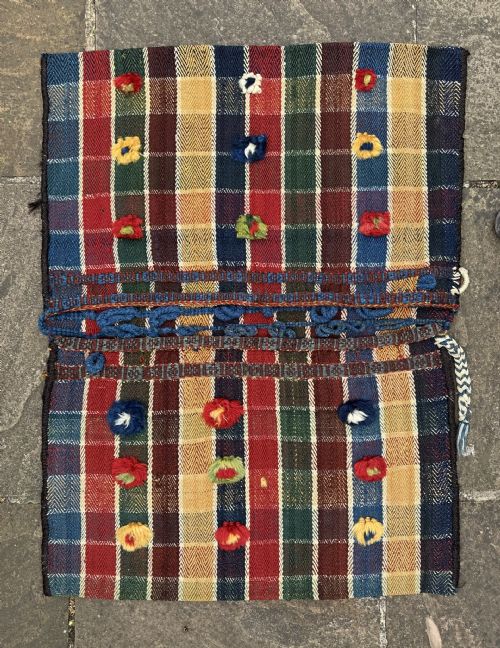

Antique Blue Saddlebags
Antique blue saddlebags bring nomadic textile tradition into modern spaces, offering rich indigo tones and geometric tribal artistry woven for practical daily use.
Antique Blue Saddlebags
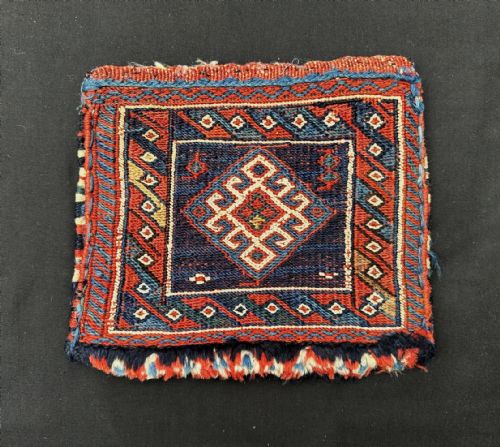
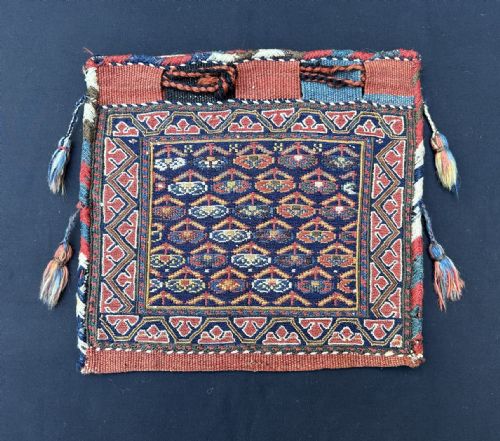
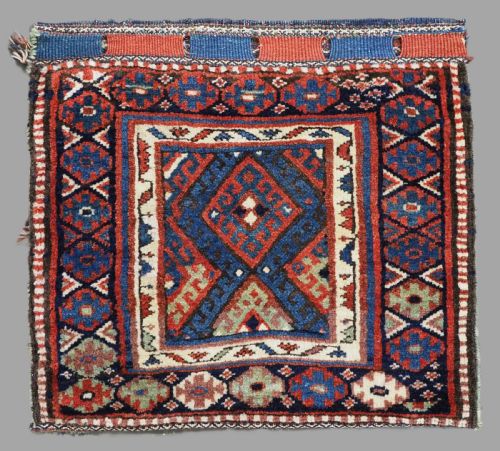
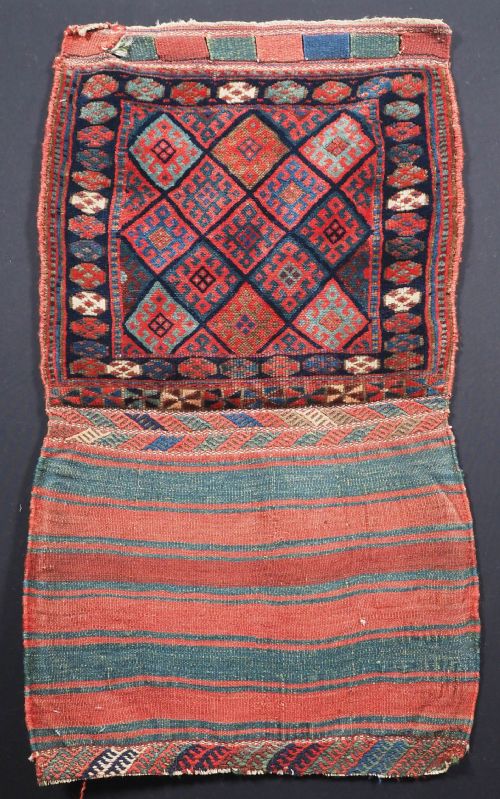
The selection on this page centres heavily on nineteenth-century examples produced by groups such as the Afshar, Qashqai, Shahsavan, and Kurdish tribes. Buyers frequently encounter complete bags with plain weave backs alongside isolated bag faces that showcase intricate central medallions and tribal iconography.
Nomadic materials and construction
Makers utilised hand-spun wool for the foundation and pile, providing a dense, resilient surface that responded well to natural dyes. Natural dye baths yielded deep indigo blues that dominate these textiles, complemented by subsidiary vegetable colours derived from local flora.
Techniques range from symmetrical and asymmetrical hand-knotting to flat-woven sumac and kilim structures. Complete pieces often feature sturdy plain weave backs designed to distribute weight evenly across the animal flank.
Antique Blue Saddlebags Retail Price Guide 2026
Typical asking prices for blue saddlebags among the pieces listed under this phrase on Sellingantiques today, from the lower quarter to the upper quarter. They describe what is for sale here now, not the wider market.
Listings span the nineteenth and early twentieth centuries, featuring wool, cotton, and hand-spun wool across Persian, Caucasian, and Central Asian tribal traditions.
Material depth and structural integrity
Quality rests significantly on the lustre of the wool and the saturation of the natural dyes, where deep, light-reflecting indigo tones elevate the visual impact. Finer knotting and precise geometric execution separate master weavers from more utilitarian tribal production.
Preservation of the original structural format, such as retaining complete backs or paired pouches rather than isolated fragments, influences the standing of an individual piece within the broader spectrum of nomadic survivals.
The Antique Blue Saddlebags Glossary
- Khorjin
- The traditional Persian term for a double saddlebag used by nomadic tribes for transport. These items were constructed as paired pouches connected by a central web.
- Bag face
- The decorative front panel of a saddlebag, which remained visible when loaded on an animal. Collectors frequently encounter these mounted or displayed independently of their original backs.
- Sumac
- A warp-wrapping flatweave technique that creates a durable, textured surface resembling embroidery. This method allowed weavers to produce crisp geometric patterns without pile.
- Boteh
- A stylised floral motif resembling a almond or bent pine cone, frequently incorporated into tribal field designs. This symbol appears across various regional weaving traditions.
- Plain weave
- A simple interlacing of warp and weft threads without pile, forming a flat, unadorned fabric. In these textiles, it typically forms the sturdy back panels or connecting webs.
Antique Blue Saddlebags: Frequently Asked Questions
What are antique blue saddlebags?
Antique blue saddlebags are functional textile containers woven by nomadic and village communities for transport on horses, donkeys, or camels. They combine durable utility with traditional tribal iconography.
Today, they survive primarily as decorative fragments, complete paired bags, or individual bag faces showcasing indigo-dominated palettes and geometric motifs.
How were these bags used?
Nomadic groups utilised these double pouches to carry personal belongings, grain, and household goods during seasonal migrations. They were slung across pack animals in balanced pairs.
Over time, many of these bags were separated from their original pairs or split into single faces as families settled or the items entered trade.
How do I live with them?
These textiles adapt well to modern interiors when displayed as wall hangings or placed on low-traffic floor areas where heavy wear is avoided. Their compact square formats suit smaller wall spaces.
Protecting the antique wool from direct, prolonged sunlight preserves the natural indigo dyes and prevents fibre degradation over decades of display.
How do I identify different tribal types?
Attribution relies on specific structural characteristics, wool qualities, and distinct regional motifs associated with groups like the Afshar, Shahsavan, or Qashqai. Border designs and colour combinations offer key clues to origin.
Weaving techniques also vary by region, with some groups favouring crisp sumac flatweaves while others utilised dense hand-knotted pile.