






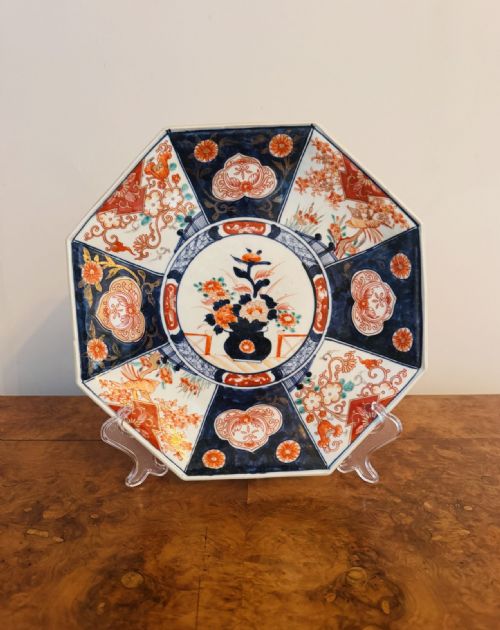


Antique Blue Imari
Antique blue imari brings together porcelain and earthenware painted in deep cobalt and iron red, prized for rich colour and pattern.
Antique Blue Imari
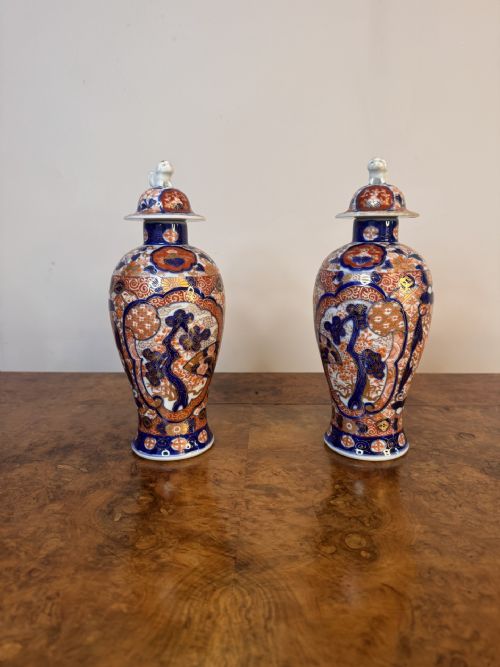
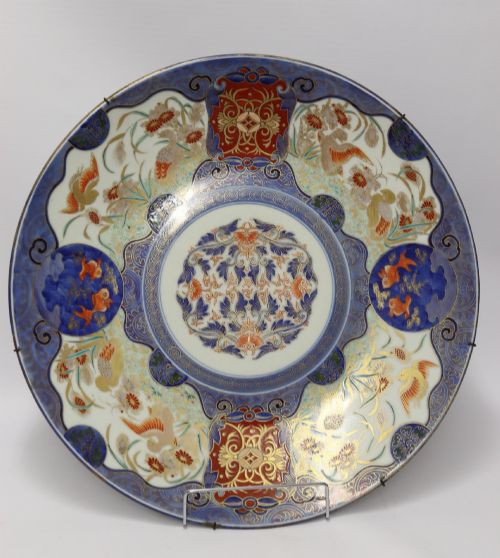
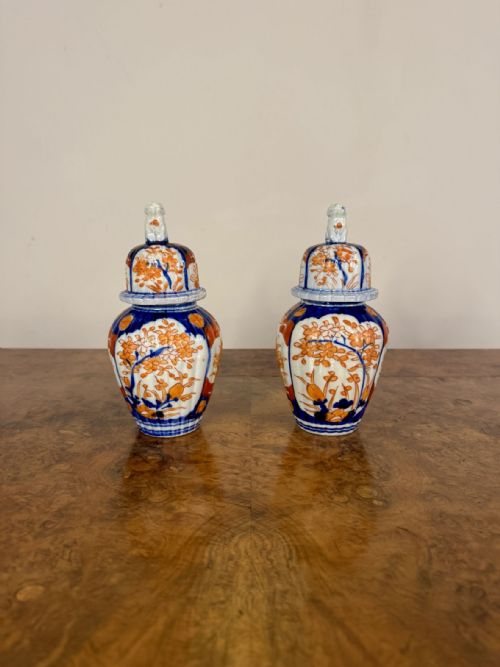
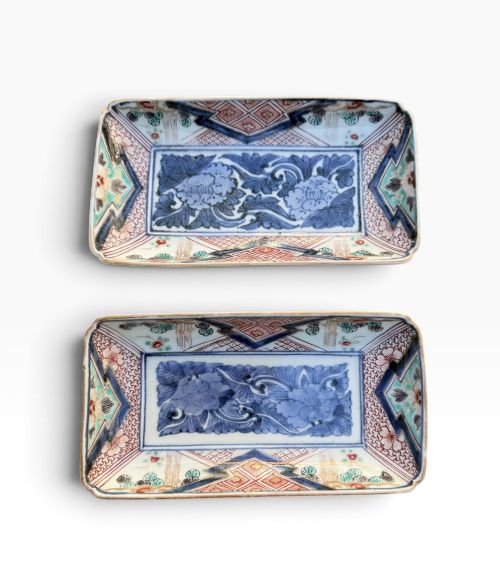
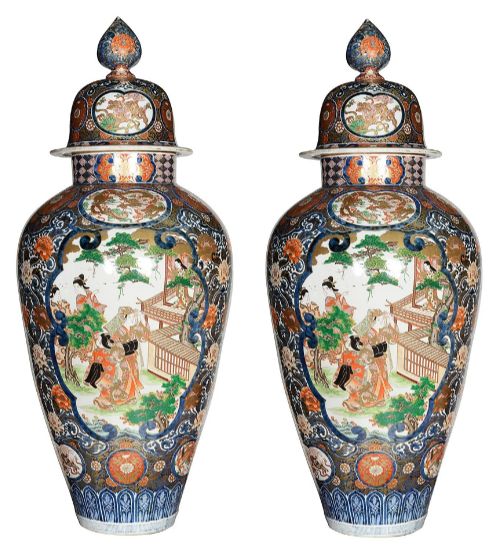
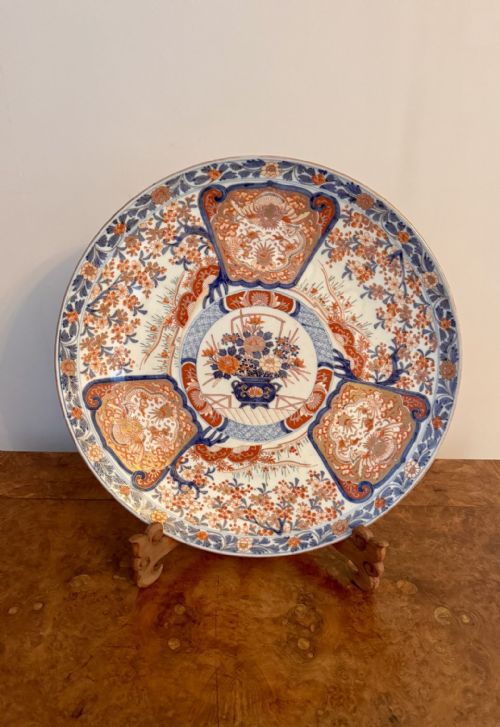
When you search for antique blue imari, you encounter pieces spanning from the seventeenth century to the twentieth century, originating from Japanese kilns as well as English factories imitating the style. Japanese examples often appear as large chargers, plates, bowls, and floor-standing or lidded vases created during the Edo and Meiji periods.
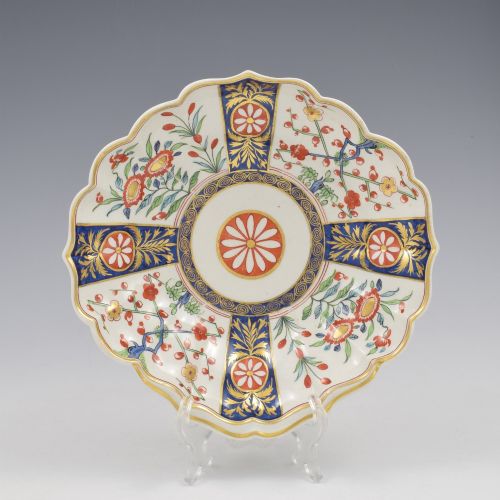
English interpretations emerge frequently on this page through manufacturers such as Royal Crown Derby, Spode, Mason's, and Worcester. These domestic makers adapted the characteristic palette onto bone china, porcelain, and ironstone vessels including serving dishes, sauce tureens, jugs, and coffee sets.
The aesthetic relies on a distinct visual vocabulary featuring cobalt blue underglaze combined with overglaze iron red enamel, frequently augmented by gold leaf and gilding. Forms range from hexagonal plates and fish-shaped dishes to trumpet vases and pierced serving trays.
Materials and Manufacture
Potters shaped hard-paste porcelain, bone china, or heavy ironstone before applying cobalt blue pigment beneath the glaze for foundational patterns. Kiln firing fixed this blue underglaze, ensuring durability and depth.
Artisans then added overglaze enamel colours, predominantly iron red, alongside detailed applications of gold leaf and gilding. Subsequent lower-temperature firings bonded these surface decorations to the glaze.
Antique Blue Imari Retail Price Guide 2026
Typical asking prices for blue imari among the pieces listed under this phrase on Sellingantiques today, from the lower quarter to the upper quarter. They describe what is for sale here now, not the wider market.
Listings feature periods ranging from the seventeenth-century Edo era to the twentieth-century Victorian and Meiji eras.
Judging Quality and Execution
The refinement of the painted decoration dictates the distinction between standard production and exceptional examples. Precise brushwork in the cobalt underglaze and fine control of the iron red enamel distinguish superior pieces.
The application of gilding and gold leaf separates ordinary items from masterworks, with heavier, more intricate gold detailing elevating a piece. Body material also plays a role, where crisp, translucent porcelain contrasts with heavier ironstone.
Royal Crown Derby·Mason's·Spode·Chamberlain Worcester
The Antique Blue Imari Glossary
- Imari palette
- A decorative scheme employing underglaze cobalt blue and overglaze iron red, typically enriched with gilt. This combination originates from Japanese export wares and was widely copied in Europe.
- Underglaze
- Pigment applied to ceramic body before the protective glassy coating is fired. Cobalt applied this way remains durable and stable at high kiln temperatures.
- Overglaze enamel
- Coloured glass-like paint applied on top of fired glaze and fixed with a secondary, lower heat. Iron red is the most common enamel found on these wares.
- Ironstone
- A dense, durable type of earthenware patented in the nineteenth century. It provided a robust alternative to porcelain for heavy domestic service wares.
- Charger
- A large ornamental plate intended for display rather than dining. These items frequently showcase the most ambitious painted compositions.
Antique Blue Imari: Frequently Asked Questions
How do I tell Japanese imari from English imari?
Japanese pieces generally utilise a greyer, more porous body with characteristic spur marks from kiln supports underneath. English versions from factories like Royal Crown Derby or Spode tend to use whiter bone china or refined earthenware.
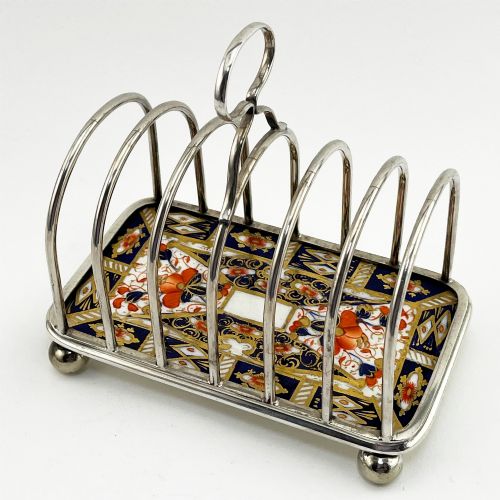
Decoration also offers clues, as Japanese designs often reflect Edo and Meiji aesthetics with asymmetrical plant and animal motifs. English makers adapted these patterns to standard European ceramic shapes like sauce tureens and toast racks.
What periods do these pieces come from?
The selection spans from the seventeenth-century Genroku period through the eighteenth and nineteenth centuries up to the early twentieth century. Early examples include seventeenth-century Japanese Arita wares and eighteenth-century Worcester porcelain.
Later nineteenth-century Victorian pieces and early twentieth-century productions from firms like Royal Crown Derby represent the continuation of the style. Date marks on English ceramics help pinpoint exact years of manufacture.
How were these decorative items used?
Large chargers, lidded jars, and floor-standing vases served primarily as decorative showpieces in period interiors. Plates, bowls, and serving dishes functioned in formal dining and dessert services.
Smaller pieces such as miniature vases, inkstands, and spill vases occupied desks, mantelpieces, and drawing rooms. Ironstone jugs and crocus jugs saw more robust handling in domestic settings.
How should I clean antique imari porcelain?
Wash pieces gently by hand using lukewarm water and a mild detergent. Avoid harsh abrasive sponges or soaking items with metallic gilding.
Take particular care with overglaze enamels and gold leaf, as aggressive scrubbing can wear away surface details over time. Dry immediately with a soft, lint-free cloth.