

Antique Blue Dining Chairs
Antique blue dining chairs bring rich textile colour and period timber together around a table, offering solid construction and historic character.
Antique Blue Dining Chairs
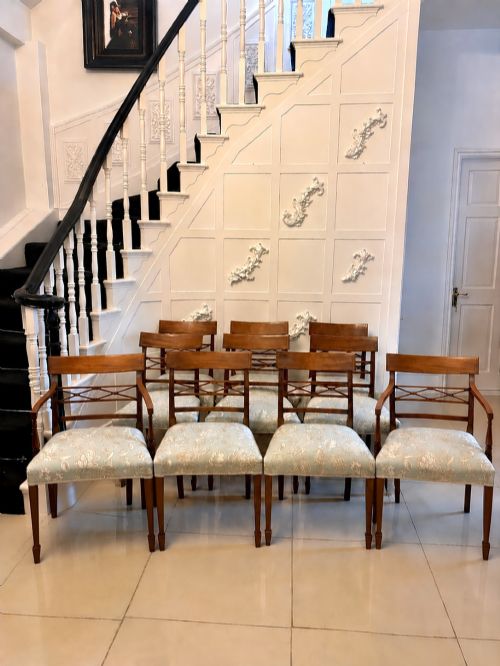
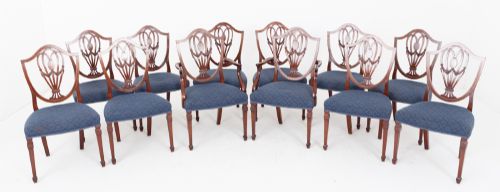
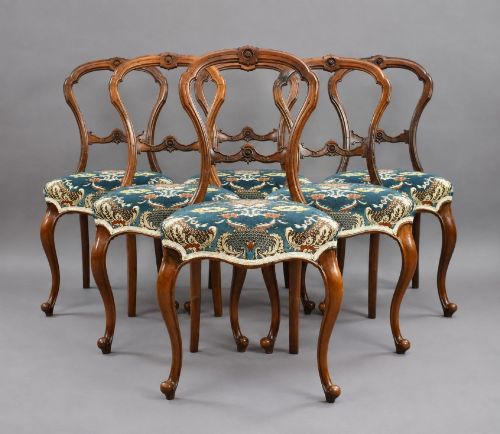
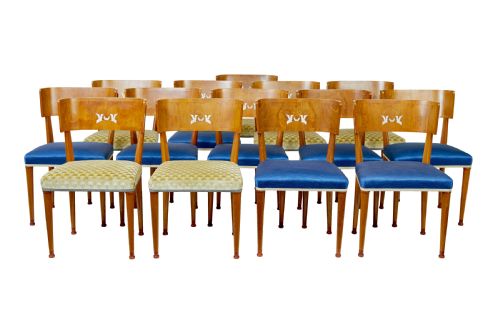
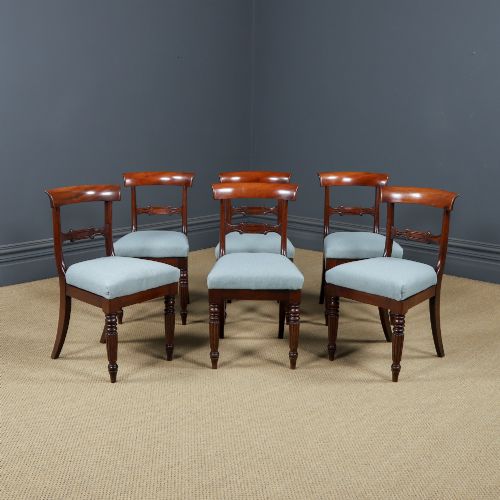
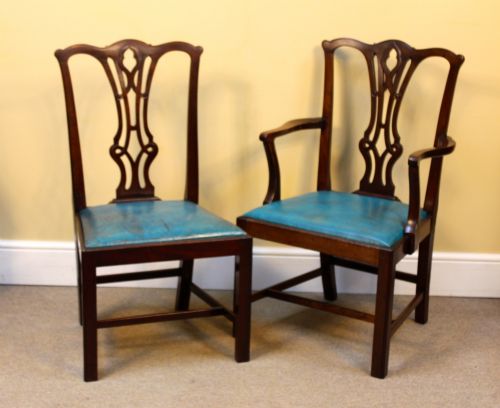
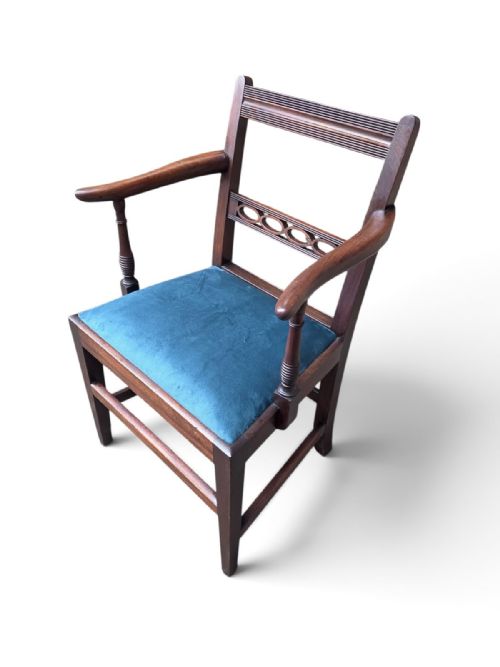
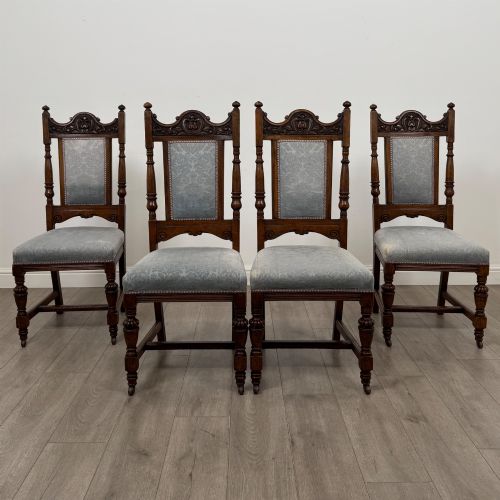
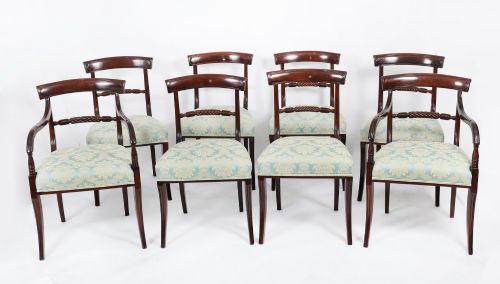
When searching for antique blue dining chairs, buyers encounter sets of dining chairs, carvers, and side chairs upholstered in various shades of blue. The selections span periods from the Georgian and Victorian eras through to the twentieth century, reflecting shifting tastes in interior seating.
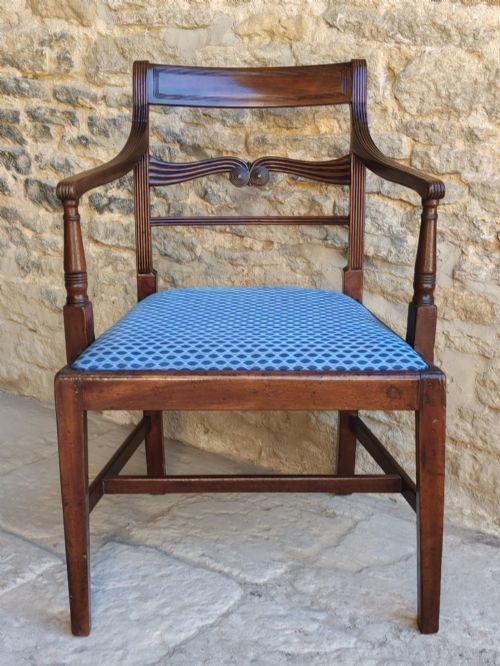
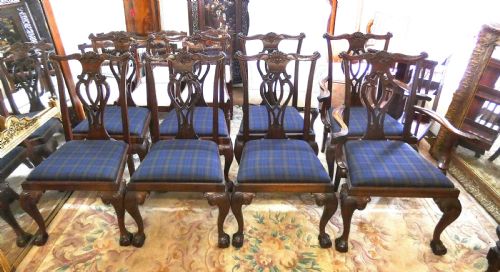
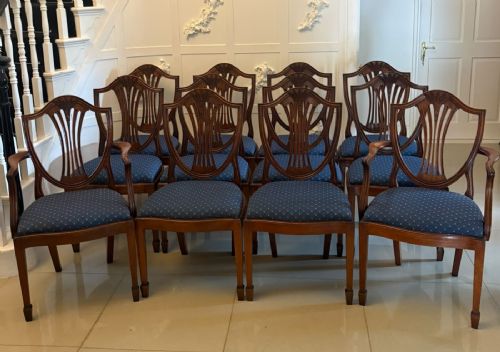
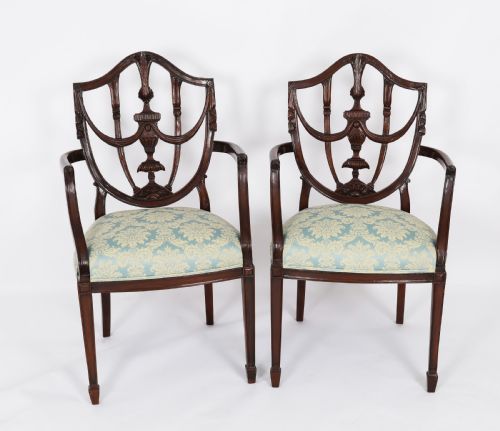
The dominant timbers framing these seats are mahogany and oak, alongside rosewood and walnut, paired with textiles such as velvet, fabric, and needlepoint. Many pieces adopt revival styles, including Hepplewhite, Chippendale, and Regency designs, executed in sets or smaller groupings.
Most examples rely on period upholstery or later textile replacements to introduce the blue colourway to the frame. These chairs function practically around dining tables while carrying the distinct craftsmanship of past centuries.
How they were made
Makers constructed the chair frames using dense hardwoods like mahogany, oak, walnut, and rosewood, often shaping the timber with carved details, bar backs, or shield backs. Joinery relied on traditional methods to ensure stability across sets of multiple chairs.
Upholstery involved textile applications ranging from velvet and fabric to needlepoint, secured over padded seats. Some specialised pieces incorporated painted finishes and cane work within the wooden framework.
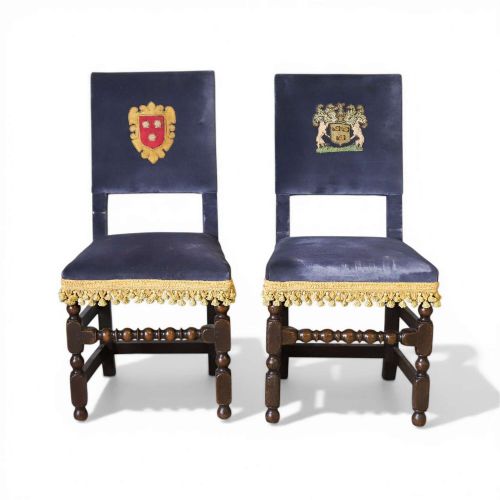
Some chairs retain centuries-old clan crests stitched into the fabric, reminding diners of ancient allegiances.
What varies in quality
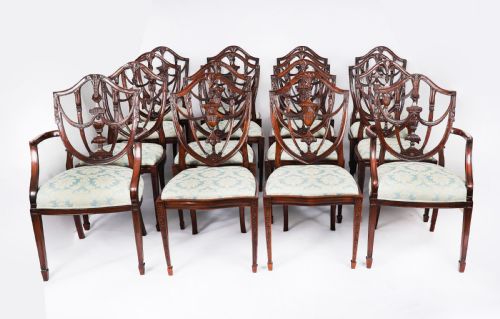
The degree of carving refinement and timber selection dictates the standing of a set, where deeply sculpted mahogany or walnut frames distinguish finer workshops. Uniformity across large sets of ten or twelve chairs also marks a higher standard of production.
The execution of the upholstery, particularly needlepoint or fitted velvet seat coverings, contributes significantly to the visual integrity of the chair. Retaining matching frames within a set elevates the overall coherence of the grouping.
Gillows
The Antique Blue Dining Chairs Glossary
- Carver
- An armchair designed with armrests, typically placed at the head of a dining table to match surrounding side chairs.
- Shield back
- A chair back shaped like a heraldic shield, popular in eighteenth-century and revival dining chair designs.
- Bar back
- A horizontal wooden slat crossing the upper backrest of a chair, frequently seen in Regency seating.
- Needlepoint
- A type of canvas embroidery worked with wool yarn, often utilised for durable historic chair seat upholstery.
- Regency
- A style period spanning the early nineteenth century, characterised by classical restraint and influences from antiquity.
Antique Blue Dining Chairs: Frequently Asked Questions
How do I clean blue upholstery?
Maintenance depends entirely on the specific textile used on the seat, whether it is velvet, woven fabric, or needlepoint embroidery. Gentle surface dusting or professional textile cleaning preserves the fabric without damaging the historic frame.
Avoid harsh chemical detergents that might alter the shade of the blue textile. Test any cleaning method on an inconspicuous underside area first.
Can I mix different chair styles?
Mixing chair styles works well if the timber tones and general heights share similarities. Pairing side chairs with matching carver armchairs at the table ends creates a balanced arrangement.
Matching the wood species, such as mahogany or oak, helps unify disparate seating choices around one dining table.
Are large sets difficult to find?
Complete large sets of ten or twelve matching chairs occur less frequently than smaller groupings of four or six. Many larger dining sets are assembled matches rather than original single-workshop productions.
Checking consistency in timber grain and carved details helps verify whether a large set originated together.