

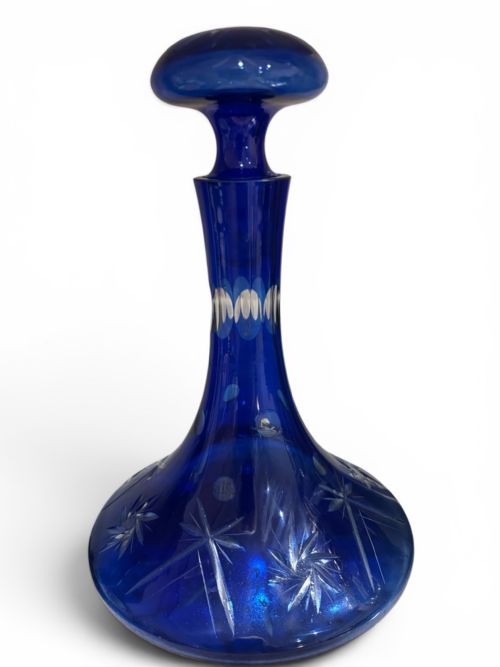


Antique Blue Decanter
An antique blue decanter brings deep colour and rich historical character to a drinks tray.
Antique Blue Decanter
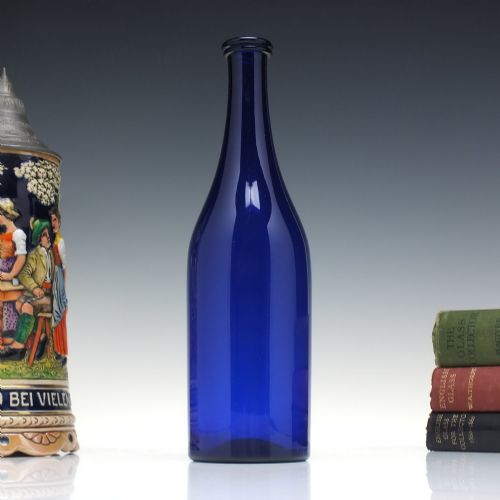
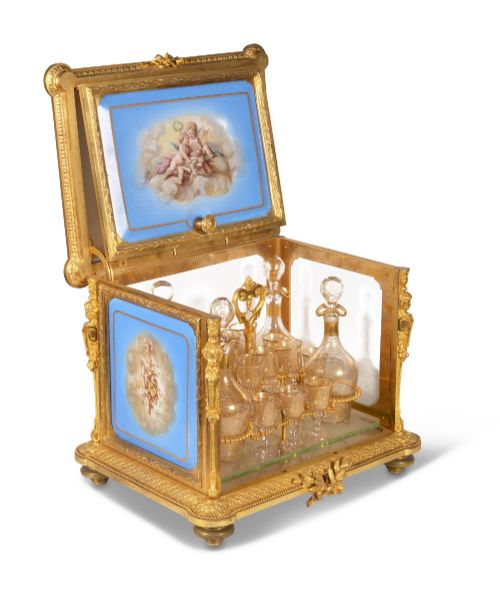
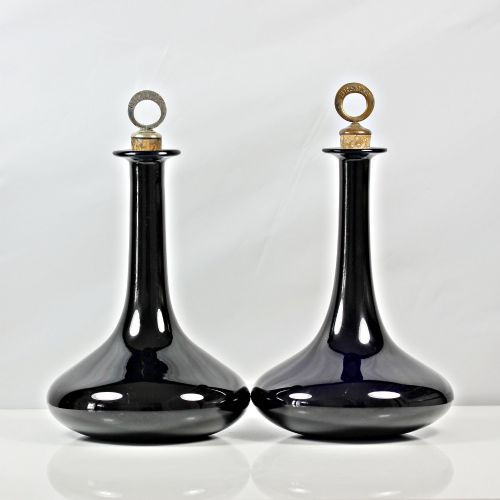
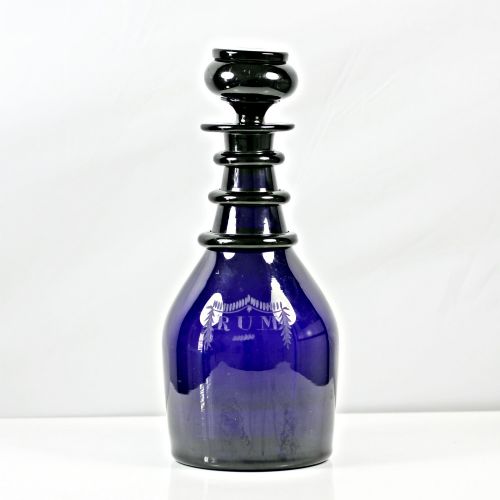
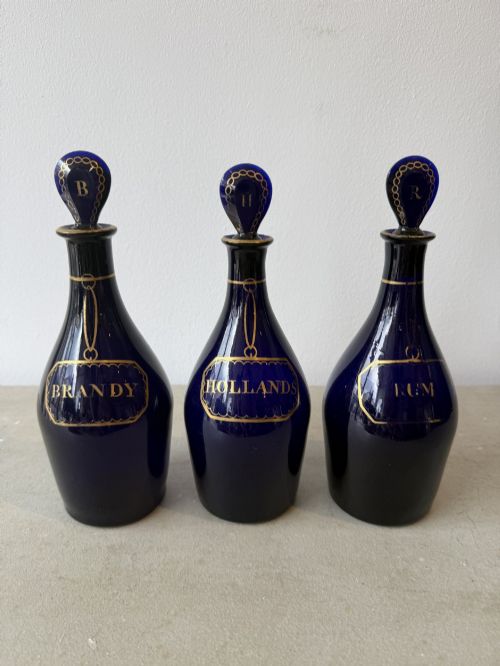
When you search for an antique blue decanter, you encounter vessels produced primarily during the nineteenth century, including Georgian, Victorian, and William IV examples. These pieces range from three ring rum decanters and mell shapes to wine carafes and spirit bottles, often rendered in deep cobalt glass.
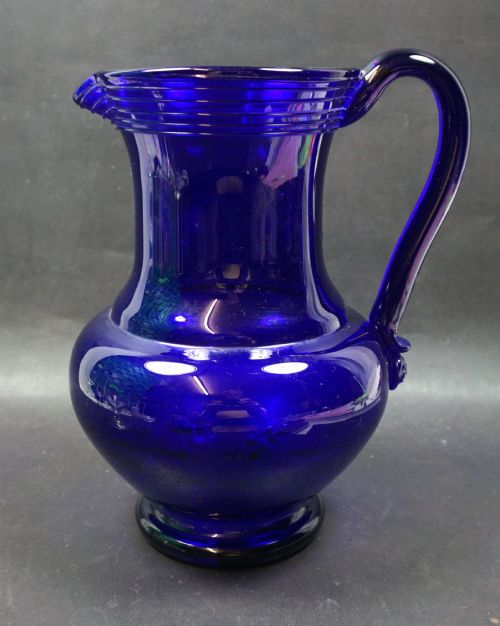
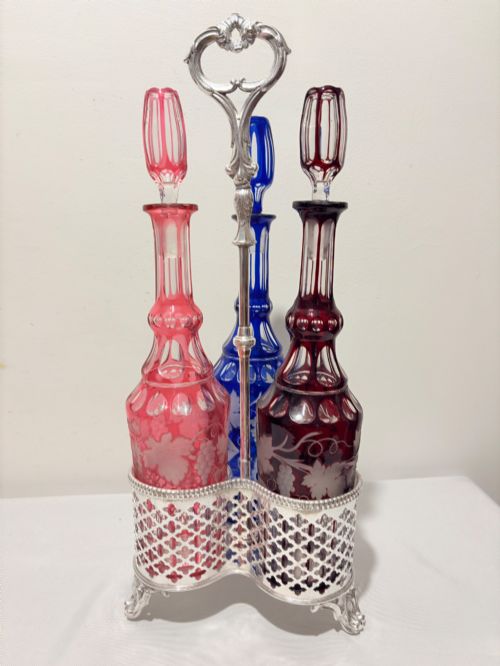
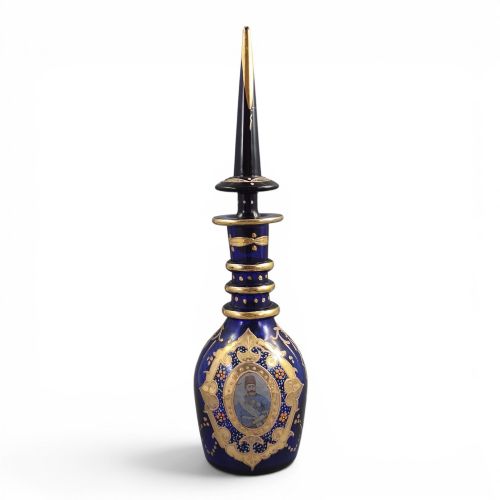
The selection includes specialised regional variations such as Bristol blue glassware, Scottish mell decanters, and Bohemian export pieces designed for international markets. Alongside standard decanters, you also find related items like decanter stands, matching sets, and claret jugs.
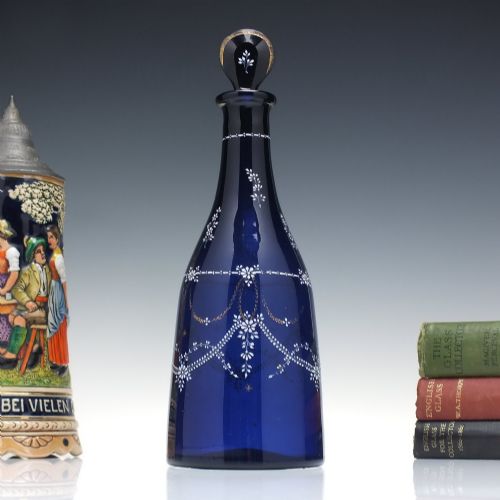
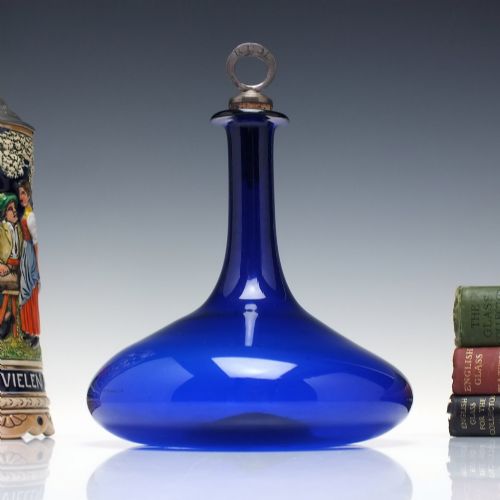
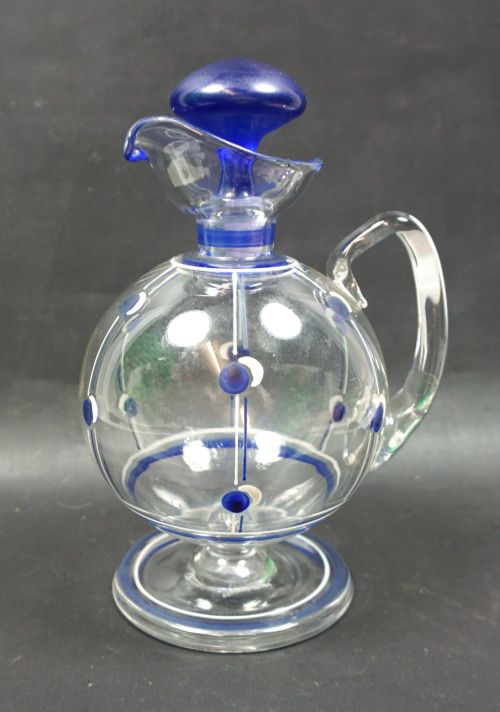
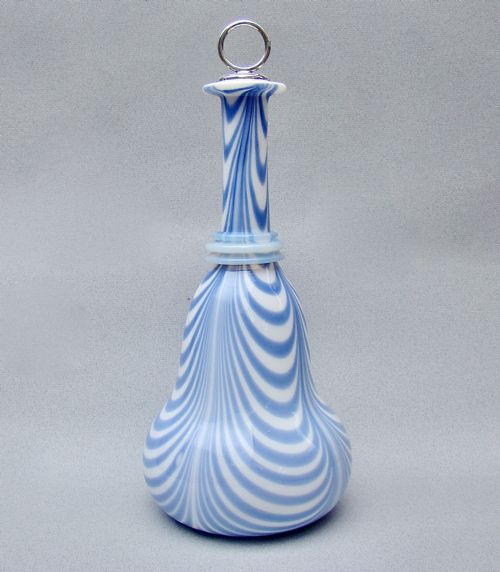
Many of these containers feature functional additions such as silver plated mounts, cork stoppers, and hand-painted enamel decoration, reflecting both domestic British production and wider European craft traditions from the eighteen-hundreds onwards.
Materials and construction
The foundation of these vessels rests on hand-blown glass, frequently utilising deep cobalt or colour-over-crystal formulas to achieve intense saturation. Artisans shaped the hot glass into distinct forms like the heavy rings of rum decanters or the tapered profiles of mell bottles.
Surface ornamentation involved hand-painted enamel decoration, gilt highlights, and Mary Gregory style white enamel figural scenes. Metal components such as silver plate, Old Sheffield plate, and mounted silver necks completed the functional design of the bottles.
Antique Blue Decanter Retail Price Guide 2026
Typical asking prices for blue decanter among the pieces listed under this phrase on Sellingantiques today, from the lower quarter to the upper quarter. They describe what is for sale here now, not the wider market.
Even apothecary bottles managed to look stylish in brilliant blue glass.
Evaluating craftsmanship and condition
Quality in these vessels reveals itself through the depth and uniformity of the glass colour, the precision of hand-blown body shapes, and the crispness of any cut rings or facets. Superior examples display minimal bubbles or impurities in the glass alongside well-fitted original stoppers.
The refinement of surface embellishment distinguishes finer pieces, particularly where hand-painted enamel or gilded details remain crisp and well-preserved. Integrated metalwork, including silver necks and plated stands, adds structural integrity and material value.
The Antique Blue Decanter Glossary
- Bristol blue
- A deep cobalt glass associated with production in Bristol and wider British glasshouses during the Georgian and Victorian periods. This intense colour remains a defining characteristic of many nineteenth-century spirit bottles.
- Mell decanter
- A mallet-shaped bottle characterised by a broad base tapering towards the neck, designed for stability on shipboard or dining tables. This specific silhouette is common in eighteenth and nineteenth-century service ware.
- Ring decanter
- A bottle featuring horizontal glass rings around the neck to ensure a secure grip during pouring. These rings are typical of rum and spirit decanters from the Georgian and Victorian eras.
- Mary Gregory glass
- Glass decorated with white enamel silhouettes depicting children in natural settings, popular during the Victorian period. The technique appears on various jugs, carafes, and decanters.
- Old Sheffield plate
- A composite material made by fusing a thin sheet of silver to a copper base, utilised for mounts and stands prior to modern electroplating. This technique produces a warm tone distinct from standard silver plate.
Antique Blue Decanter: Frequently Asked Questions
How do I date a blue decanter?
Dating relies on observing manufacturing marks, glass colour density, and the presence of pontil scars on the base. Georgian and early Victorian pieces often exhibit deeper cobalt tones and hand-blown irregularities.
Later Victorian and Art Deco examples introduce machine-molded lines, alternative mounts, and distinct Bohemian or continental decoration styles.
Can I use these decanters for serving wine?
Many nineteenth-century vessels remain structurally sound for holding and serving beverages today. Checking the interior for cleanliness and inspecting the stopper fit ensures safe daily usage.
Hand washing with lukewarm water preserves the fragile enamel work and historical glass surfaces, avoiding harsh detergents or modern dishwashers.
What is the difference between Bristol blue and Bohemian glass?
Bristol blue typically refers to nineteenth-century British production known for its rich cobalt hue and traditional tavern or domestic forms. Bohemian pieces often incorporate elaborate enamelling, gilt accents, or colour-over-crystal layering tailored for export markets.
Examining the weight, cutting style, and decorative motifs helps differentiate between these regional manufacturing traditions.
Why do some decanters have metal necks?
Metal mounts and silver necks served to reinforce vulnerable rims against chipping during pouring and stopper replacement. They also provided a secure platform for fitted stoppers and added decorative contrast to the blue glass.
These additions often carry hallmarks that assist in determining the precise period and origin of the piece.