
Antique Blonde Wood Furniture
Antique blonde wood furniture brings pale, figured grains into a room, offering nineteenth-century chests and twentieth-century desks shaped by Scandinavian and Art Deco hands.
Antique Blonde Wood Furniture
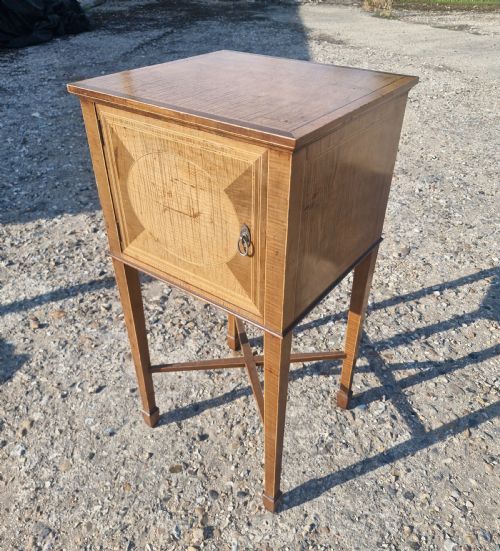
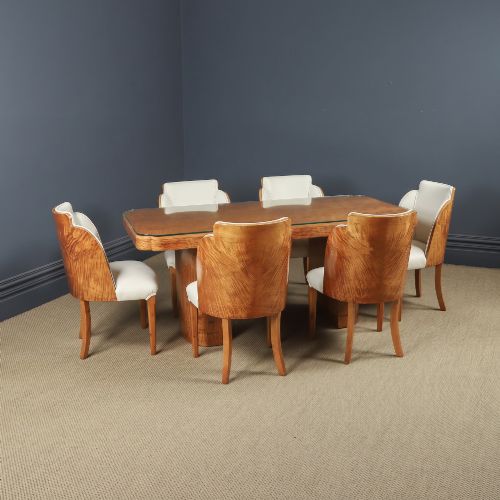
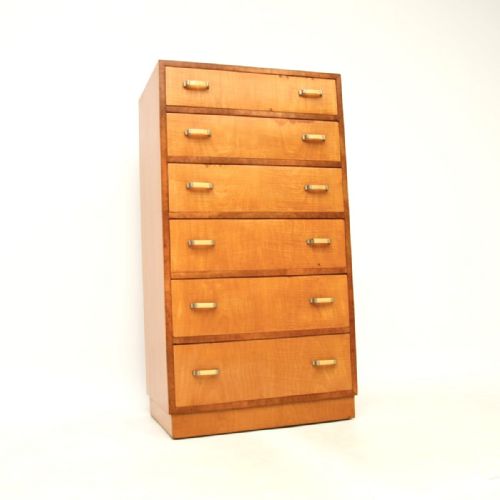
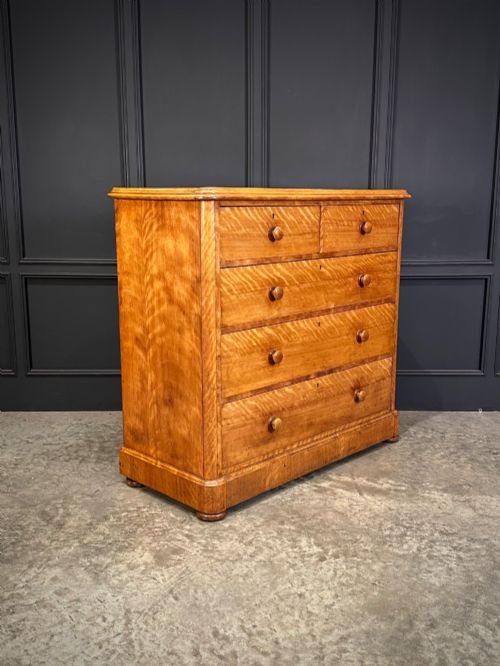
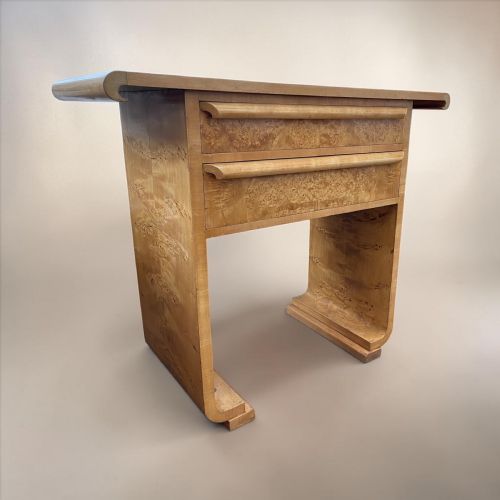
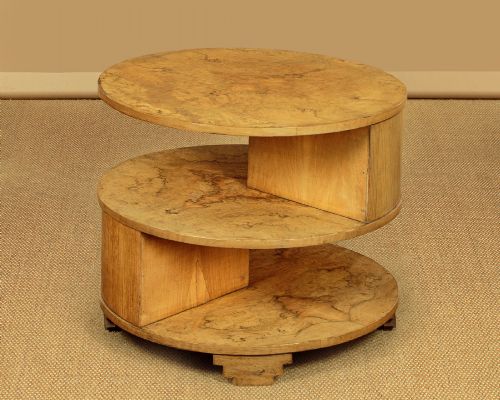
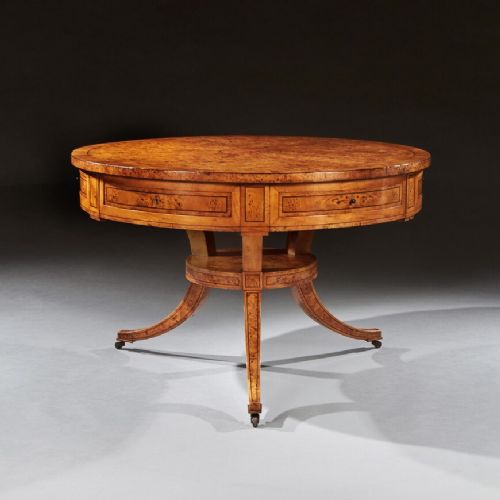
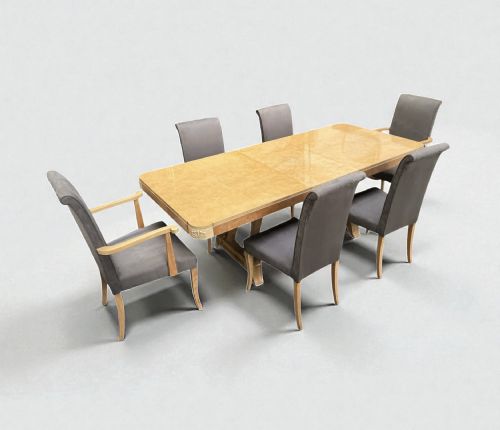
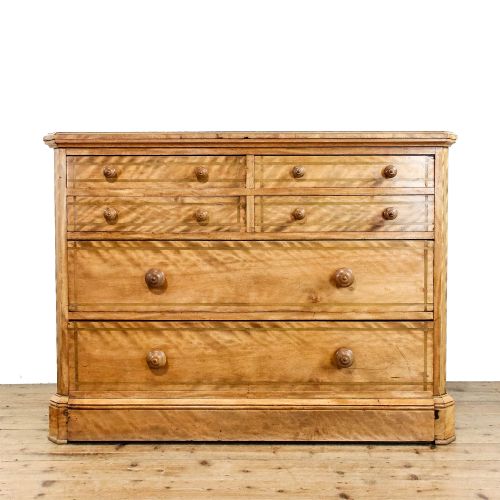
When you search for antique blonde wood furniture, you encounter pieces defined by pale, figured timbers rather than a single period. The selection spans nineteenth-century chests of drawers and desks alongside twentieth-century dining suites, beds, and bedside cabinets.
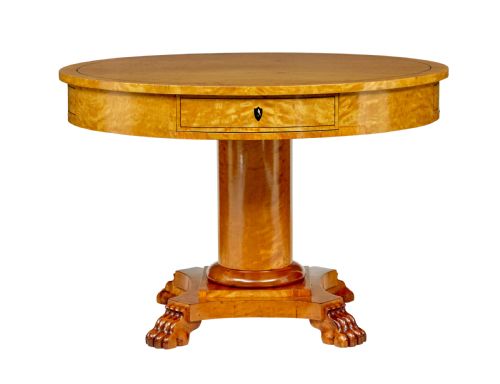
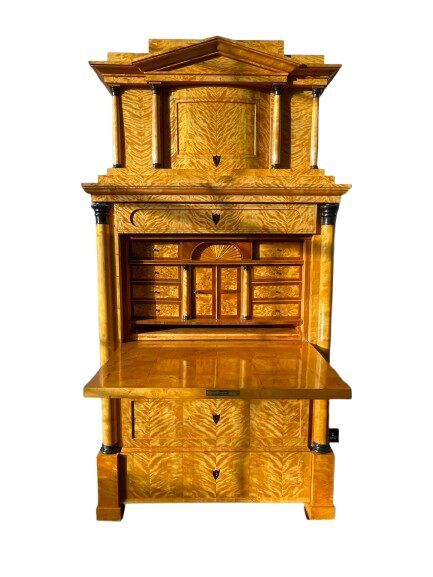
Nineteenth-century examples lean heavily toward Scandinavian Biedermeier and Empire Revival forms, prioritising clean lines that let the natural grain speak. These share space with British Victorian pieces in pale satinwood and ash.
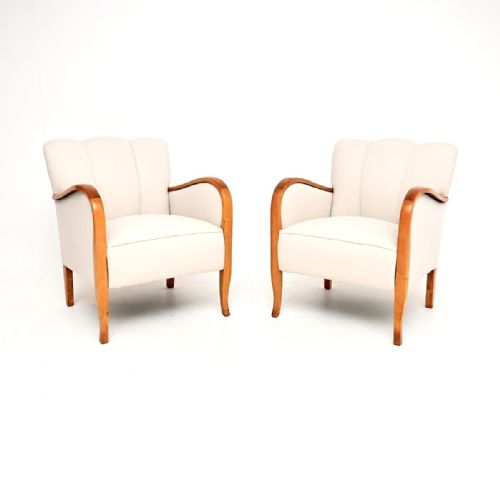
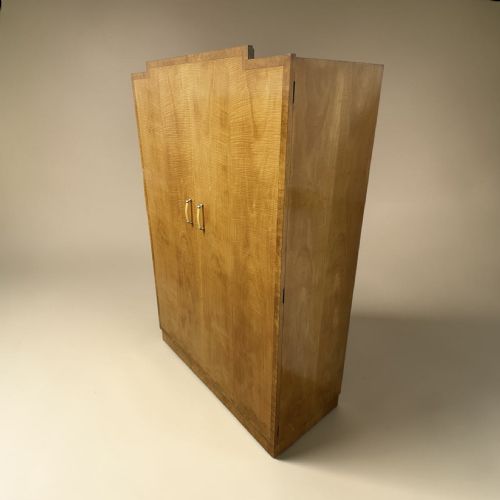
Twentieth-century pieces on this page are predominantly Art Deco, originating from British workshops and Swedish makers. These combine blonde veneers with contrasting dark details or leather tops.
How they were made
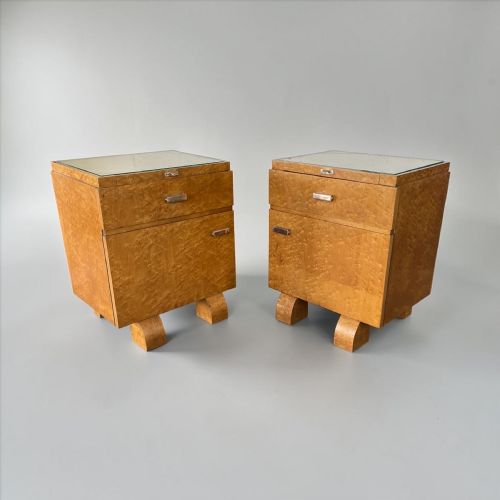
Cabinetmakers utilised native and imported timbers, selecting birch, satin birch, masur birch, flame birch, and birds eye maple for their striking, light-coloured figuring. Walnut, satinwood, and ash also appear across the periods.
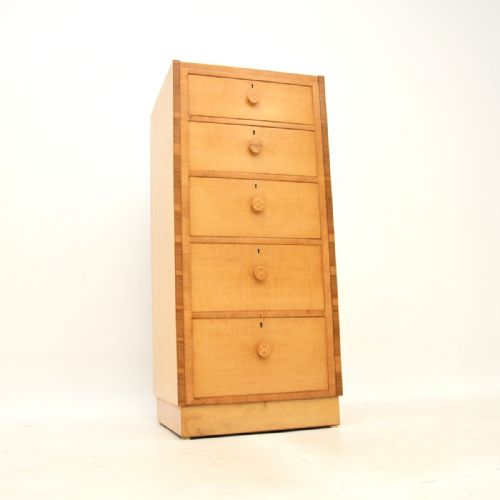
Veneering techniques allowed makers to display intricate grain patterns across large flat surfaces like tabletops, chest drawer fronts, and wardrobe doors. Solid timbers were shaped for structural elements such as chair frames, legs, and turned pedestal columns.
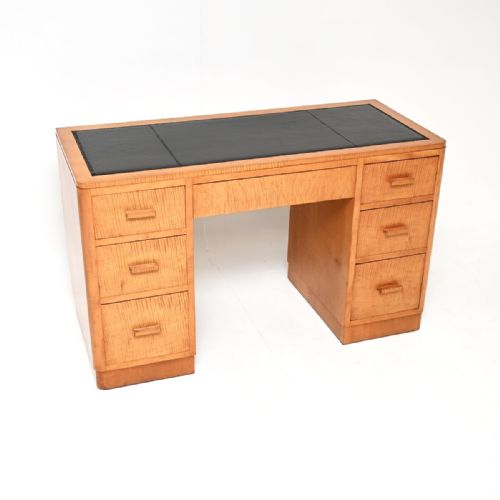
Brass fittings, marble tops, and leather inserts complete the construction of desks, bedside cabinets, and tables, grounding the pale wood with tactile contrast.
The listings span from the Victorian era through the Edwardian period to the height of Art Deco in the 1930s.
What varies in quality
The distinction between ordinary and exceptional pieces lies in the choice and matching of the timber veneer. Master cabinetmakers aligned the grain symmetrically across drawer fronts to create mesmerising patterns, whereas simpler items display standard, unselected grain.
Proportion and execution separate standard domestic output from high-end commissions. Pieces bearing maker stamps or attributed to notable workshops demonstrate finer joinery details, balanced proportions, and careful integration of secondary woods.
Morant and Co London·Fortnum and Mason·Hille·Heal and Son·Harry and Lou Epstein·Gemla Fabrikers
The Antique Blonde Wood Furniture Glossary
- Satin Birch
- A pale, lustrous timber with a fine texture and subtle golden sheen. It was widely utilised by Scandinavian and British makers for chests, desks, and bedroom furniture.
- Birds Eye Maple
- A figure in maple wood where tiny knots create pattern swirls resembling small birds eyes. It forms a highly decorative surface on Art Deco beds and tallboys.
- Biedermeier
- A Central European style spanning the nineteenth century favouring utilitarian comfort and clean architectural lines over excessive ornamentation. It showcases pale woods like birch to striking effect.
- Masur Birch
- A northern European birch variety featuring dark streaks and swirling organic inclusions within the pale grain. Cabinetmakers prized it for high-status nineteenth-century chests of drawers.
- Pedestal Desk
- A freestanding writing table supported by two vertical banks of drawers rather than four legs. These often feature inset leather writing surfaces.
Antique Blonde Wood Furniture: Frequently Asked Questions
How do I clean antique blonde wood furniture?
Dust regularly with a soft, dry cloth to prevent grit accumulation on the surface. Avoid modern silicone sprays that can damage historic polishes.
Apply a traditional beeswax sparingly when the timber appears dry, buffing gently to maintain the natural sheen of the pale grain.
Can I mix Biedermeier with Art Deco pieces?
Mixing nineteenth-century Biedermeier with 1930s Art Deco works well because both styles celebrate minimalist forms and pale wood grains. The shared emphasis on clean geometry bridges the decades.
Keep surrounding walls neutral so the contrasting tones of the birch and maple furniture remain the visual focal point of the room.
Where should I place a blonde wood desk?
Position a pedestal desk away from direct sunlight to prevent the pale birch or satinwood veneers from fading over time. Indirect natural light highlights the intricate grain patterns.
Allow sufficient clearance around the piece so the architectural lines and brass fittings remain fully visible in the room.