


Maple Console Table
A maple console table brings warmth and distinct grain to an entrance hall or living room, offering surface space with a decorative presence.
Maple Console Table
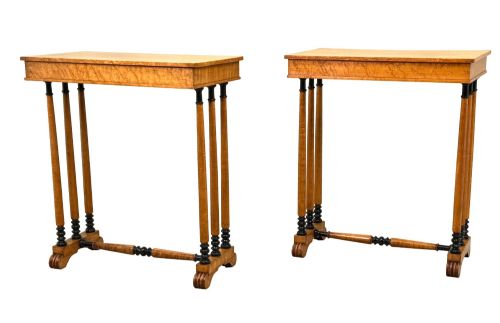
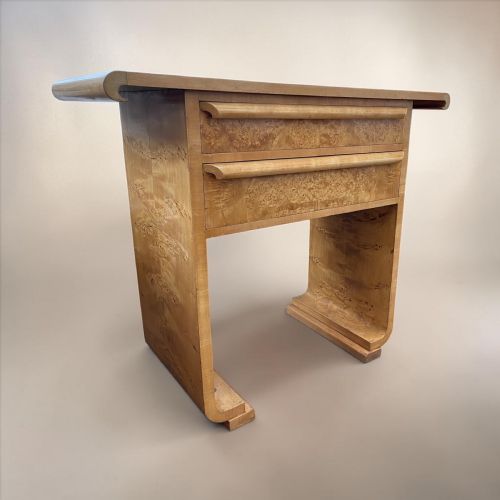
A maple console table appears across periods spanning the early nineteenth century through to Art Deco designs of the 1930s, taking the form of half-round side pieces, serving tables, and server units designed to stand against a wall.
The selection includes specific maker-attributed pieces alongside period examples in birds-eye maple, burr maple, and ebonised or walnut combinations, reflecting shifts from Regency elegance to twentieth-century geometric lines.
Buyers seeking a maple console table will encounter both dedicated console tables and versatile forms such as serving tables and half-round pier tables designed for compact hallway placement.
Judging quality
Quality rests in the choice and matching of the maple veneer, where symmetrical figuring and unbroken grain across the top elevate an example above plain timber construction.
Structural integrity of the carved or veneered base, the crispness of any applied ebonising or brass details, and the overall harmony of the proportions distinguish finer workshops from standard production.
Listings feature maple console tables paired with materials like brass, walnut, burr walnut, ebonised wood, mahogany, and marble tops.
Maple and Co·Maples of London·Fortnum and Mason·Gillows
The Maple Console Table Glossary
- Birds Eye Maple
- A figure in maple wood resembling tiny swirling eyes caused by local distortions in the grain growth. It is highly prized for decorative veneer work on tabletops.
- Console Table
- A table designed to be fixed or to stand flat against a wall, frequently supported by brackets or front legs. These tables often feature decorative friezes.
- Burr Maple
- The gnarled growth on a maple tree producing intricate, swirling grain patterns. Cabinet makers slice this timber into thin veneers for high-status furniture.
- Pier Table
- A specialised console table designed to fit against the wall space between two windows. They are frequently paired with matching wall mirrors.
- Ebonised Wood
- Timber treated with a dark stain or finish to imitate ebony. This technique provides sharp contrast against lighter maple or walnut veneers.
Maple Console Table: Frequently Asked Questions
Where should I place a console table?
A console table fits naturally in a hallway or entrance passage where floor space is limited. Its shallow depth allows it to sit against a wall without obstructing movement.
Positioning one beneath a mirror or a hall lamp creates a balanced display area. Dining rooms and living rooms also accommodate these tables well for serving or decorative purposes.
Are maple tables durable for daily use?
Maple is a dense and robust hardwood that withstands regular everyday use when properly maintained. Veneered surfaces require care to prevent deep gouges or moisture rings from standing liquids.
Tables constructed in the nineteenth and twentieth centuries demonstrate lasting structural stability. Placing the table away from direct heat sources prevents the wood and veneer from warping over time.
How can I date my console table?
Examine the construction methods, secondary woods used in the frame, and stylistic cues such as Regency curves or Art Deco geometry. Maker stamps and labels can provide precise attribution to workshops or retailers.
Compare the veneer grain patterns and decorative hardware with documented examples from specific periods. Wood ageing and patination also offer clues to the approximate decade of manufacture.