


Antique Black Wardrobe
An antique black wardrobe brings dramatic weight and deep monochrome presence to a bedroom, offering substantial hanging space wrapped in rich historical finish.
Antique Black Wardrobe
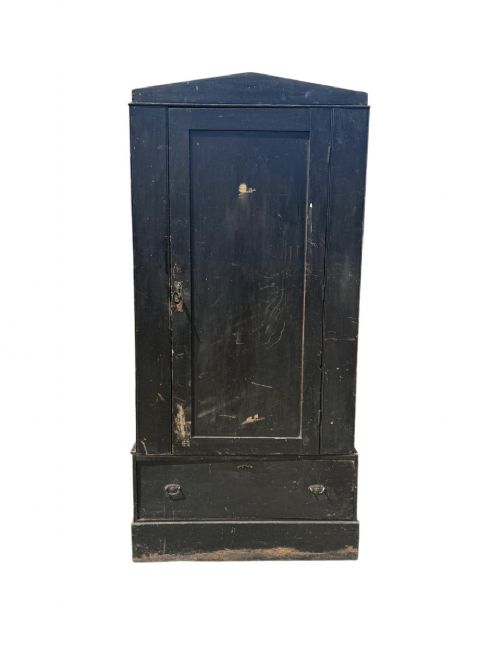
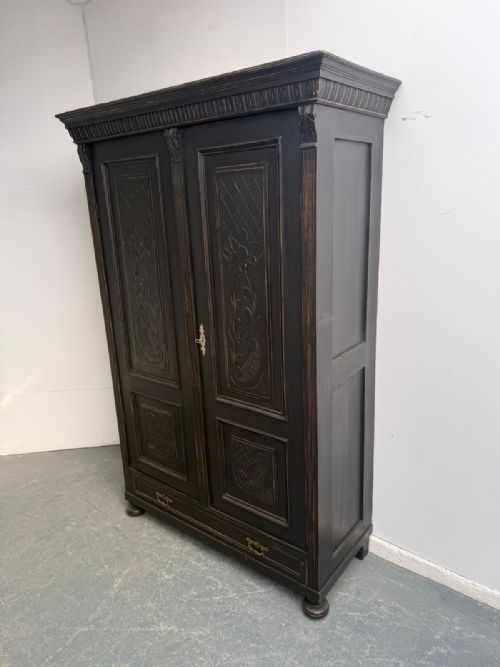
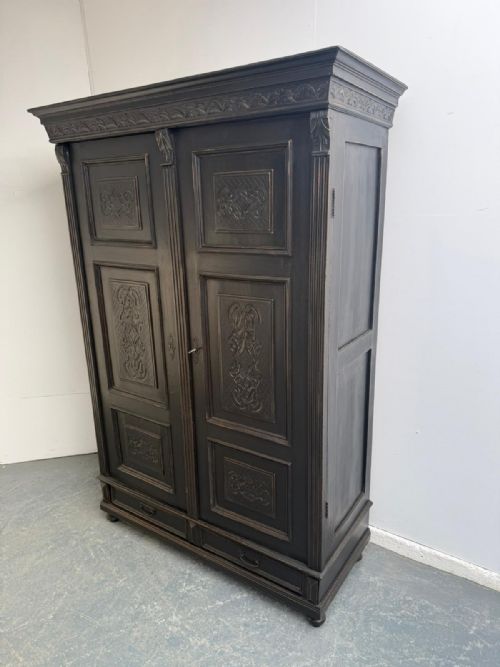
An antique black wardrobe encompasses tall storage pieces finished in dark paint, lacquer, or ebonised wood from the eighteenth, nineteenth, and early twentieth centuries. When searching for an antique black wardrobe, buyers encounter diverse regional interpretations ranging from English ebonised cupboards and Victorian bedroom suites to Hungarian painted pine hall pieces and Chinese lacquer compound cabinets.
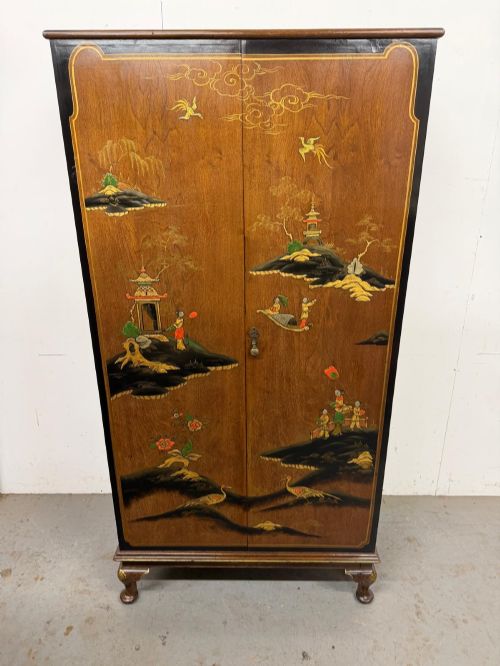
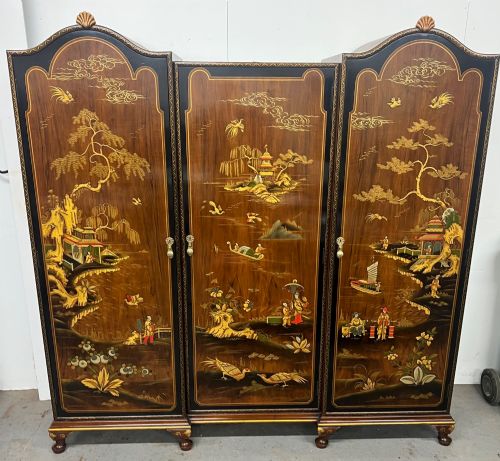
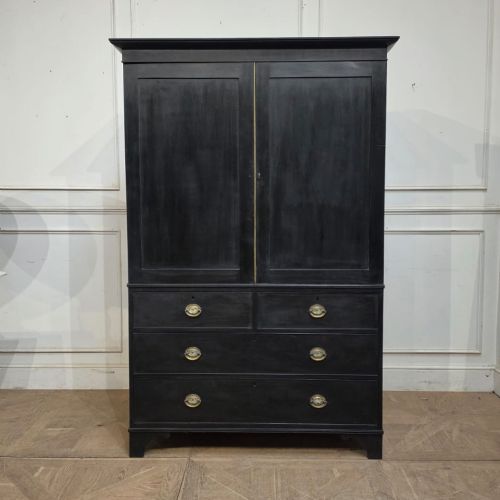
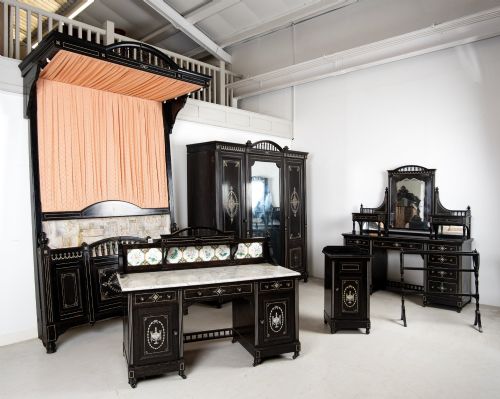
The selection on this page shows pieces spanning the Georgian era, the Victorian period, and the early twentieth century, including specialised compactums and linen presses. Many examples display distinct artistic movements such as Chinoiserie and the Victorian Aesthetic Movement, utilising contrasting gold leaf accents or intricate painted motifs against deep dark grounds.
Form follows function across these storage pieces, with single and double door wardrobes standing alongside multi-piece bedroom suites and specialised hall cupboards. Regional vernacular traditions also appear, notably in continental country painted pine and oak constructions alongside refined English cabinetwork.
Materials and construction techniques
Makers utilised solid timbers such as pine, oak, walnut, and exotic hardwoods as the foundational structure for these wardrobes, frequently applying paint, lacquer, or ebonising processes to achieve the characteristic dark surface. Brass hardware, including hinges, locks, and keyplates, provides functional contrast and structural reinforcement on doors and drawers.
Decorative techniques recorded in the evidence range from hand-applied black lacquer and gold leaf detailing in Chinoiserie traditions to folk art painting on Hungarian pine and oak. Ebonising involved treating cheaper or alternative woods to mimic expensive ebony, a common practice in nineteenth-century workshops.
Listings feature woods including pine, oak, walnut, and iron, finished with paint, lacquer, and gold leaf across the Victorian and eighteenth-century periods.
Distinguishing quality in dark-finished storage
Quality in these wardrobes rests upon the integrity of the underlying timber construction and the execution of the surface finish. Superior pieces demonstrate crisp joinery, well-fitted doors, and stable internal configurations that endure centuries of use without sagging.
The refinement of the decorative surface distinguishes finer examples, whether through the delicate depth of hand-painted Chinoiserie scenes with gold leaf or the careful preparation of ebonised and inlaid woodwork. Original painted surfaces and untouched patination carry higher regard among collectors than later repainting.
Maples & Co.
The Antique Black Wardrobe Glossary
- Ebonised
- Wood treated to resemble ebony by staining or painting it black. This finish gained immense popularity during the nineteenth century for furniture requiring a dramatic, uniform dark appearance.
- Chinoiserie
- European interpretations of Chinese and East Asian artistic traditions, frequently featuring raised motifs and gold leaf on black lacquer. It dominated fashionable interior decoration during various periods from the seventeenth century onward.
- Compactum
- A multi-functional wardrobe designed to maximise storage efficiency by combining hanging space, drawers, and shelving within a single footprint. These appeared frequently in the late nineteenth and early twentieth centuries.
- Linen Press
- A tall storage piece traditionally used for storing folded linens in the upper section and garments in the lower drawers. Many examples were later adapted for general wardrobe use.
- Lacquer
- A durable varnish made from natural resin or synthetic substitutes, applied in multiple polished layers to create a hard, glossy protective coating. Black lacquer finishes provided a prized canvas for decorative gilding.
Antique Black Wardrobe: Frequently Asked Questions
What is an antique black wardrobe?
An antique black wardrobe is a tall storage furniture piece finished in dark paint, lacquer, or ebonised wood, originating from periods spanning the eighteenth to the early twentieth centuries.
These pieces range from formal English ebonised cupboards and Chinoiserie cabinets to rustic Hungarian painted pine hall wardrobes.
How were antique black wardrobes used?
They served primarily for storing garments, linens, and personal belongings in bedrooms, hallways, and dressing rooms before built-in closets became standard.
Many included internal hanging rails, hooks, sliding shelves, or lower drawers to accommodate diverse types of historical clothing.
How do I fit an antique black wardrobe into a room?
An antique black wardrobe functions as a dominant anchor piece due to its dark visual weight, pairing well with neutral walls or contrasting light architectural details.
Careful measurement of ceiling height and doorway clearance is essential, as many older wardrobes are solid, non-demountable structures.
How do I tell different periods apart?
Periods are identified through a combination of construction techniques, wood choices, hardware styles, and decorative motifs such as Chinoiserie or Aesthetic Movement inlay.
Georgian and eighteenth-century pieces often display heavier proportions and regional vernacular details, whereas Victorian and early twentieth-century examples frequently utilise ebonising or fitted internal compartments.