
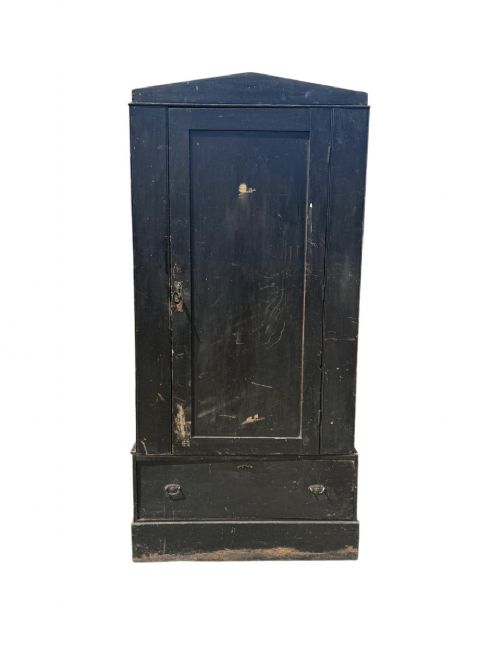
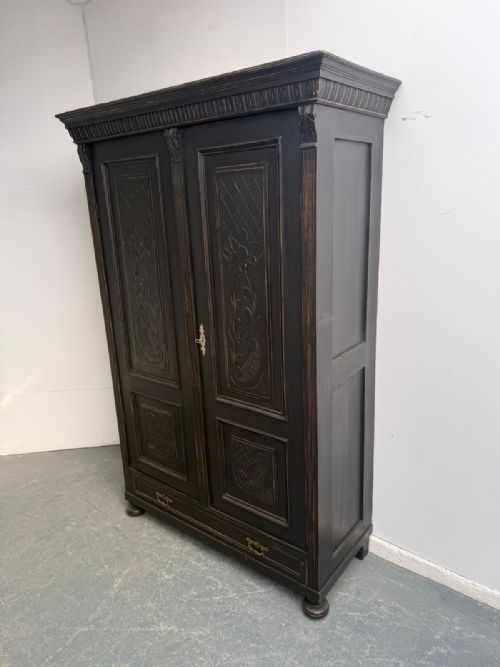

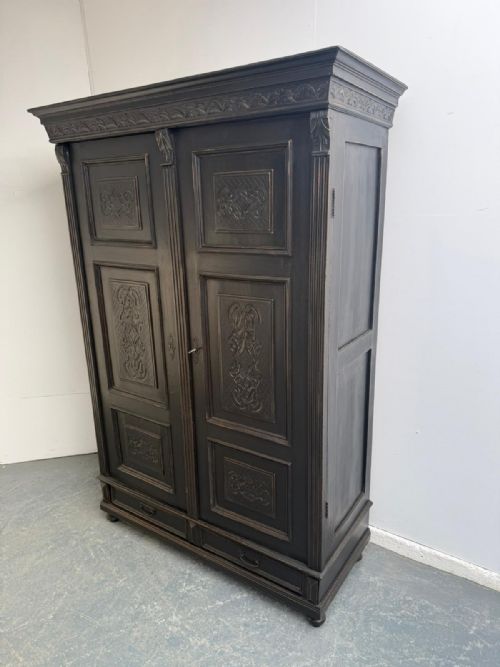


Rustic Black Cupboard
A rustic black cupboard brings deep, grounding tone and practical storage to a room, drawn from country workshops across Europe.
Rustic Black Cupboard
A rustic black cupboard unites everyday utility with the dark, painted finishes recorded in country houses and provincial homes. When you search for a rustic black cupboard, you meet substantial pieces built for storage, from bedside cabinets to large wardrobes and dresser bases.
The pieces on this page span the eighteenth and nineteenth centuries, including Victorian examples alongside continental folk art and English country furniture. Forms range from tall hall wardrobes and larder cupboards to smaller bedside units and bookcases.
Hungarian folk art traditions strongly represent this category, often combining pine and oak within a single painted piece. Other origins include English vernacular styles and Tuscan provincial work, reflecting diverse rural woodworking traditions.
Materials and construction
Makers relied on accessible regional timbers such as pine and oak for the primary carcase and structural elements. These woods provided the necessary strength for hardworking furniture designed for domestic storage.
Surfaces received layers of dark paint, which served to protect the timber while establishing the distinctive monochromatic aesthetic. Iron hardware and occasionally ceramic details completed the construction, securing doors and drawers for daily use.
Bread, cheese, and heavy linens found a safe, dark haven inside these sturdy provincial cupboards long before modern pantries existed.
Judging quality in country painted furniture
Quality rests in the integrity of the timber framing and the character of the surface finish. Pieces that retain their original structural proportions and honest joinery stand apart from heavily altered examples.
The depth and patina of the dark painted surface contribute significantly to the visual weight of the piece. Subtle signs of age in the paint layer demonstrate a genuine history of use rather than recent embellishment.
The Rustic Black Cupboard Glossary
- Pine
- A soft timber widely used in country furniture for its workability and availability. It formed the carcase of many provincial cupboards and wardrobes before receiving a painted finish.
- Oak
- A durable hardwood utilised alongside pine in regional furniture for structural strength and panels. It offers resistance to wear in heavy-use items such as hall wardrobes.
- Folk art
- Decorative styles and techniques rooted in rural communities rather than formal urban workshops. It encompasses the painted and carved details found on continental cupboards.
- Vernacular
- Architecture and furniture built by local craftsmen to local needs using regional materials. These pieces prioritise practical function over high-style academic design.
Rustic Black Cupboard: Frequently Asked Questions
What rooms suit a rustic black cupboard?
These pieces provide substantial storage that functions well in hallways, bedrooms or dining spaces. Their dark painted surfaces anchor a room and contrast effectively against lighter walls.
Larger items like larder cupboards and wardrobes manage kitchen or clothing storage, while smaller bedside cabinets fit beside a bed.
How do I care for painted country furniture?
Keep painted wooden furniture away from direct heat sources and strong sunlight to protect the finish and timber. Dust gently with a dry or slightly damp cloth.
Avoid harsh chemical cleaners that can damage historic paint layers and patination.
How can I tell nineteenth century pieces apart?
Nineteenth-century items often show machine-sawn timber elements alongside traditional hand-planed surfaces. Fasteners and hinge types also help indicate the period of manufacture.
Regional styles, such as English country or Hungarian folk art, display distinct construction habits that separate them from one another.
Were these cupboards always painted black?
Many country pieces received multiple coats of paint over their lifespan for protection or redecoration. Black and dark finishes were common in continental folk traditions to seal and unify different timbers.
Some pieces combine pine and oak, making a dark painted finish a practical choice to bring visual harmony to mixed woods.