
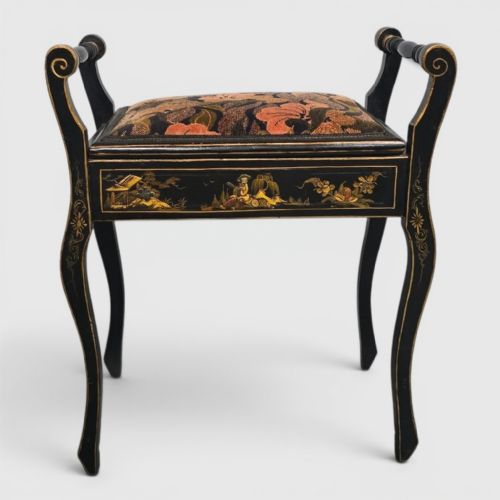
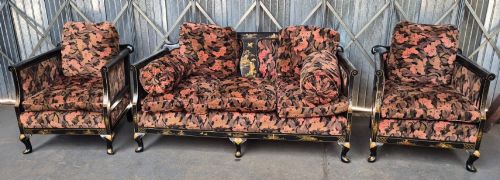
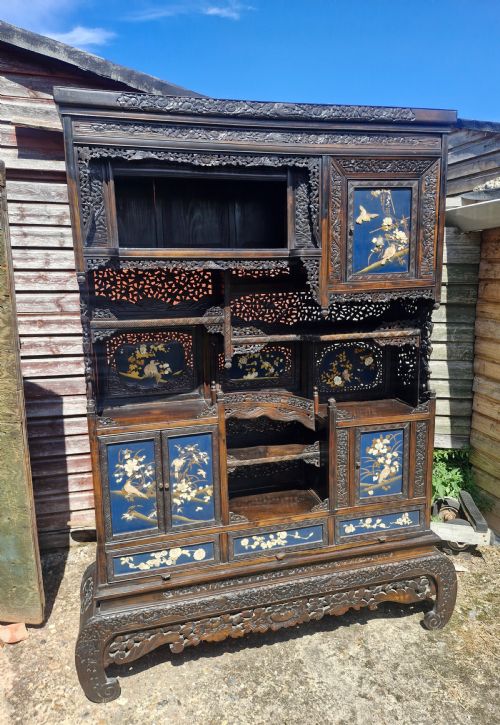
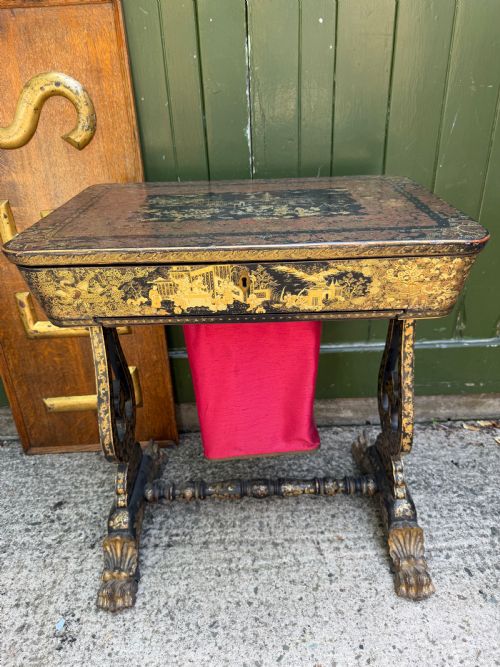
Antique Black Lacquer Furniture
Antique black lacquer furniture brings striking surface depth and intricate narrative scenes into a room through centuries-old decorative traditions.
Antique Black Lacquer Furniture
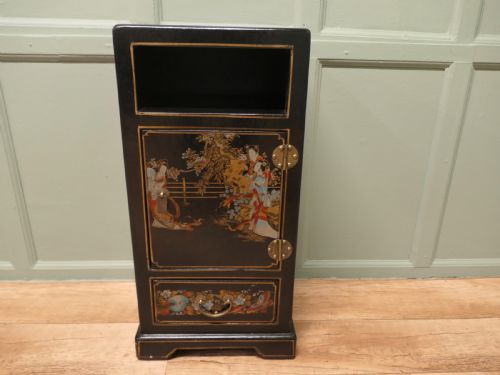
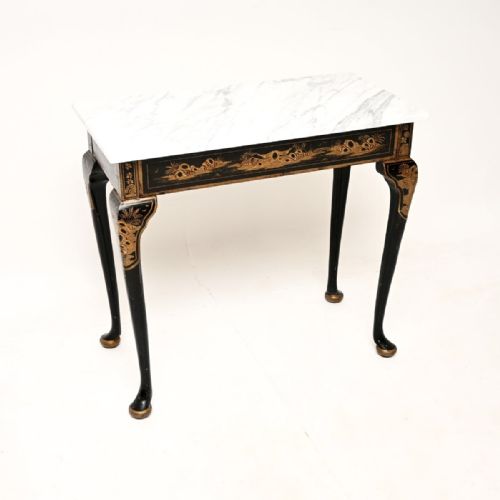
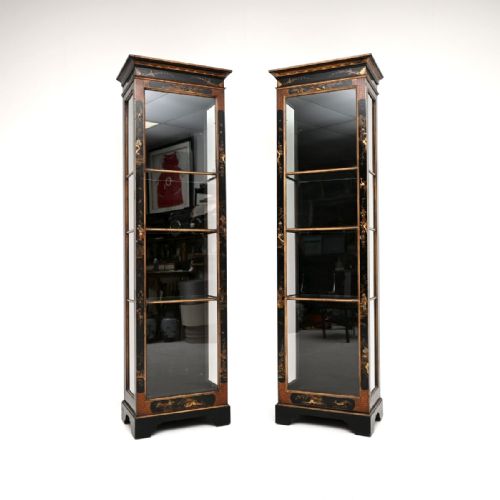
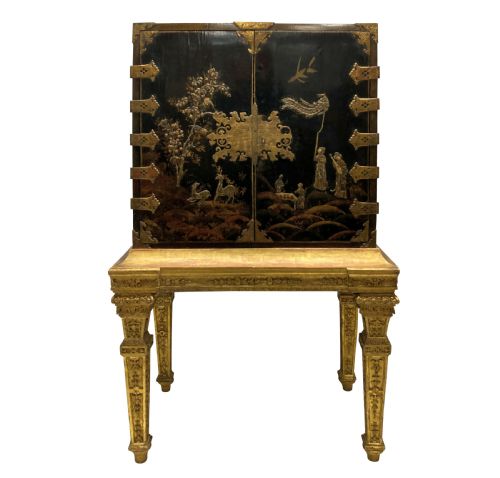
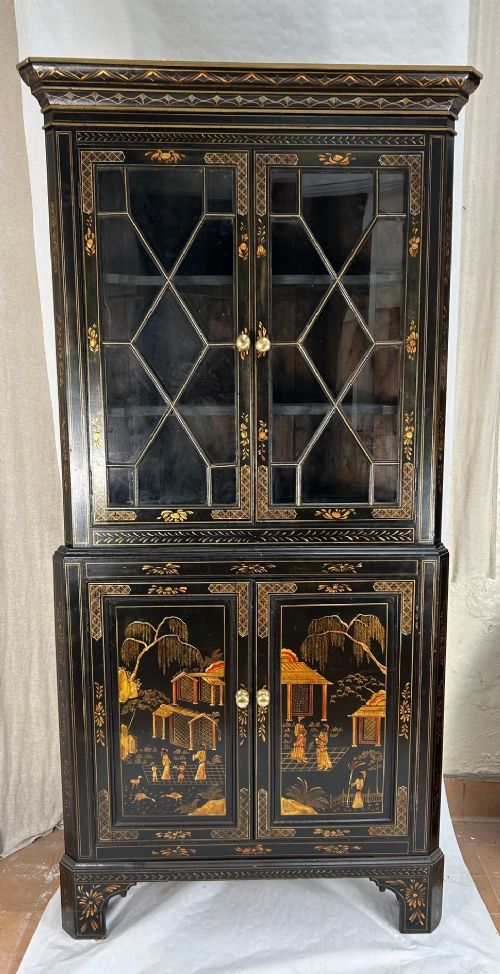
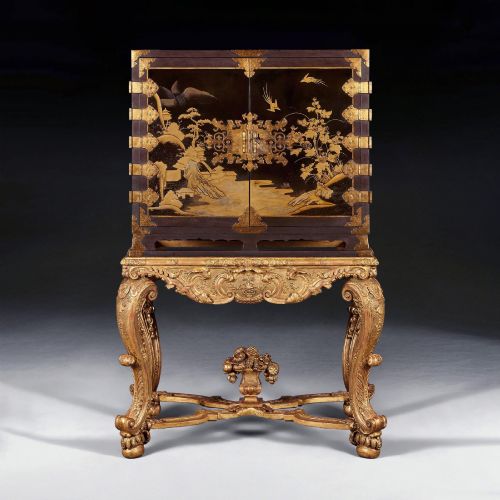
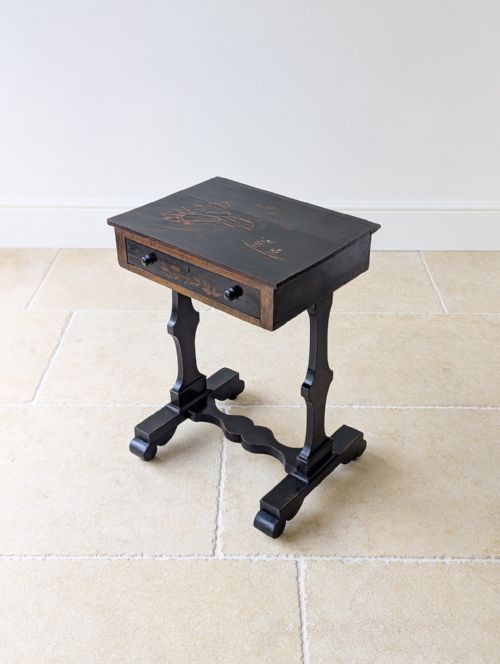
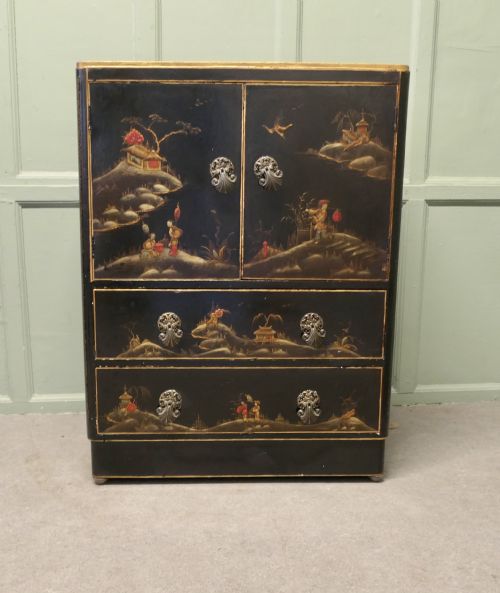
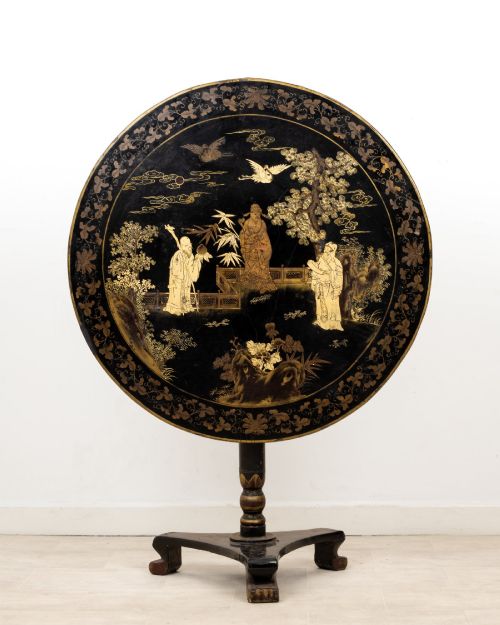
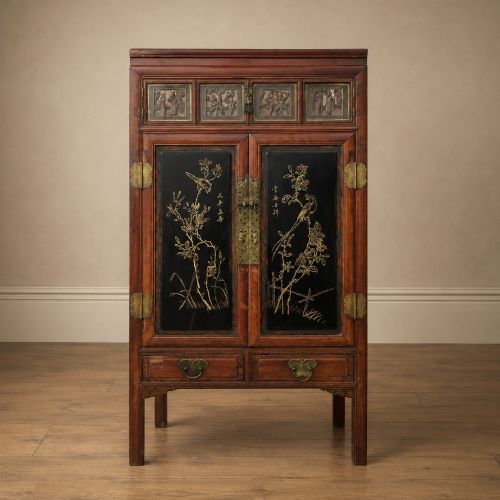
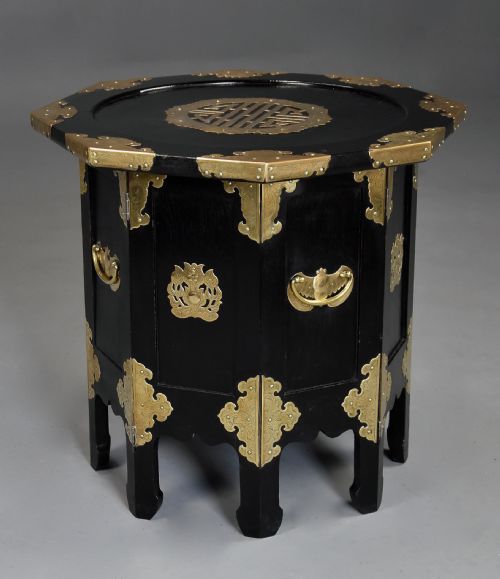
When searching for antique black lacquer furniture, buyers encounter a diverse selection of storage and display pieces including cabinets on stands, side tables, corner cupboards, and occasional tables. These items span periods from the seventeenth century through to the early twentieth century, incorporating regional aesthetics from English adaptations to Chinese export pieces.
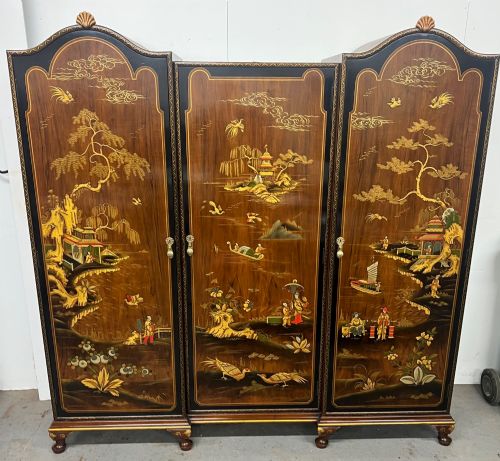
The most common examples on this page are Edwardian and Victorian creations alongside nineteenth-century Chinese export items. These range from functional side cabinets and tray tables to elaborate display units and work tables decorated with oriental motifs.
Forms vary from compact occasional tables to large storage cabinets and multi-tiered pieces. Each item reflects the persistent European and domestic fascination with dark glossy surfaces and narrative ornamentation.
How they were made
The construction of these items relies on solid wood foundations, sometimes including ebonised timber, bamboo, or papier-mâché, finished with layered lacquer. Artisans applied successive coats of resin to achieve a deep, reflective black sheen.
Decoration frequently incorporates gold leaf, gilt, and brass mounts to highlight the pictorial scenes. Many pieces utilise traditional Chinoiserie techniques, depicting figures, landscapes, and pavilions rendered in raised or flat metallic pigments upon the dark ground.
Materials recorded across the selection include lacquer, wood, brass, gold leaf, gilt, ebonised wood, and glass.
What varies in quality
The division between standard examples and exceptional pieces rests upon the finesse of the surface ornamentation and the depth of the lacquer finish. Superior items display meticulous hand-painted detail and finely executed gilt work that remains crisp and vibrant across the panels.
Structural integrity and the retention of original decorative schemes also dictate the standing of a piece. Examples that retain their authentic stands, original hardware, and unblemished surfaces represent the upper echelon of surviving workmanship.
Maples & Co.
The Antique Black Lacquer Furniture Glossary
- Chinoiserie
- European decorative style reflecting Chinese artistic influences, popular in furniture decoration from the seventeenth century onwards.
- Japanning
- European imitation of East Asian lacquerwork, created by applying layers of varnish and metallic dust to a wooden base.
- Cabinet on Stand
- A tall storage enclosure mounted upon a separate, often elaborately carved or gilded supporting base.
- Ebonised Wood
- Timber treated with stain or paint to imitate the dark, dense appearance of ebony wood.
- Chinese Export
- Goods manufactured in China specifically for Western markets, often combining traditional local craftsmanship with European forms.
Antique Black Lacquer Furniture: Frequently Asked Questions
What is the difference between Chinoiserie and Japanning?
Chinoiserie refers to the overarching European decorative style that imitates Chinese artistic motifs, appearing on textiles, ceramics, and furniture.
Japanning is the specific European technique used to simulate Asian lacquerware through layered varnishes, heat curing, and painted metallic decorations.
Where were these pieces originally used?
Many of these items served practical and decorative functions in formal reception rooms, drawing rooms, and studies of grand homes.
Cabinets and coppers stored precious items or documents, while occasional tables and work desks provided functional surfaces for writing and needlework.
How can I tell the period of a lacquer cabinet?
Examine the underlying furniture form, hardware fixings, and construction methods, which usually correspond to known stylistic periods like the Victorian or Edwardian eras.
European interpretations often follow the prevailing furniture styles of their decade, while export pieces reflect specific Qing Dynasty or nineteenth-century manufacturing traits.