

Antique Black Credenza
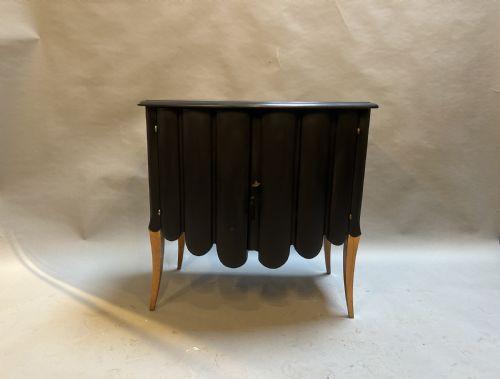
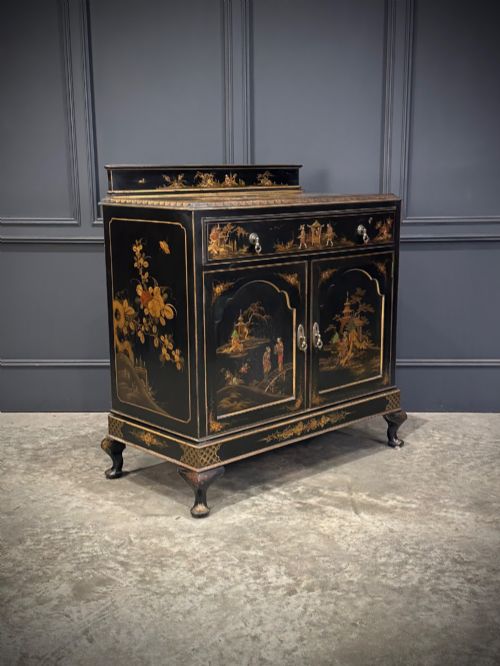
An antique black credenza brings dark timber, gilt mounts and glazed doors together to anchor a room with nineteenth-century presence.
Antique Black Credenza
When you search for an antique black credenza, you encounter low-profile storage furniture designed for formal reception rooms, often taking the form of side cabinets, pier cabinets or breakfront credenzas. These pieces date principally from the Victorian era and the nineteenth century, though earlier eighteenth-century examples and later twentieth-century styles also appear.
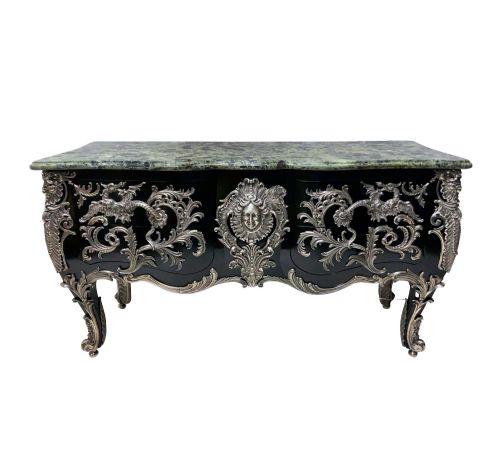
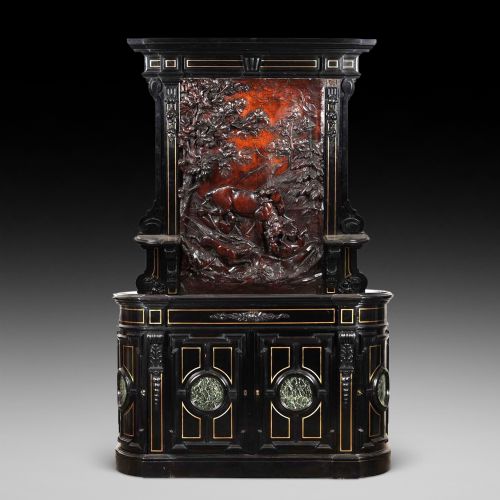
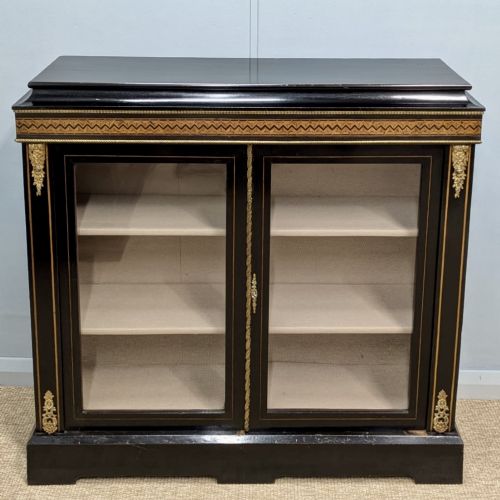
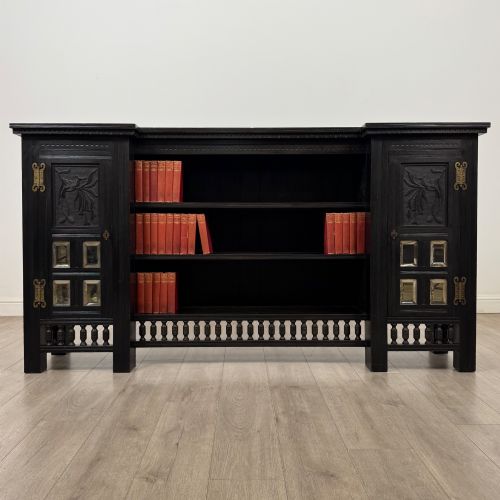
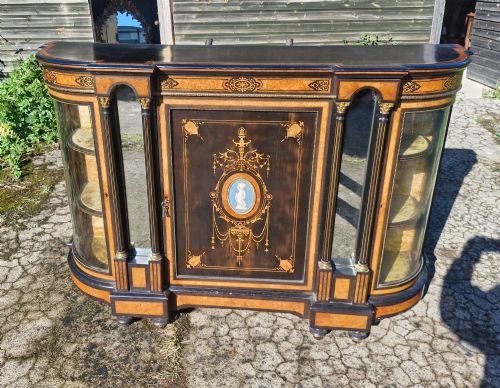
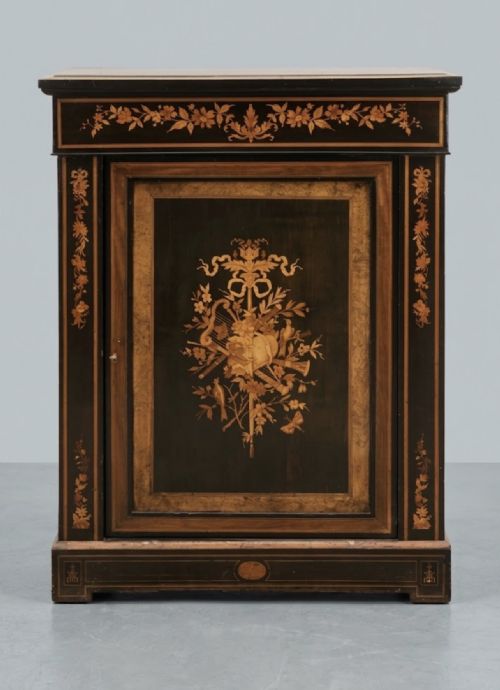
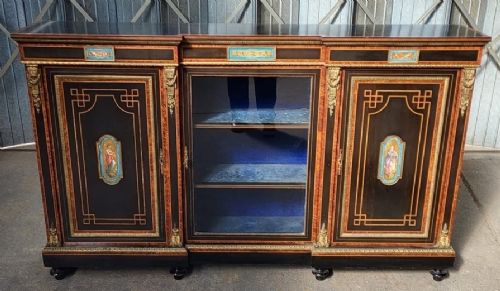
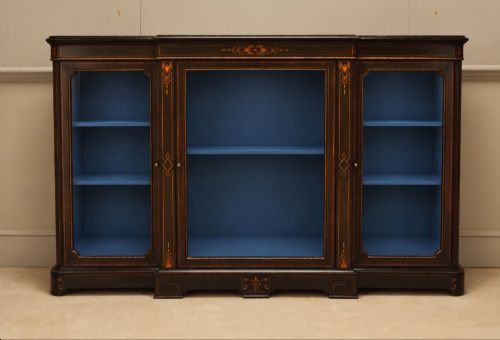
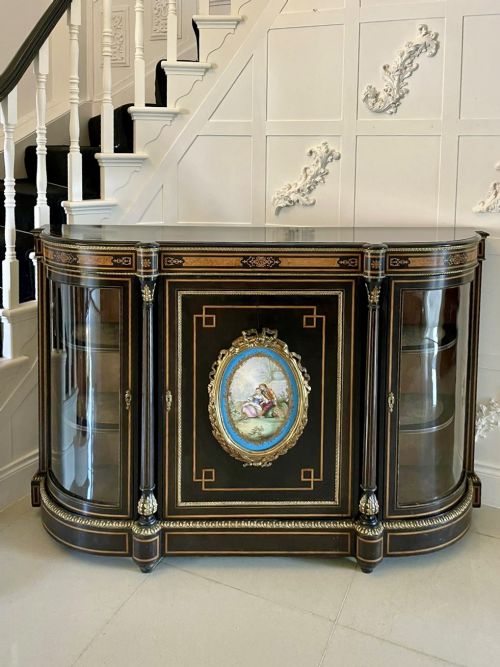
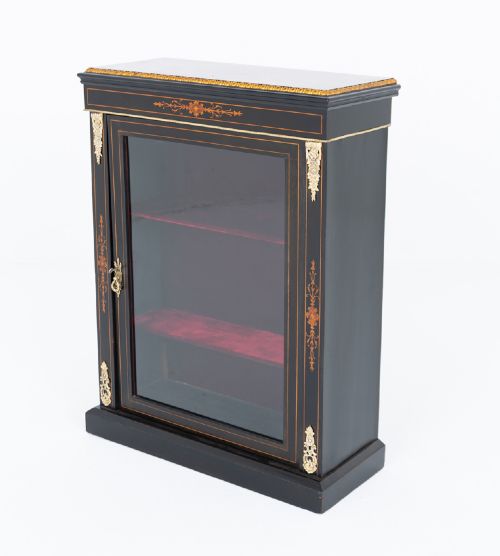
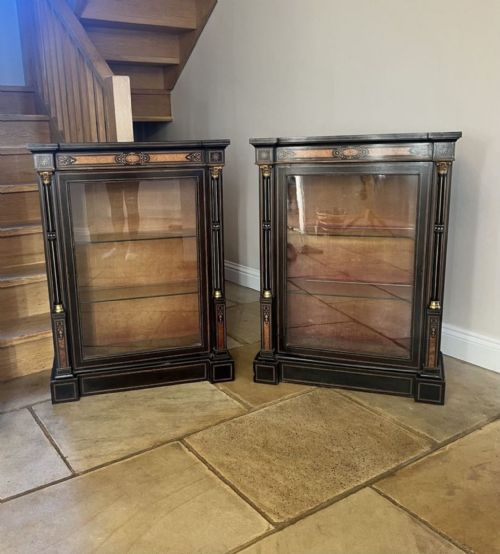
The most common examples on this page are Victorian ebonised pieces featuring three doors or glazed central sections, frequently decorated with marquetry inlay or mounted with porcelain plaques. French Napoleon III designs and English aesthetic movement variations recur regularly among these listings.
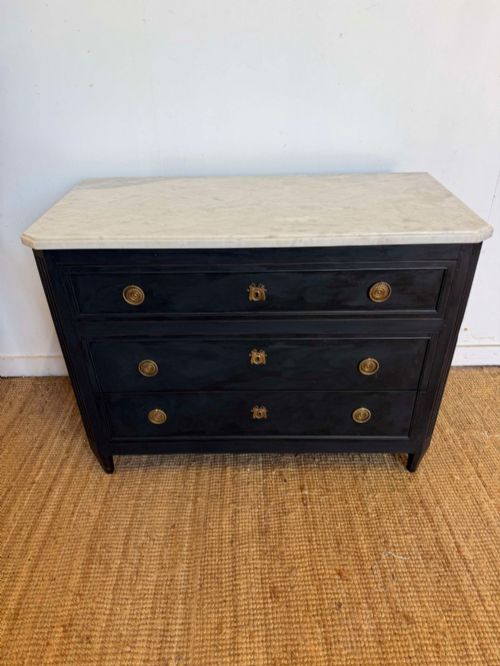
Lower formats designed to stand against drawing room walls blend display functions with closed cupboard storage. The proportions generally remain low and wide, often surmounted by white or dark marble tops.
Materials and construction methods
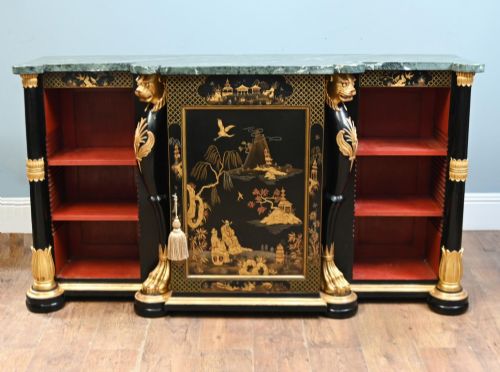
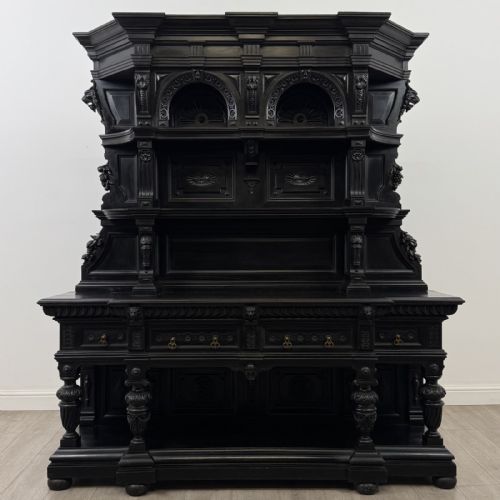
The foundational wood is typically timber treated with ebonising to achieve a dense black finish, alongside natural black walnut, amboyna and ebony. Cabinet makers applied these dark surfaces as a foil for intricate brass marquetry, boullework and painted lacquer.
Decoration relied heavily on cast ormolu mounts, gilt-metal fittings and porcelain plaques inset into the timber doors and friezes. Glazed panels framed in brass beadwork protected displayed porcelain and books within the primary compartments.
Antique Black Credenza Retail Price Guide 2026
Typical asking prices for black credenza among the pieces listed under this phrase on Sellingantiques today, from the lower quarter to the upper quarter. They describe what is for sale here now, not the wider market.
Some nineteenth-century music cabinets quietly disguised sheet music storage behind stately ebonised and marquetry doors.
Assessing quality and craftsmanship
Quality reveals itself in the precision of the brass inlay and the crispness of the cast ormolu mounts rather than the mere presence of ornamentation. Finer cabinets employ meticulously cut tortoise-shell and brass boullework set flush into the ebonised timber surface.
The integrity of the structural carcass, the thickness of the marble top and the depth of the hand-applied black finish distinguish superior workshop production from simpler commercial output.
Garnett & Sons·KRIEGER of Paris
The Antique Black Credenza Glossary
- Ebonised wood
- Timber treated with stain, dye or polish to imitate solid ebony. This dark finish became immensely popular during the Victorian period for formal display furniture.
- Ormolu
- Gilded bronze mounts applied to the corners, friezes and feet of cabinets. The technique provides metallic contrast against dark ebonised surfaces.
- Boullework
- Marquetry technique utilising brass and tortoise-shell inlaid in elaborate scrolling patterns. It originates from French cabinet making traditions of the seventeenth century.
- Pier cabinet
- A narrow display cabinet specifically proportioned to fit the wall space between windows. These pieces often feature glazed doors and velvet-lined interiors.
- Marquetry
- Decorative veneer applied to furniture in geometrical or pictorial patterns. Craftsmen utilised various exotic timbers to create contrasting motifs across the cabinet doors.
Antique Black Credenza: Frequently Asked Questions
Where did people place a credenza?
These cabinets stood against principal drawing room walls, often between tall windows or beneath large mirrors to reflect light.
Their low proportions allowed the flat top surface to hold decorative porcelain, lamps or collected objects without obscuring wall art.
How do I clean ebonised wood?
Dusting with a dry, soft lint-free cloth preserves the dark polish without harming the underlying timber finish.
Avoid liquid furniture polishes containing silicone, which can build up over nineteenth-century wax surfaces and dull the lustre.
What is the difference between a credenza and a pier cabinet?
A credenza is typically a wide, low sideboard or cabinet featuring three or more doors designed for central wall placement.
A pier cabinet is a much narrower, single-door display piece built specifically for the restricted wall space between two windows.
Are marble tops original to these cabinets?
Many nineteenth-century French and Victorian cabinets were constructed specifically to carry heavy white or dark marble slab tops.
These stone surfaces provided a durable, cooling platform for serving items or displaying heavy bronze and porcelain ornaments.