


Antique Black Armchairs
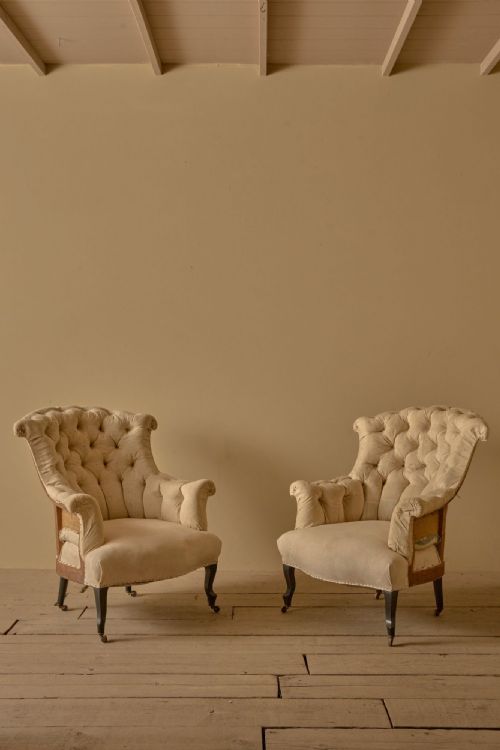
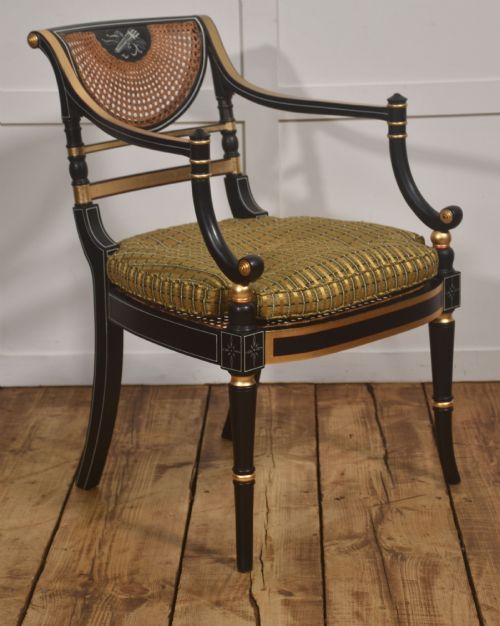
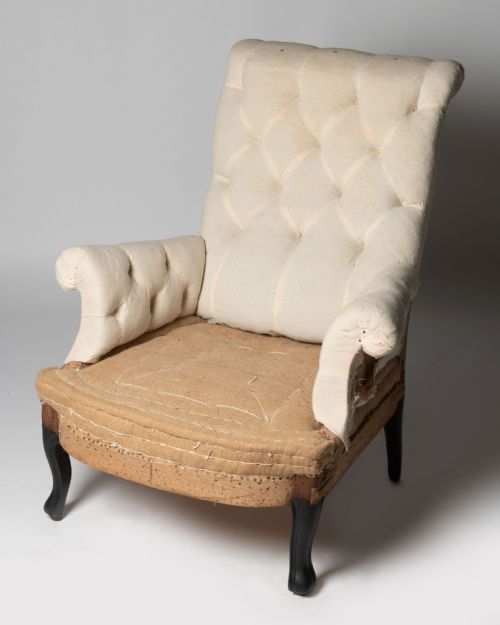
These antique black armchairs range from Regency ebonised library seats to Victorian painted designs, offering striking dark finishes and traditional craftsmanship.
Antique Black Armchairs
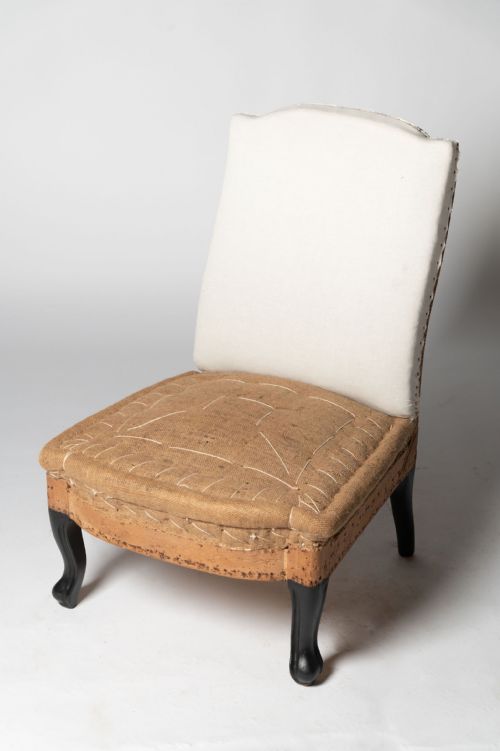
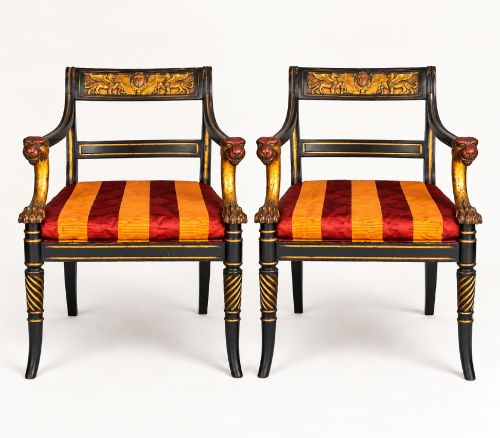
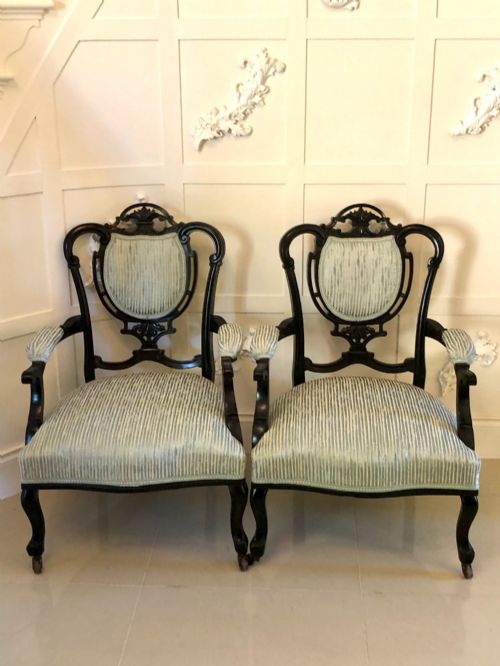
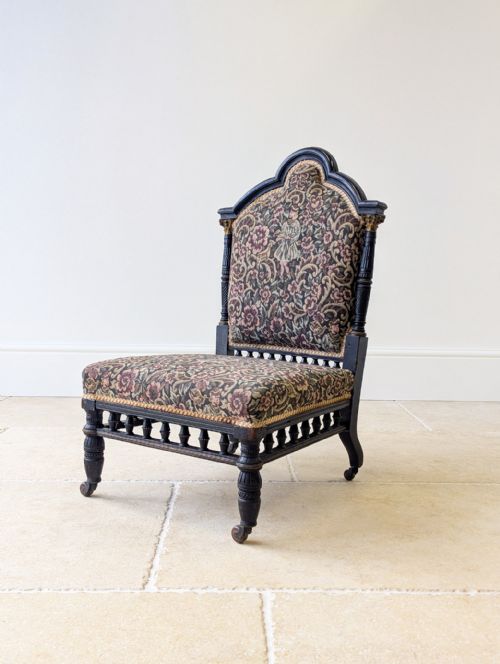
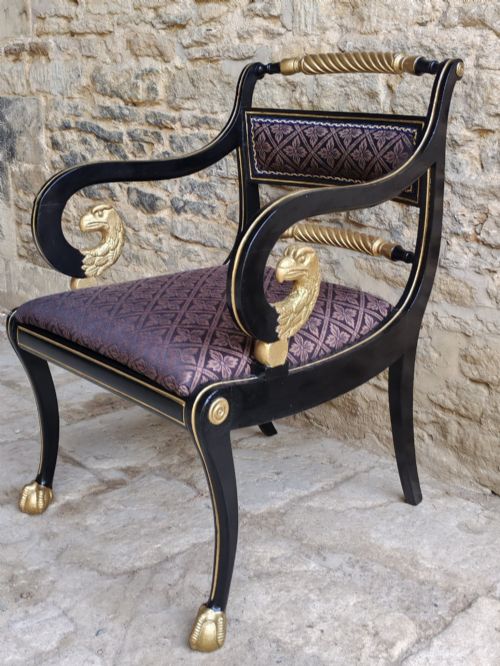
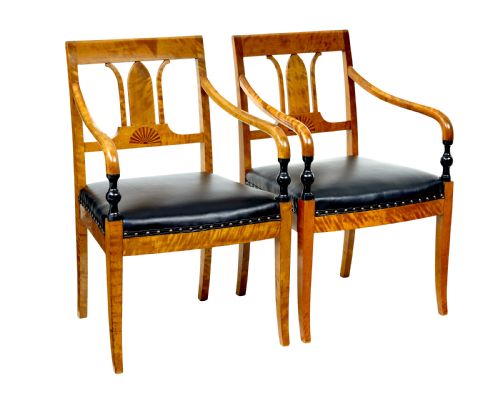
Antique black armchairs encompass a wide variety of seating forms, including library armchairs, desk chairs, salon chairs, rocking chairs, corner chairs, and elbow chairs. These pieces span periods from the Regency era through the Victorian years into the early 20th century.
The materials contributing to the dark appearance include ebonised wood, black lacquer, painted surfaces, ebony, and blackwood. Alongside these frames, buyers encounter seating upholstered in leather, cane, fabric, and bergere.
Stylistic influences vary significantly, taking shape as Regency, Victorian, Aesthetic Movement, Gothic Revival, Chinoiserie, and Anglo-Indian designs. Pieces originate from English, French, Ceylonese, Chinese, and Scandinavian makers.
Materials and construction
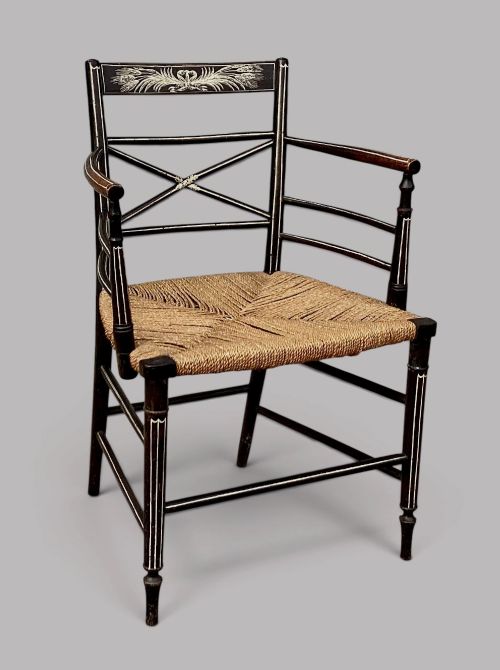
Makers utilised solid timbers such as mahogany, oak, beech, birch, and exotic hardwoods like ebony and blackwood, often applying ebonising, black lacquer, or dark paint to achieve the signature finish. Frames frequently display carved details, turned components like bobbin turnings, pierced splats, or gilt highlights.
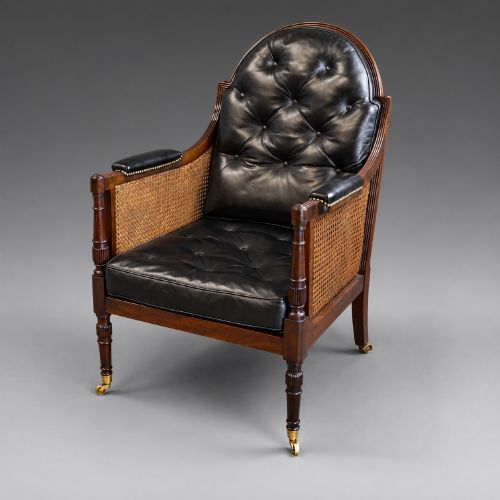
Upholstery methods paired these dark wooden frames with studded leather, woven cane, or textured fabric inserts. Structural integrity relied on traditional joinery suited to the specific form, whether a revolving desk chair, a low salon seat, or a substantial library armchair.
Antique Black Armchairs Retail Price Guide 2026
Typical asking prices for black armchairs among the pieces listed under this phrase on Sellingantiques today, from the lower quarter to the upper quarter. They describe what is for sale here now, not the wider market.
Listings feature periods spanning the Regency era, Victorian years, and early 20th century, utilising materials from mahogany and oak to cane, leather, and ebonised wood.
Distinctions in craftsmanship
Quality separates through the refinement of the carved details, the execution of the ebonising or paint finish, and the selection of timber. Pieces utilising solid ebony or finely carved blackwood demonstrate a higher standard of material than standard woods given a black surface treatment.
The integrity of the frame construction and the preservation of original elements, such as early leather, cane, or paint, define the standing of individual examples. Attribution to documented makers or workshops also elevates the stature of specific chairs.
Morris & Co·Philip Webb·Hindley & Sons·Gillows·W.Williamson & Sons
The Antique Black Armchairs Glossary
- Ebonised wood
- Timber treated with a stain, dye, or finish to imitate true ebony. This technique was widely utilised during the Victorian and Aesthetic Movement periods.
- Bergere
- An enclosed upholstered armchair with a wooden frame where the back and sides typically feature cane work. It frequently appears in Regency and later styles.
- Cockpen chair
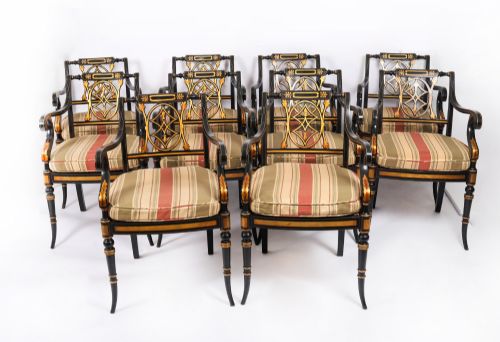
- A chair featuring a distinctive Chinese Chippendale open lattice grid pattern in the back. Examples appear in Edwardian and early 20th-century listings.
- Library armchair
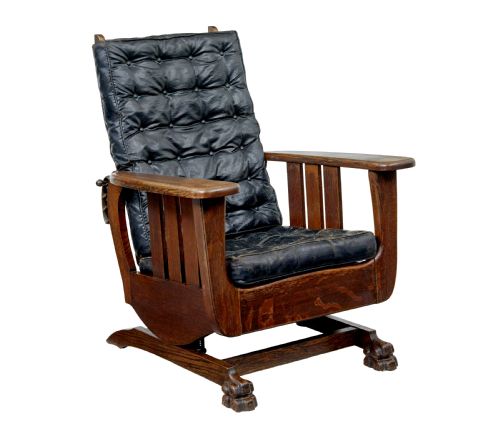
- A substantial, comfortable seat designed for reading rooms, often upholstered in leather and constructed from mahogany, oak, or ebonised wood.
- Bobbin corner chair
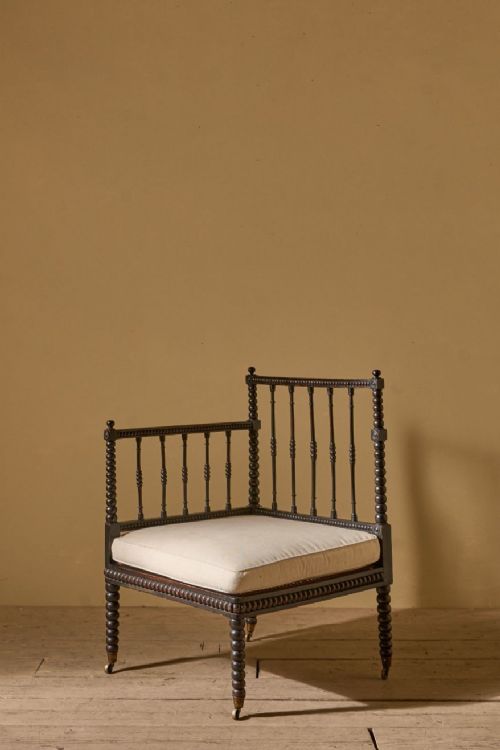
- A corner seating form constructed with turned bobbin components resembling a string of spools. This style is found in 19th-century pieces.
Antique Black Armchairs: Frequently Asked Questions
What is an ebonised armchair?
An ebonised armchair is a wooden seat treated with a dark finish to mimic the appearance of expensive ebony timber. This method gained popularity during the 19th century, particularly within Victorian and Aesthetic Movement furniture.
These chairs feature frames made from beech, mahogany, or other timbers finished in deep black, sometimes accented with gilding or carved details. They served as stylish seating in parlours, libraries, and drawing rooms.
How do I identify a Regency black armchair?
Regency black armchairs typically display the neat proportions, sabre legs, and classical lines characteristic of the early 19th century. They often feature ebonised or painted wooden frames paired with cane work or upholstered seats.
Look for refined turned components and restrained decorative carving rather than the heavier ornamentation seen in later Victorian designs. Many examples from this period function as library or elbow chairs.
Where were antique black lacquer chairs made?
Antique black lacquer and dark wood chairs originate from various global traditions, including English workshops, French cabinet makers, and Asian export production. Ceylonese and Indian makers also produced substantial ebony and blackwood armchairs during the 19th century.
European makers adapted these dark finishes to local styles like Regency, Gothic Revival, and Chinoiserie. This international exchange resulted in diverse forms ranging from salon chairs to heavy library seats.
How should I care for leather and wood?
Preserving these chairs involves maintaining the dark wooden frames with appropriate wax polish while protecting any leather or fabric upholstery from direct sunlight. Regular dusting prevents particle buildup in carved crevices and ebonised surfaces.
Avoid placing antique seating near heat sources that could dry out timber or crack aged leather surfaces. Gentle, periodic maintenance helps preserve the original finish and structural stability of the frame.