



Antique Bird Bronze Vessel
An antique bird bronze vessel brings sculptural weight and intricate avian detail into a room, making it a focal point for any mantel or table.
Antique Bird Bronze Vessel
When searching for an antique bird bronze vessel, buyers encounter heavy cast metal objects shaped as vases, jardinières, bowls, urns and incense burners. These pieces originate predominantly from the Meiji period in Japan and the Qing dynasty in China, dating from the nineteenth and early twentieth centuries.
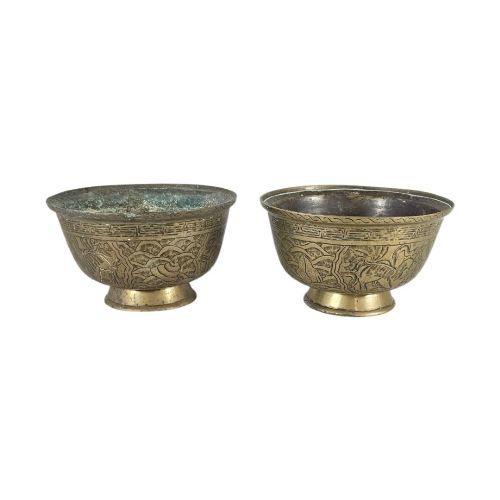
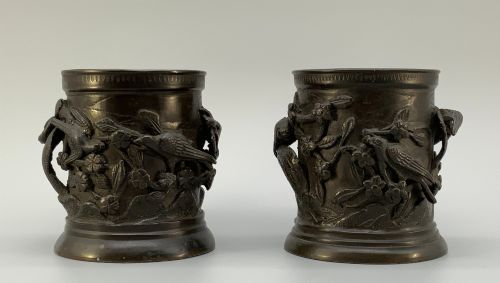
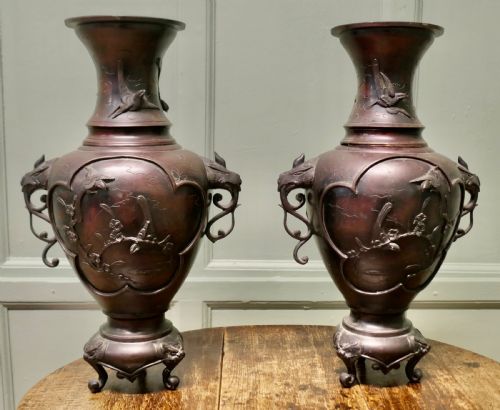
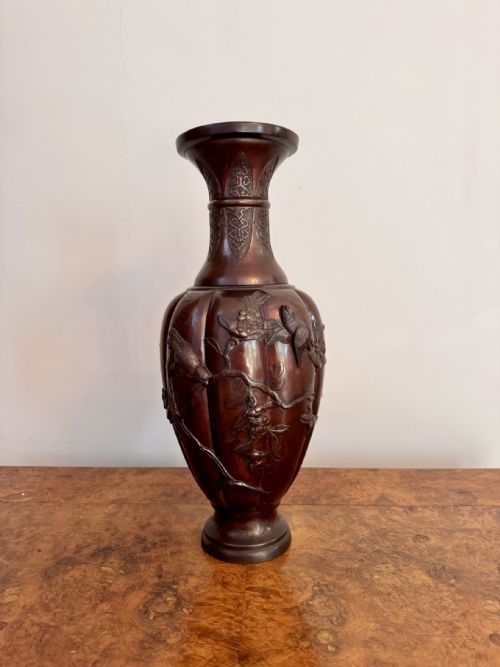
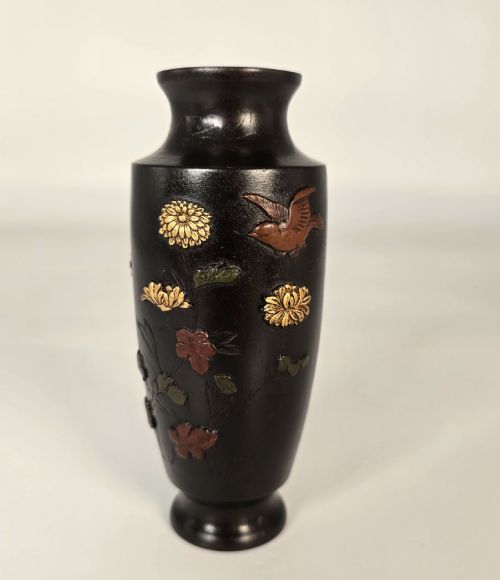
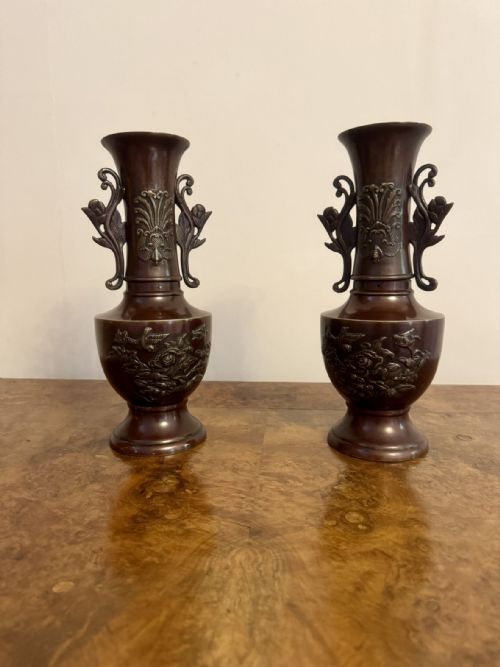
The most common examples on this page are pairs of Japanese Meiji bronze vases, often featuring raised details of birds, blossom and floral motifs. Alongside these stand larger Chinese bronze bowls and altar pieces adorned with similar avian themes.
Materials and construction methods
These metalwork items rely primarily on cast bronze, brass and copper, sometimes enhanced with patinated surfaces that darken or colour the metal organically. Artisans applied mixed metal techniques, incorporating silver, gold inlay, enamel and cord to accentuate the feathers and wings of the birds.
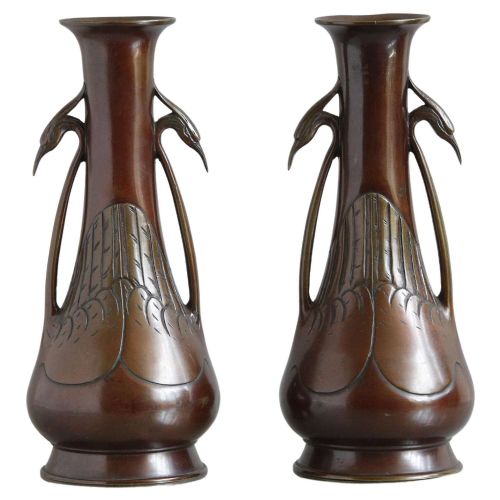
Details such as egret handles and raised floral motifs were cast separately or applied directly onto the body of the vessel. The heavy weight of these pieces reflects the substantial amounts of metal poured into moulds during the nineteenth century.
The listings show items spanning the Victorian era, the Meiji period, and the late Qing dynasty, executed in bronze, brass, and copper.
Measures of craftsmanship
Quality rests in the crispness of the casting and the precision of the mixed metal inlay work depicting birds and foliage. Superior examples display deeply chiselled surface details and harmonious proportions between handles, body and base.
The finish of the dark patina and the integration of added silver or gold elements distinguish standard production items from exceptional decorative vessels. Heavier, well-balanced forms show greater ambition from the foundry.
The Antique Bird Bronze Vessel Glossary
- Patinated bronze
- Bronze that has been chemically treated to alter its surface colour, usually producing rich brown, green or dark tones. This process protects the underlying metal and adds visual depth.
- Meiji period
- The era in Japanese history spanning from 1868 to 1912, noted for a surge in decorative metalwork destined for export. Pieces from this time frequently incorporate naturalistic bird and flower designs.
- Jardinière
- A large decorative pot or planter designed to hold growing plants rather than cut stems. They often sit on low bases and feature substantial weight.
- Cloisonne enamel
- A technique where enamel paste is applied within compartments created by soldered wire on a metal base. It appears on hanging vessels and decorative items.
- Koro
- A traditional Japanese incense burner typically featuring a pierced lid to allow scented smoke to escape. These often stand on small feet and incorporate animal handles.
Antique Bird Bronze Vessel: Frequently Asked Questions
What is an antique bird bronze vessel used for?
These items were created primarily as decorative ornaments, flower holders, or ceremonial altar pieces in Chinese and Japanese interiors.
Today, buyers place them on side tables, mantels, or display cabinets to add sculptural form and historical character to a room.
How do I date a Japanese Meiji bronze?
Dating relies on stylistic markers associated with the Meiji period between 1868 and 1912, alongside specific reign marks or supporting documentation.
Surface patination and the complexity of mixed metal details also provide strong clues regarding the exact decades of manufacture.
How should I clean my bronze vessel?
Maintenance requires only a gentle dusting with a soft, dry cloth to preserve the original surface patination.
Harsh chemical polishes or modern cleaning agents should be avoided because they strip away the historical oxidation that gives the metal its character.
Are these vessels Chinese or Japanese?
The listings encompass both traditions, with Chinese pieces often linked to the Qing dynasty and Japanese items originating from the Meiji era.
Motifs and casting styles help distinguish between the two regional aesthetics.