
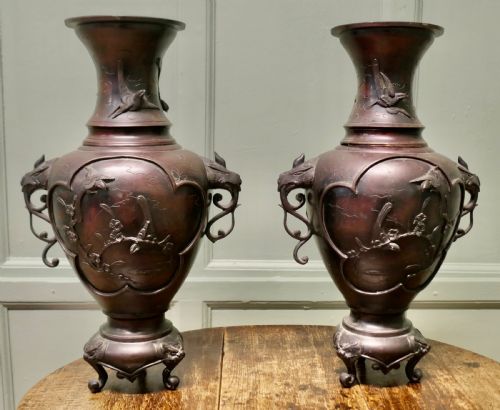
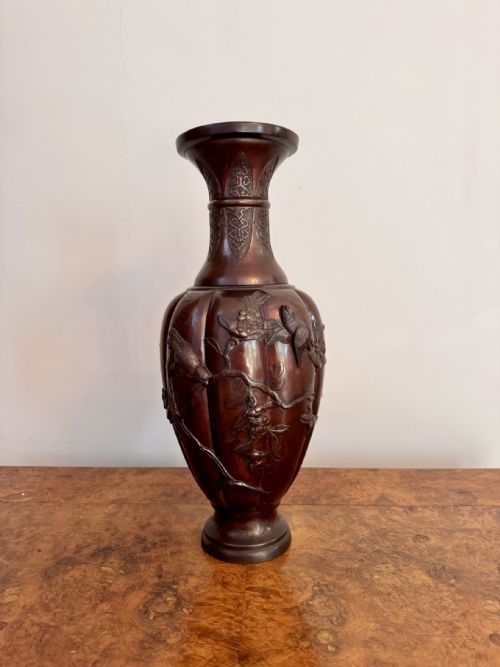
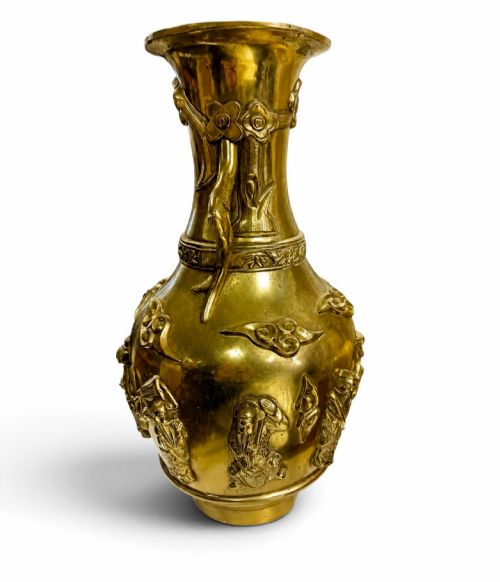

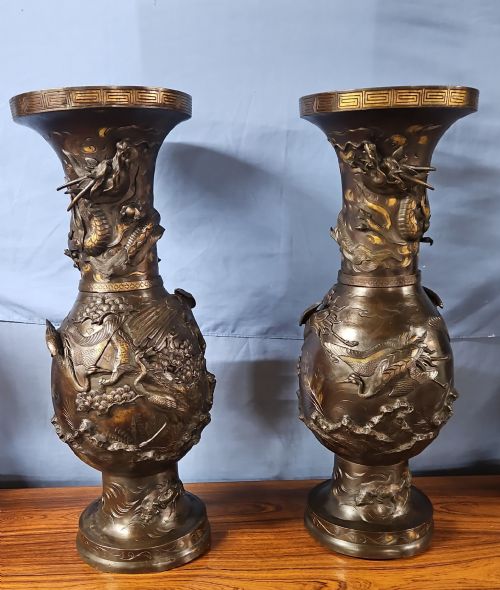


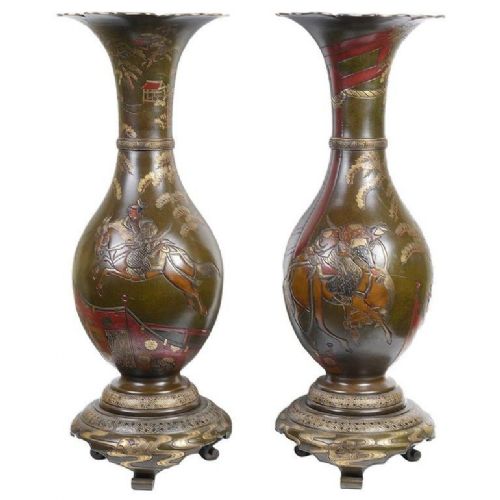


High Relief Metal Urn
These high relief metal urn pieces are substantial bronze and copper vessels bearing intricate raised ornamentation, prized for their decorative presence.
High Relief Metal Urn
When you search for high relief metal urn items, you encounter a selection dominated by large Japanese bronze vases from the Meiji period and Chinese baluster vessels from the 19th century. These objects frequently take the form of amphorae, posy vases, and garden planters known as jardinieres.
The aesthetic bridges Japanese Meiji design and Chinese Qing Dynasty influences, often intersecting with Victorian taste through decorative import. Surviving examples range from monumental pairs intended for grand reception rooms down to single posy vessels.
How they were made
The construction relies primarily on cast bronze, copper, and copper alloy, sometimes accented with mixed metals, gilt bronze, silver, or enamel. Artisans employed casting and hammering techniques to build up the heavy, raised surface details that define the high relief effect.
Surface ornamentation on these vessels is achieved through meticulous modeling of flora, birds, and figures such as Daoist immortals. Signed works indicate individual foundry mastery, while base marks connect certain pieces to traditional production centres like the Xuande style.
Daoist immortals peer out from these heavy bronze walls, occasionally sharing the surface with industrious birds and botanical bouquets.
What varies in quality
Quality reveals itself in the crispness of the raised metalwork and the depth of the casting, where superior pieces exhibit sharply defined plumage, facial expressions, and botanical forms. Heavier weights and secure joins on handles or twin-dragon bases indicate substantial material commitment.
The integration of mixed metals and enamel work separates standard decorative items from exceptional artistic achievements. Furthermore, the presence of legible signatures or authentic period base marks elevates the standing of an individual vessel.
Genryusai Seiya
The High Relief Metal Urn Glossary
- High relief
- Relief sculpture where the elements stand far out from the background, creating strong shadows and depth. On these metal vessels, this technique brings figures and birds into striking three-dimensional prominence.
- Baluster
- A form of vase with a rounded body that tapers upward into a narrow neck, resembling an architectural baluster. This silhouette provides a stable base for heavy bronze casting.
- Jardiniere
- A decorative pot or stand designed to hold live plants or floral arrangements, often executed in heavy bronze for interior or conservatory display.
- Mixed metal
- The combination of different metallic alloys, such as bronze, copper, and silver, used together on a single object to create contrasting colours and textures.
- Meiji Period
- The era in Japanese history spanning from 1868 to 1912, characterised by a flourishing of decorative arts destined for international export.
High Relief Metal Urn: Frequently Asked Questions
What are high relief metal urn pieces?
These pieces are heavy cast vessels, primarily Japanese and Chinese bronze vases and jardinieres, decorated with deeply raised figures, animals, and botanical motifs.
They serve as focal points in a room, combining sculptural presence with traditional metalwork techniques from the 19th century.
How were these metal urns used?
Historically, large bronze vessels and jardinieres functioned as ornamental display pieces in formal interiors, sometimes holding floral arrangements or plants.
Today, they continue to be used as standalone decorative objects on side tables, pedestals, or hearths.
How do I style a bronze vase?
Place a large baluster vase or jardiniere where it can catch natural light, which accentuates the raised metal details and mixed-metal patination.
Because many examples are substantial in weight and height, they sit well on sturdy low tables or dedicated stands.
How do I date a Meiji bronze?
Dating relies on stylistic markers associated with the Meiji period, Victorian import patterns, and occasional artist signatures or foundry marks.
Comparison with documented pieces helps place the manufacture within the late 19th or early 20th century.