
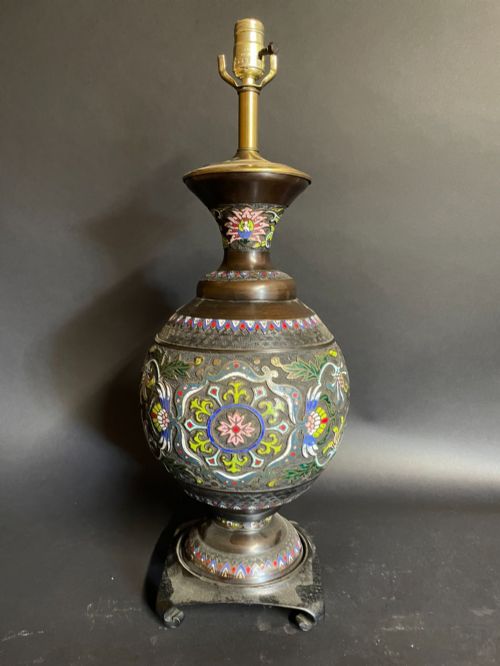


Japanese Floral Bronze Urn
A japanese floral bronze urn brings masterwork metalcraft and botanical ornament directly into your interior.
Japanese Floral Bronze Urn
When you search for a japanese floral bronze urn, you encounter vessels shaped as baluster vases, ginger jars, and decorative posy urns. These objects originate largely from the Meiji period, alongside nineteenth-century and early twentieth-century examples.
You will notice forms range from miniature table vessels to large floor-standing jardinieres and converted table lamps. Botanical motifs of flora and birds dominate the surface decoration of these metal pieces.
Materials and construction methods
Artisans forged these vessels primarily from bronze, frequently integrating mixed metals like copper, brass, gold, and silver. Raised detail work brings depth to the floral and avian subjects cast into the metal body.
Many examples incorporate champleve and cloisonne enamel techniques to introduce vibrant colour alongside the dark metal. Artisans applied wires and enamel pastes to cell divisions across the bronze surface before firing.
Listings feature bronze urns, vases, and jars spanning the nineteenth century through to nineteen thirty, including Edwardian and Meiji periods.
Assessing craftsmanship and execution
Quality rests in the crispness of the raised floral and bird details cast into the metal surface. Superior pieces demonstrate precise control in mixed metal inlay and smooth enamel work.
The presence of artist signatures indicates higher workshop standards during the Meiji period. Weight, balanced proportions, and careful finishing of the bronze and enamel distinguish finer examples.
The Japanese Floral Bronze Urn Glossary
- Cloisonne
- An enamelwork technique where metal wire forms compartments on a bronze base to hold coloured pastes. Artisans fire the piece to fuse the glass-like decoration.
- Champleve
- A method where troughs or cells are carved directly into the bronze body and filled with enamel before firing. This technique creates robust coloured patterns across the metal surface.
- Baluster
- A vase shape characterised by a rounded body that tapers toward a narrow neck and flares at the rim. This form provides a stable base for detailed botanical ornament.
- Meiji Period
- An era in Japanese history spanning from eighteen sixty-eight to nineteen twelve, noted for exceptional metalwork and enamel export pieces. Works from this time frequently feature naturalistic flora and fauna.
- Mixed Metals
- The practice of combining bronze with brass, copper, gold, and silver on a single vessel. This technique creates subtle colour contrasts across the decorated surface.
Japanese Floral Bronze Urn: Frequently Asked Questions
What is a japanese floral bronze urn?
A japanese floral bronze urn is a cast metal vessel decorated with botanical motifs, often produced during the nineteenth and early twentieth centuries.
These pieces encompass vases, ginger jars, and posy holders utilised for decorative display within period interiors.
How are these urns decorated?
Decoration relies on cast bronze with raised details, mixed metal applications, and intricate enamel work.
Craftsmen utilised techniques like cloisonne and champleve to depict floral subjects and birds across the metal surface.
How do I date an antique bronze urn?
Dating relies on stylistic markers, manufacturing techniques, and occasional artist signatures found on the pieces.
Items associated with the Meiji period typically display refined mixed metal inlay and detailed enamel cell work characteristic of late nineteenth and early twentieth-century production.
Where should I place an urn at home?
These vessels suit prominent display positions on tables, pedestals, or as converted lamp bases in reception rooms.
Their substantial bronze weight and detailed botanical surfaces complement traditional and eclectic interior schemes alike.