
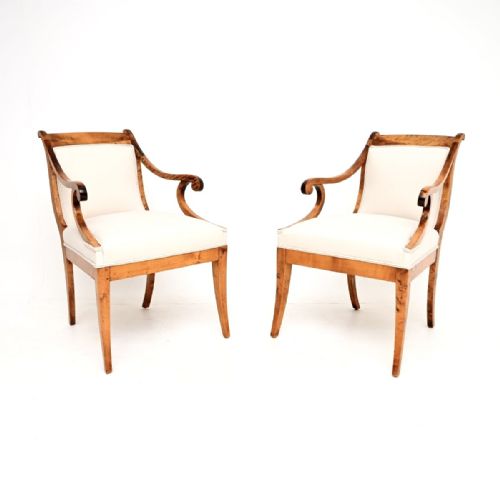


Antique Birch Seating
Antique birch seating brings pale timber and clean grain to chairs, stools and sofas from the nineteenth and early twentieth centuries.
Antique Birch Seating
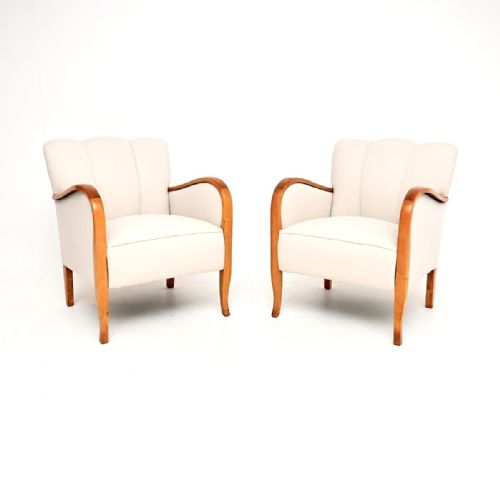
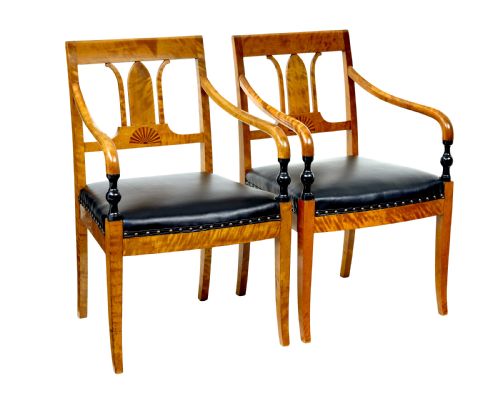
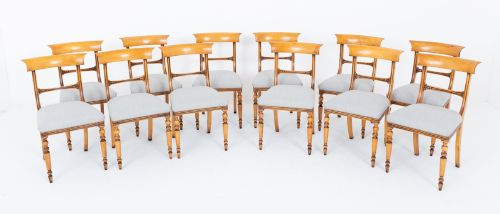
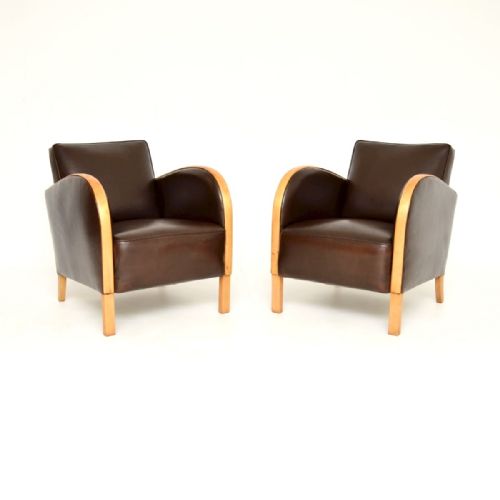
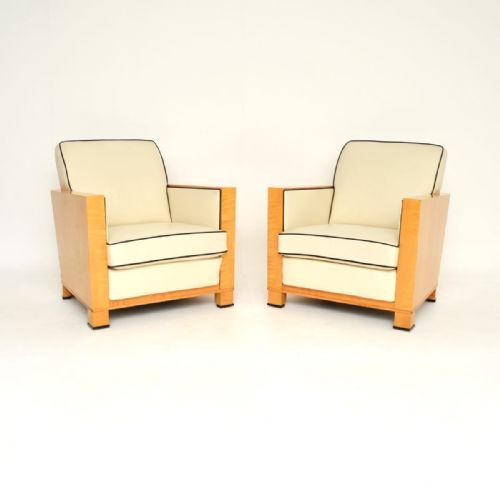
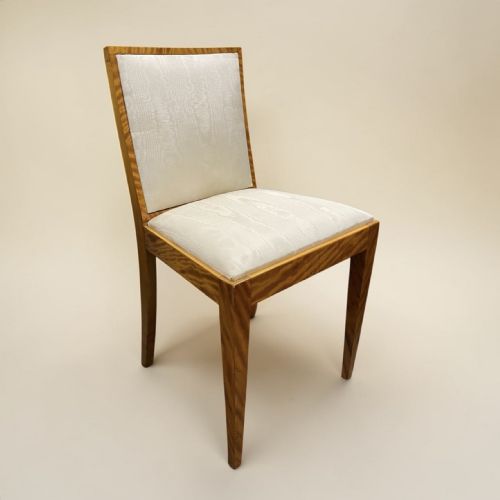
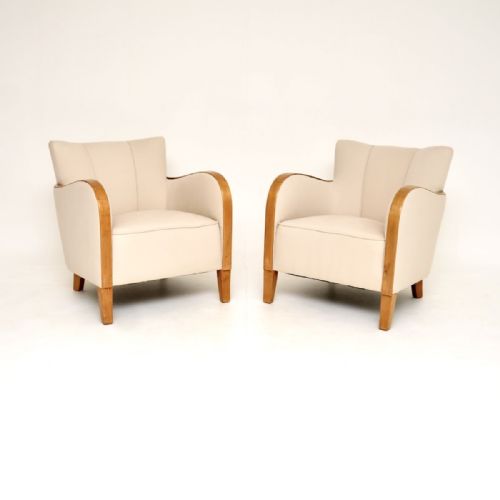
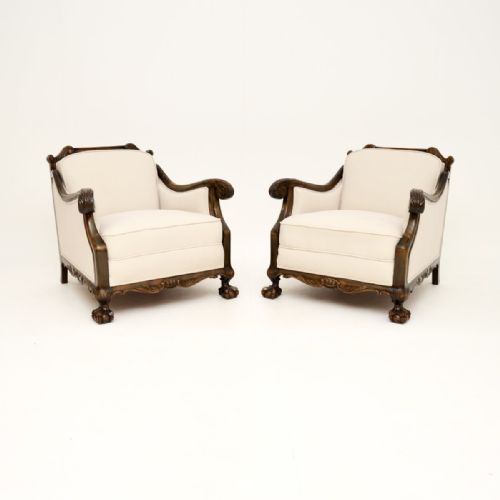
Antique birch seating encompasses armchairs, dining chairs, stools, sofas and settees produced across various periods including the nineteenth century, eighteen-eighty, nineteen-hundred and nineteen-thirty. Buyers seeking antique birch seating will encounter distinct styles such as Victorian, Regency style, Arts and Crafts, Swedish Biedermeier, Swedish Empire and Art Deco.
The pieces range from individual bedroom chairs and clerk's stools to extensive living room suites and sets of dining chairs. Swedish origins feature prominently among the armchairs and stools, often utilising satin birch or burr birch alongside timber frames.
Seating forms include club fenders, long bedroom stools and multi-piece suites, frequently paired with fabric, leather or upholstery fabric. Buyers are most likely to meet armchairs and stools originating from Swedish workshops alongside nineteenth century British seating.
What varies in quality in antique birch seating
Quality varies according to the selection of timber veneers, such as figured satin birch or burr birch, which alter the visual depth of the grain. The crispness of carved details on frames and the execution of ebonized accents distinguish finer examples from simpler utilitarian forms.
The integrity of the original upholstery materials, including specialised leather and traditional fabrics, influences the character of each piece. Maker attribution, such as work associated with established cabinets makers, further separates standard production seating from exceptional workshop creations.
A solitary clerk spent long hours perched on a simple nineteenth century birchwood stool before these pieces found their way into modern studies.
Bath Cabinet Makers·William Birch
The Antique Birch Seating Glossary
- Satin Birch
- A pale, lustrous timber with a fine grain often utilised in Scandinavian furniture design. It provides a bright finish distinct from darker hardwoods.
- Biedermeier
- A Central European style originating in the nineteenth century emphasising clean lines and utility. Swedish interpretations frequently employ birch timber.
- Club Fender
- A low upholstered seat frame placed around a fireplace hearth. These typically feature metal bases paired with padded leather or fabric tops.
- Ebonized
- Wood treated to imitate ebony through staining or painting. This technique creates a sharp dark contrast against pale birch frames.
Antique Birch Seating: Frequently Asked Questions
What is satin birch?
Satin birch is a bright, pale timber known for its light colour and smooth grain pattern. It was frequently utilised in Swedish furniture during the nineteenth and early twentieth centuries.
Furniture makers valued the wood for its ability to take a high polish while maintaining a luminous, reflective surface across large flat panels and curved chair backs.
How do I identify Biedermeier chairs?
Biedermeier chairs are characterised by restrained ornamentation, smooth wood surfaces and comfortable proportions. They prioritise domestic comfort and clean geometric forms over heavy carving.
Most examples in birch display warm honey tones and straightforward joinery that highlights the natural figuring of the timber.
Where were these pieces made?
The seating originates from various workshops across Britain and Sweden. Swedish pieces often feature pale birch or satin birch constructions in styles like Art Deco and Biedermeier.
British examples range from nineteenth century smokers bows to oak and elm club fenders produced by specific cabinet makers.
What is a club fender?
A club fender is a low seating structure designed to fit around the perimeter of a fireplace hearth. They typically combine a metal frame with padded leather or fabric top rails.
These pieces allowed people to sit close to the fire while keeping the hearth area contained and organised.