




Antique Beer Glasses
Antique beer glasses bring the robust drinking traditions of the eighteenth and nineteenth centuries directly to the table.
Antique Beer Glasses
When searching for antique beer glasses, collectors encounter traditional drinkware spanning the Georgian, Victorian, and Edwardian periods. The selection includes tall flutes, rummers, and faceted stemware designed specifically for ale and beer.
Most examples found here date from the eighteenth century through to the early twentieth century, featuring clear glass, lead crystal, and occasionally silver or silver-plated mountings. Forms range from simple plain stems to large serving rummers and lidded tankards.
Alongside glassware, the listings incorporate related serving and display pieces such as decanters and carved oak cabinets associated with historic beer cellars. This variety reflects the diverse ways historical beer culture expressed itself across different households and establishments.
Materials and production methods
The pieces on this page are formed from clear glass, lead glass, and heavy lead crystal, which provided the necessary weight and clarity for drinking vessels. Craftsmen shaped these materials into sturdy tankards, flutes, and rummers capable of daily use.
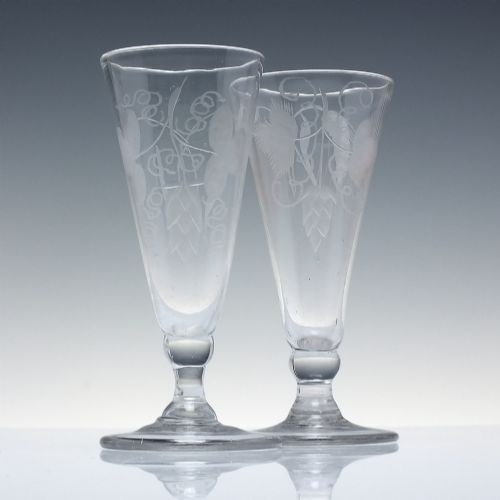
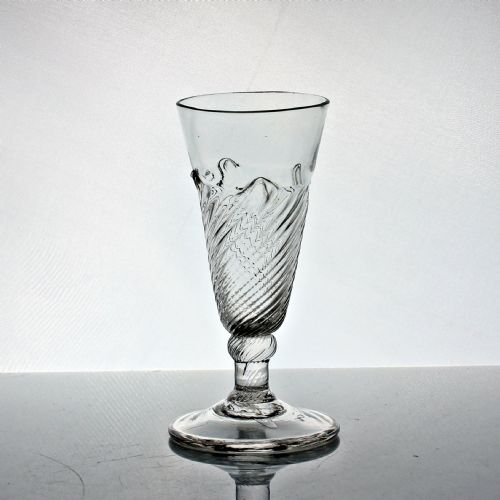
Decoration frequently involved wheel engraving, depicting motifs such as hops and barley to denote the contents of the glass. Facet cutting and air twist stems also appear, demonstrating the technical skill of period glassmakers.
Listings span the eighteenth, nineteenth, and early twentieth centuries, featuring glass, lead crystal, oak, and silver.
Assessing quality in historical glassware
Quality in these drinking vessels rests upon the clarity of the glass and the crispness of any engraved decoration. Pieces with deeply cut hops and barley motifs or well-formed air twist stems demonstrate superior craftsmanship.
Durability and proportion also distinguish finer examples, particularly in larger rummers and silver-mounted tankards where the integration of metal and glass requires precise fitting.
The Antique Beer Glasses Glossary
- Air twist
- A decorative stem formation containing an elongated spiral of tiny air bubbles trapped within the glass. This technique requires considerable skill during the blowing process.
- Facet cut
- Geometric planes ground and polished onto the surface of the glass to catch the light. This finish is common on stems and bowls from the Georgian period.
- Lead crystal
- Glass containing lead oxide, which increases brilliance, weight, and workability. It forms the foundation of many high-quality drinking vessels from these eras.
Antique Beer Glasses: Frequently Asked Questions
What is an ale rummer?
An ale rummer is a large, sturdy drinking glass designed for serving beer or ale during the eighteenth and nineteenth centuries. These vessels typically feature a generous bowl and a short, stable stem.
Their substantial weight and capacity made them practical choices for taverns and homes alike, distinguishing them from delicate wine glassware of the same period.
How do I date an old beer glass?
Dating historic beer glasses involves examining the manufacturing techniques, such as pontil marks on the base, stem construction, and the presence of air twists or facet cutting. Styles evolved significantly from plain eighteenth-century Georgian stems to heavily decorated Victorian forms.
Context is also provided by associated materials like silver mounts or tankard lids, which often bear period hallmarks or distinctive nineteenth-century design traits.
Were these glasses used daily?
Many of these drinking vessels were produced for everyday consumption in homes and social establishments rather than purely for display. Robust materials like lead crystal and heavy clear glass ensured they could withstand regular handling.
Over time, surviving pieces transitioned from functional tavernware to collectible items appreciated for their historical connection to historic brewing traditions.
What motifs appear on ale glasses?
Engravings of hops and barley are the most common decorative elements found on historical beer and ale glasses. These agricultural symbols directly reference the ingredients used in brewing.
Other examples feature geometric facet cutting, flammiform patterns, or specific German beer-related emblems associated with historic cellars and drinking halls.