

Antique Barware Silver Glass
Antique barware silver glass pieces combine precious metal mounts with weighty crystal vessels for serving spirits and wine in domestic spaces.
Antique Barware Silver Glass
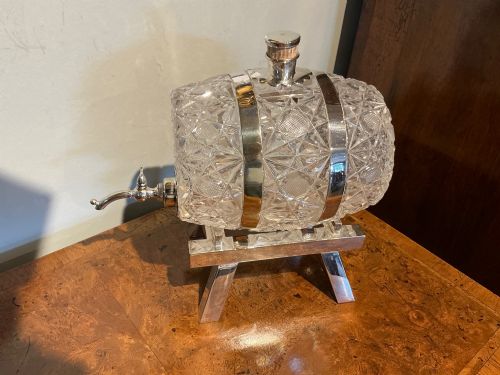
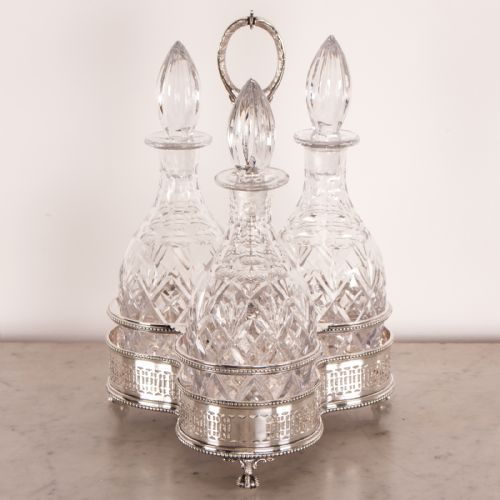
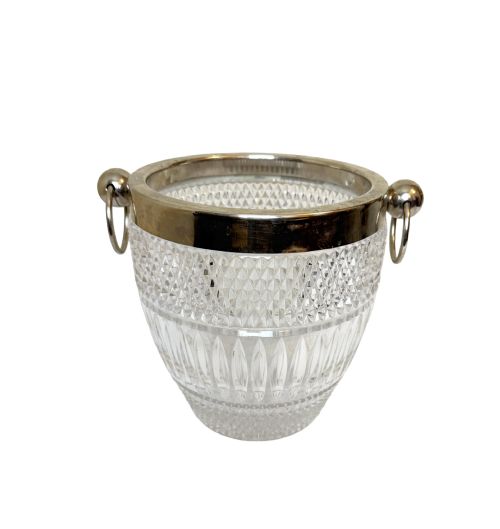
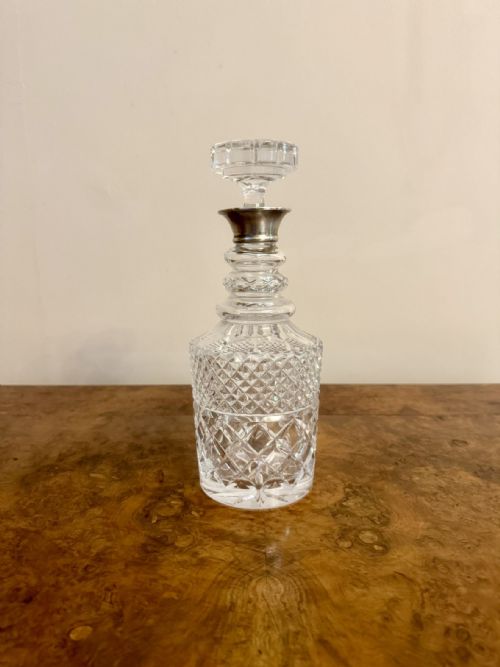
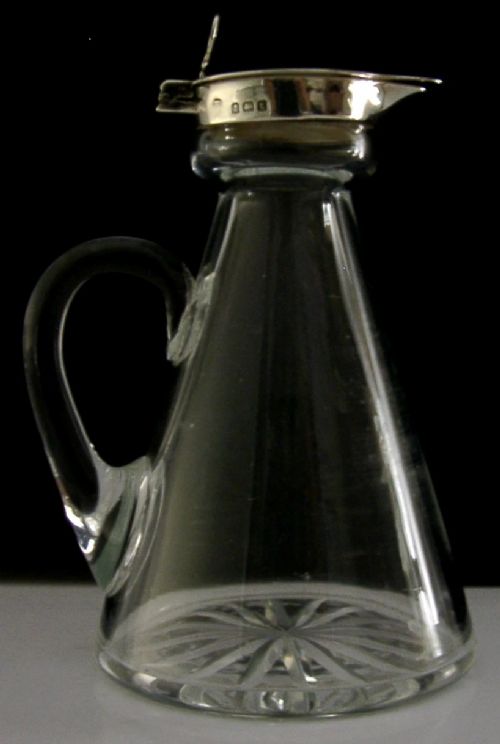
Vessels range from modest whisky noggins and spirit barrels to elaborate locking tantalus frames and sets of shot glasses with matching holders. Most examples date from the late nineteenth century through to the 1930s, reflecting changing social habits around entertaining and hospitality.
Buyers meet both practical serving vessels intended for daily use and decorative novelty items such as thimble-shaped tumblers or golfing cups. These pieces demonstrate the evolution of drinking culture from formal dining rooms to cocktail cabinets.
Materials and Techniques
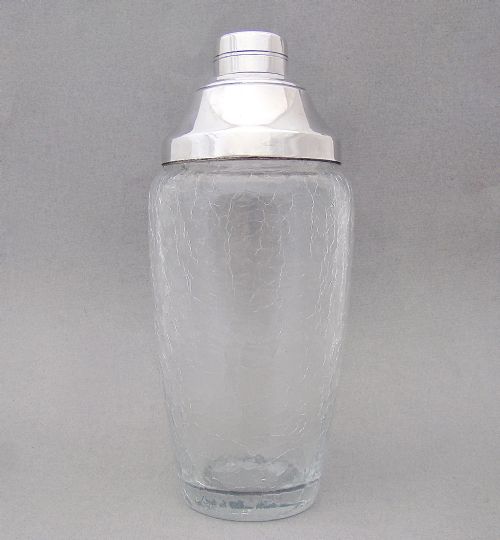
Glass bodies were mouth-blown and frequently cut with geometric facets or moulded into specific forms, utilising clear crystal, ruby glass, green glass, or crackle glass. Silver mounts, collars, and hinged tops were cast, spun, or hammered before being hallmarked and fitted to the vessels.
Silver-plate work involved applying a thin layer of silver over base metals like copper or Britannia metal, often combined with oak frames, leather casing, or cork stoppers. Makers integrated the metal hardware securely with the glass through collars, threaded necks, or locking bar mechanisms.
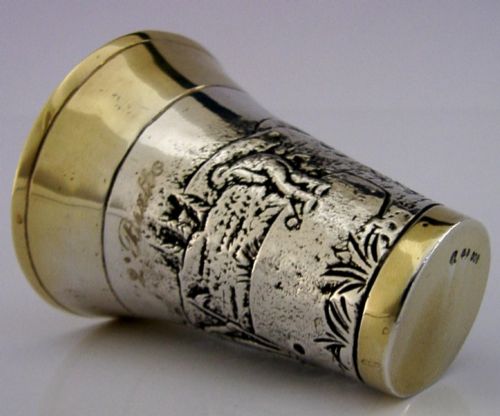
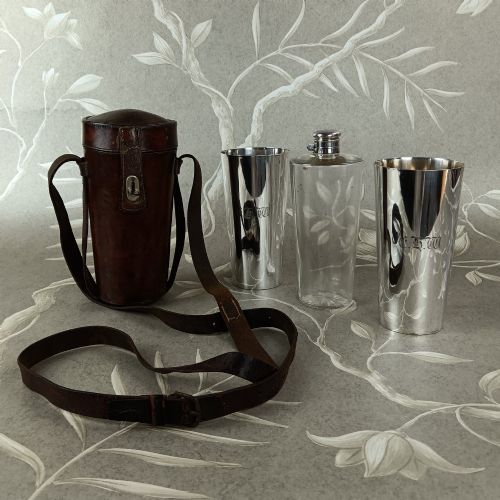
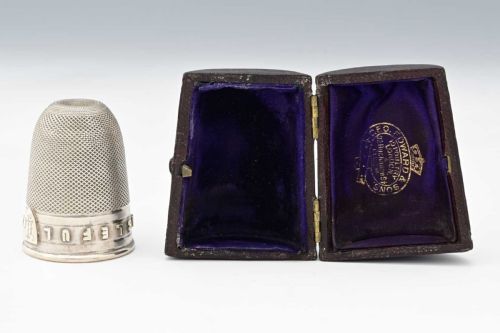
Victorian drinkers enjoyed novelty spirit measures, including silver tumblers shaped like giant sewing thimbles inscribed with the phrase just a thimbleful.
Standards of Execution
Quality rests in the weight and clarity of the glass, the crispness of the cutting, and the substantial nature of the silver or silver-plated mounts. Superior pieces display crisp hallmarks, well-fitted stoppers or lids, and harmonious proportions between the metalwork and the glass body.
The sophistication of the mechanism differentiates standard items from finer examples, particularly in complex pieces like locking tantalus sets, folding spirit campaigns, or fitted cocktail sets. Maker attribution and original cased sets also distinguish the upper tier of surviving pieces.
Tiffany and Co·James Dixon and Sons·Walker and Hall·Asprey London·Hukin and Heath
The Antique Barware Silver Glass Glossary
- Tantalus
- A locking wooden or metal frame that holds decanters securely to prevent unauthorised access to the spirits inside.
- Whisky noggin
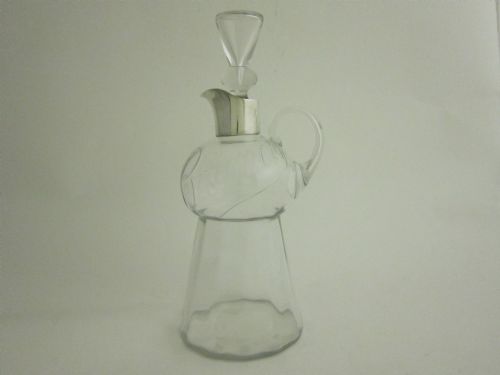
- A small single-serving decanter or jug, typically holding enough whiskey for one or two glasses.
- Claret jug
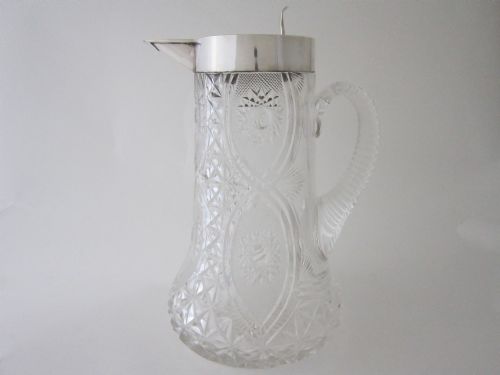
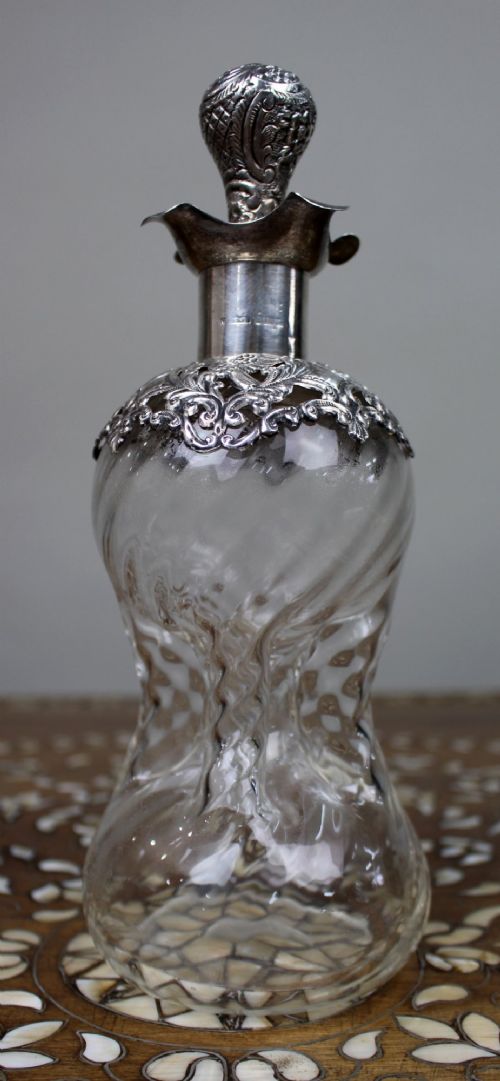
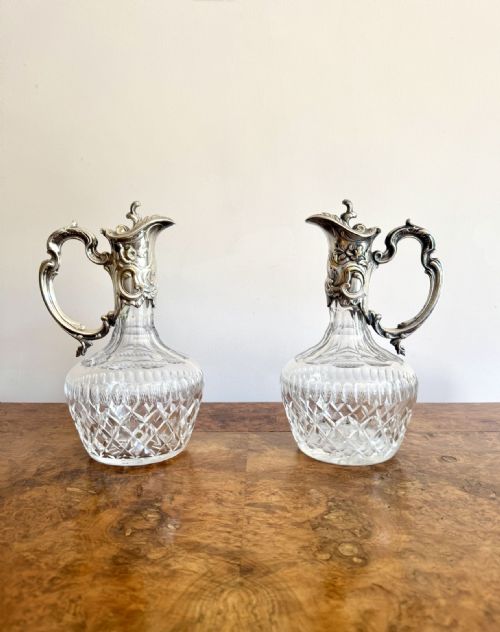
- A large pouring vessel designed for red wine, combining a glass body with a hinged silver handle, collar, and spout.
- Bitters bottle
- A small container with a perforated or fitted top used for dispensing aromatic bitters into cocktails.
- Spirit flask
- A portable flat container designed for carrying liquor on journeys, often fitted with a removable cup at the base.
Antique Barware Silver Glass: Frequently Asked Questions
Were these pieces meant for daily use?
These items served a functional role in late Victorian and twentieth-century dining rooms, drawing rooms, and studies. They were designed for hosting guests and dispensing spirits during formal meals or social gatherings.
Many survived because they were treated as household silver and kept in cabinets or sideboards when not in active service.
How do I date an antique decanter?
Examine the silver mounts for assay office hallmarks, date letters, and maker's marks which provide precise manufacturing years. The style of glass cutting, bottle shape, and stopper design also offer clear indicators of the period.
Victorian pieces tend to feature heavy hand-cutting and rococo revival styles, while 1930s examples lean towards clean Art Deco geometric lines.
What is a tantalus used for?
A tantalus secures spirit decanters behind a locking metal bar to prevent household staff or guests from helping themselves to the contents. The locked bottles remain fully visible to guests, creating the teasing effect that gave the object its name.
They were typically placed on sideboards in dining rooms or smoking rooms during the Victorian and Edwardian eras.