



Antique Banner Screen
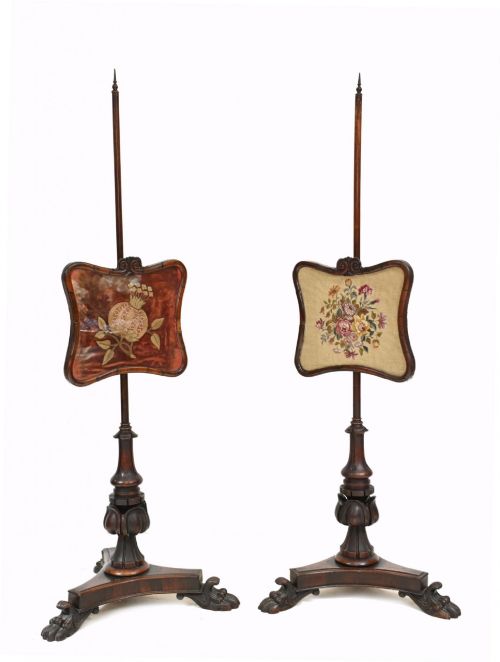
An antique banner screen is an adjustable fireside companion designed to block the fierce heat of an open hearth.
Antique Banner Screen
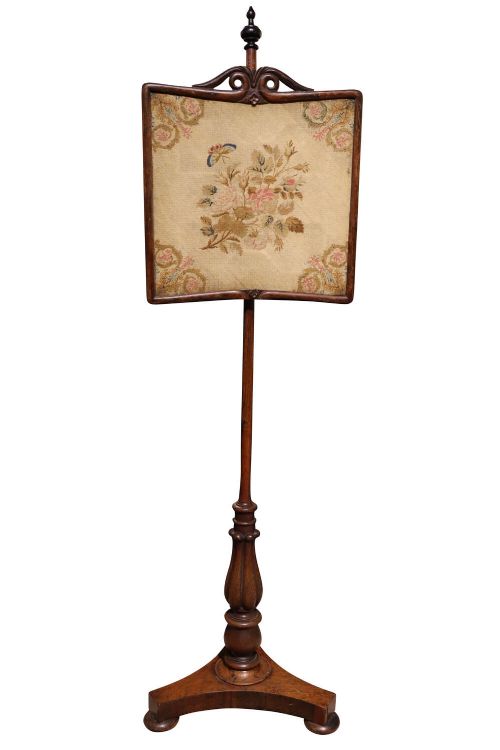
An antique banner screen, frequently termed a pole screen, stands upright on a slender shaft supported by a tripod or carved base. These pieces date across the Georgian, Regency, William IV and Victorian eras, reflecting shifts in interior taste from classical restraint to ornate revivalism.
Beyond full-sized fireside models, variations include table screens designed for smaller settings. The surviving examples utilise timber standards paired with textile inserts ranging from simple needlepoint to intricate silk embroidery.
Materials and construction
Cabinetmakers utilised dense timbers such as rosewood, mahogany, walnut and satinwood to turn the slender standards and carve the substantial bases. These hardwoods provided the necessary weight at the foot to balance the elevated panel.
The adjustable banner panels rely on brass mechanisms or friction collars that allow the embroidered or tapestry insert to slide up and down the pole. Needlework, wool, silk and needlepoint panels were hand-worked by makers before being mounted into glazed or framed surrounds.
Antique Banner Screen Retail Price Guide 2026
Typical asking prices for banner screen among the pieces listed under this phrase on Sellingantiques today, from the lower quarter to the upper quarter. They describe what is for sale here now, not the wider market.
Early owners used these screens primarily to prevent their expensive facial makeup from melting in the fierce heat of coal-burning hearths.
Distinctions in quality
The refinement of the carving on the base and the weight of the timber set finer examples apart from simpler pieces. Heavy rosewood or figured mahogany standards with detailed bobbin turning or gilt brass mounts indicate superior workshop production.
The artistry and complexity of the textile insert heavily influence the distinction between standard and exceptional pieces. Finely stitched silk embroidery and intricate tapestry work demand greater skill than basic needlepoint, elevating the overall standing of the screen.
The Antique Banner Screen Glossary
- Pole screen
- A vertical stand featuring an adjustable panel designed to shield the face from hearth heat. These pieces typically rest on a tripod base.
- Needlepoint
- A type of canvas work embroidery executed with wool or silk yarn. This technique forms the pictorial panels seen on many Victorian and Georgian screens.
- Tripod base
- A three-legged support providing stability to the slender vertical shaft. Georgian and Regency makers often shaped these legs with scroll or claw motifs.
- Tapestry
- A form of textile art woven on a loom or worked by hand with threads. These panels often depict floral or pastoral scenes mounted within the screen frame.
- Bobbin turned
- A method of woodturning that creates a series of rounded, spool-like swellings along the shaft. This decorative turning appears frequently on Victorian and mahogany pieces.
Antique Banner Screen: Frequently Asked Questions
What is an antique banner screen?
An antique banner screen is a moveable wooden stand with an adjustable panel used originally to deflect heat from an open fire. They were placed near hearths in formal rooms.
Over time, these pieces evolved in style from Georgian elegance to ornate Victorian carving while retaining their core functional design.
How do you adjust the panel height?
The panel is mounted on a vertical pole using a small collar or internal brass mechanism that allows the screen to slide up and down. This enables the user to set the banner at the exact height needed.
Fine adjustment requires gentle handling to protect the vintage wooden pole and the textile panel mounted upon it.
Where were banner screens placed?
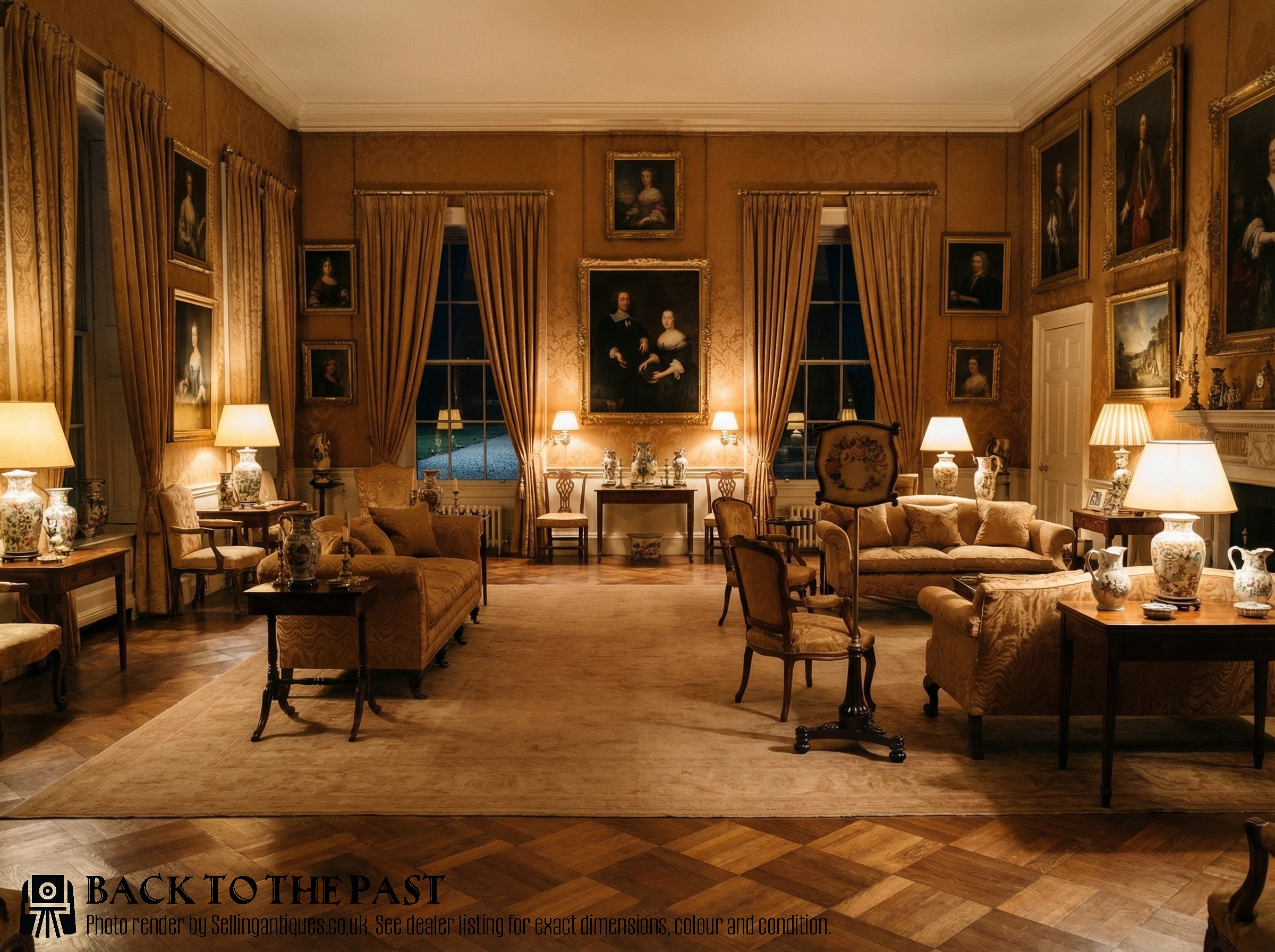
These screens stood close to the fireplace in drawing rooms and parlours where guests and residents sat. Their primary duty was shielding faces from intense radiant heat.
When not deployed against the fire, they served as decorative furnishings that showcased fine needlework and polished cabinet timbers.
What woods were used for the stands?
Cabinetmakers turned to dense hardwoods such as rosewood, mahogany, walnut and satinwood to construct the poles and bases. These timbers offered durability and sufficient weight.
Softer woods were avoided because the tall, slender shafts required strong, stable materials to support the heavy banner panels safely.
How do I care for the textile panel?
Protect the silk embroidery or needlepoint panel from direct sunlight to prevent the coloured threads from fading over the years. Regular light dusting keeps the fabric free from harmful particles.
Avoid placing the screen too close to active heat sources today, as dry warmth can degrade antique wool and textile fibres.