


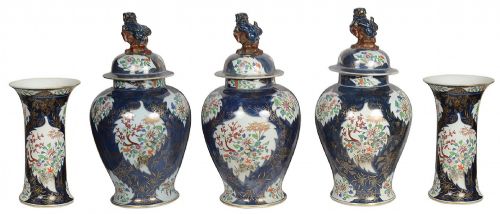
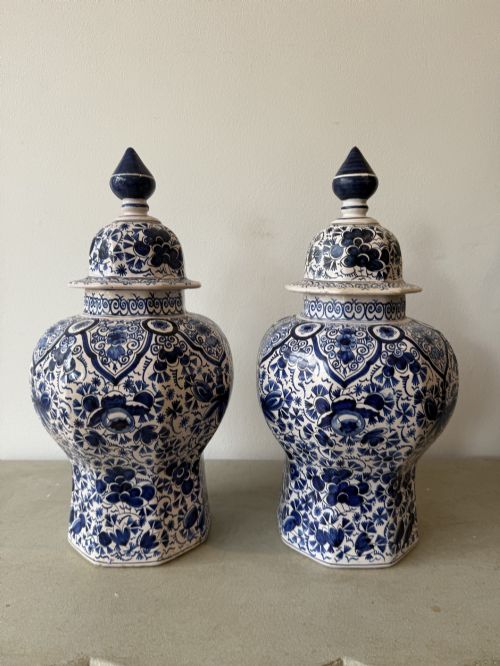
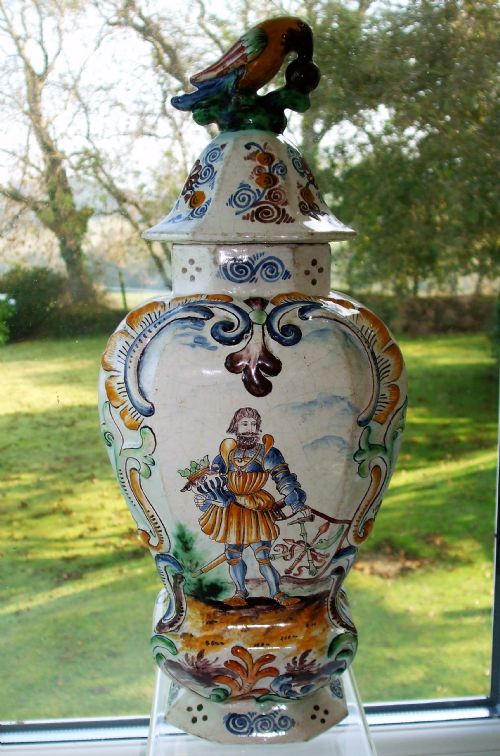


Antique Baluster Jars Lids
These antique baluster jars lids are commanding ceramic vessels designed for display, bringing centuries of global trade and kiln craft into your home.
Antique Baluster Jars Lids
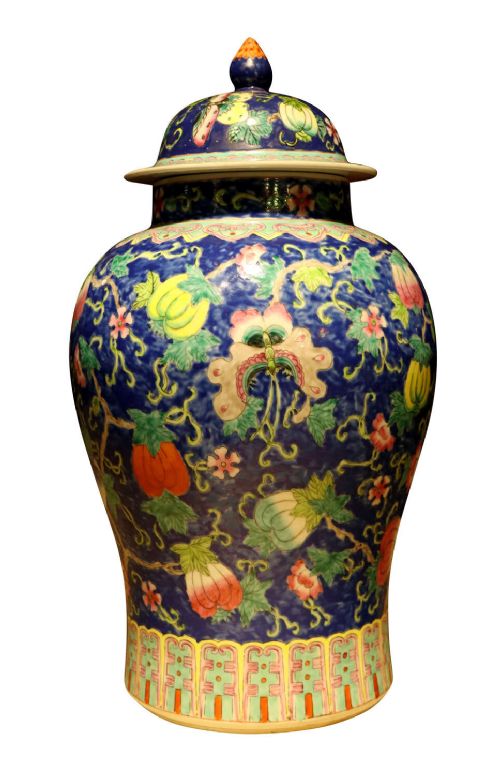
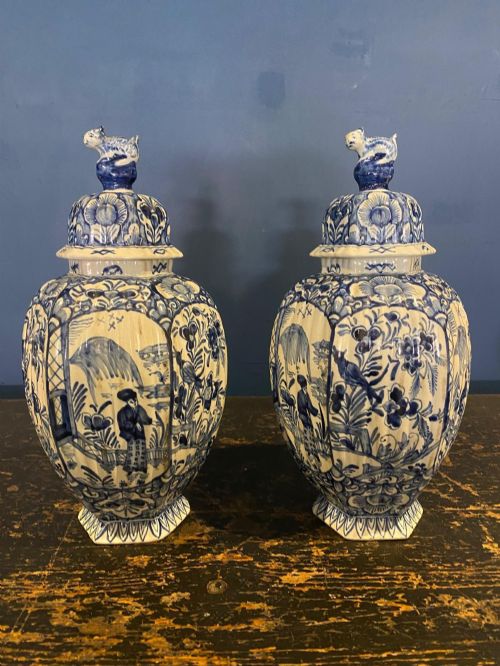
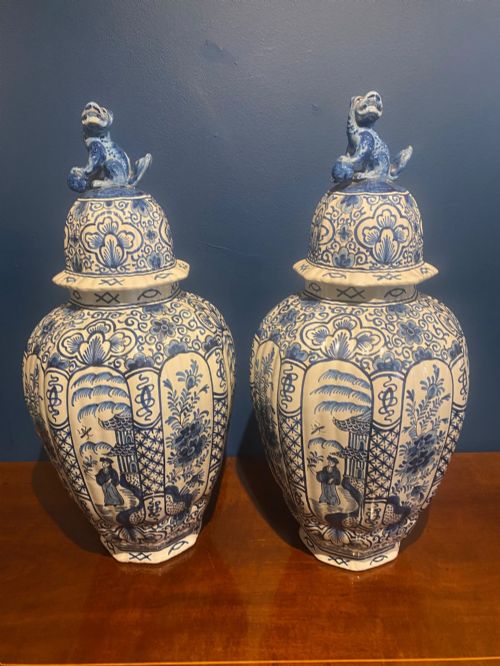
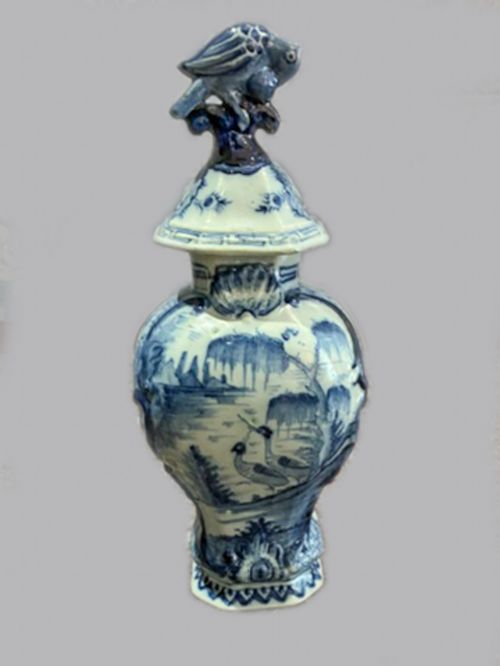
When you search for antique baluster jars lids, you encounter vessels defined by their distinctive curved profile, swelling towards the lower half before tapering at the foot and neck. These covered jars arrive from diverse ceramic traditions, spanning European tin-glazed earthenware to East Asian porcelain.
The versions most commonly met on this page include Japanese Imari and Arita wares alongside Dutch Delftware jars and Chinese Qing Dynasty blue and white pieces. Many survive as pairs or part of garnitures, shaped for mantelpieces and grand reception rooms.
Dating ranges from the seventeenth century through to the Edwardian era, encompassing both original period production and later nineteenth-century interpretations. Each piece combines functional storage ancestry with purely decorative ambition.
Materials and construction
Potters shaped these vessels using ceramic bodies such as porcelain, ironstone, and tin-glazed earthenware, applying mineral glazes to seal the surface. Cobalt blue underglaze painting predominates, often augmented with polychrome enamels and gold leaf gilding.
Kiln firing methods dictated the durability of the glaze and the vibrancy of the pigments, whether executed in Dutch workshops or East Asian kilns. Lids were thrown and fired to match the contours of the jar body, completing the silhouette.
Antique Baluster Jars Lids Retail Price Guide 2026
Typical asking prices for baluster jars lids among the pieces listed under this phrase on Sellingantiques today, from the lower quarter to the upper quarter. They describe what is for sale here now, not the wider market.
Listings feature ceramics spanning from the 17th Century to the Edwardian period, utilising porcelain, ironstone, and tin-glazed earthenware.
Judging the work
Quality reveals itself in the crispness of the hand-painted detail and the harmony of the palette, where fine cobalt brushing or intricate enamel work separates standard production from exceptional pieces. The weight and purity of the porcelain or earthenware body also set superior examples apart.
The survival of matching original lids and the precision of the fit between cover and jar heavily influence the standing of a vessel. Potteries that maintained rigorous standards produced pieces with balanced proportions and deeply saturated glazes.
The Antique Baluster Jars Lids Glossary
- Baluster
- A architectural form resembling a pillar or vase, characterised by a rounded lower body that tapers towards the top. This silhouette defines the primary shape of the jars found here.
- Delftware
- Tin-glazed earthenware produced in the Netherlands, typically featuring white tin enamel painted with blue designs. It often mimics Chinese porcelain imports.
- Imari
- A style of Japanese export porcelain originating from Arita, traditionally decorated in underglaze blue, iron red, and gold. These wares were widely collected across Europe.
- Garniture
- A set of matching vases or jars designed to be displayed together on a mantelpiece or cabinet. They often comprise varying heights of baluster jars and beaker vases.
- Ironstone
- A type of durable heavy earthenware patented in the nineteenth century, designed to resist chipping. It provided a sturdy alternative to porcelain.
Antique Baluster Jars Lids: Frequently Asked Questions
What were baluster jars used for?
Originally, large covered jars stored valuable commodities such as spices, tea, or ginger imported along global trade routes. Over time, their utility shifted entirely to ornamental display within wealthy interiors.
Pairs and garnitures of these vessels became centrepieces for mantelpieces, cabinets, and entrance halls during the seventeenth and eighteenth centuries.
How do I distinguish Delftware from Asian porcelain?
Delftware uses an earthenware body covered in an opaque white tin glaze, which can feel softer and thicker under inspection. Asian porcelain employs a vitrified, resonant body that rings when tapped and shows a smoother white surface.
Palette and brushwork also provide clues, with European tin-glaze offering a slightly different absorption of the cobalt blue pigment compared to Eastern kiln work.
Are these jars always sold with their original lids?
Many surviving jars have lost their original covers over centuries of handling, meaning replacement lids are sometimes associated with older bodies. Matching lids that share the exact glaze, potting style, and wear pattern are highly prized by collectors.
Examining the rim and interior fit helps determine whether the cover belongs to the vessel from its initial creation.
How should I display lidded jars safely?
Place these ceramic vessels on stable, level surfaces away from heavy foot traffic or doorways where vibrations might cause movement. Ensure the lid sits securely within the collar of the jar, or display it slightly adjacent if the fit is loose.
Keep them out of direct sunlight to protect any vulnerable enamel highlights or gold leaf gilding over extended periods.