




Pair Imari Ginger Jars
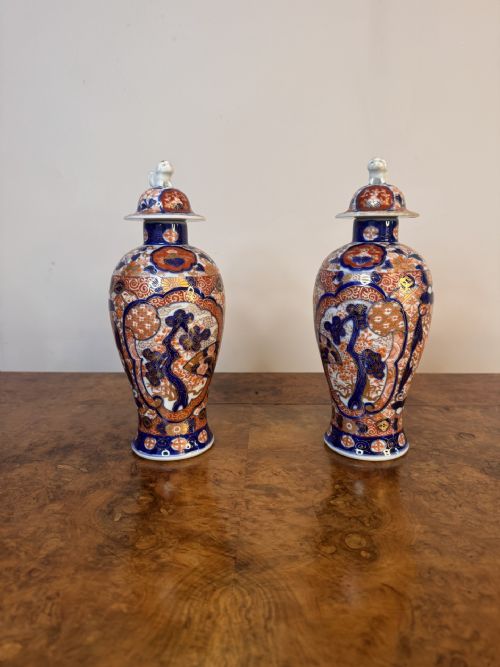
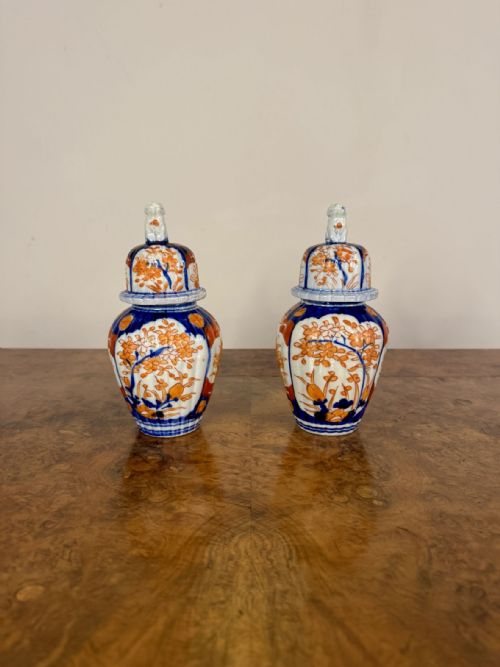
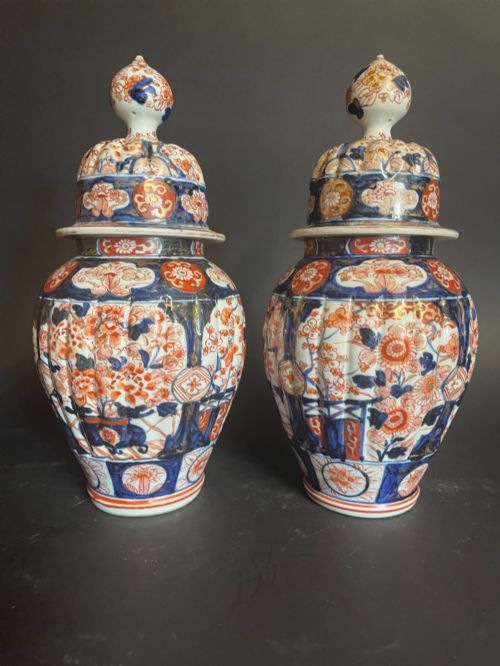
Pair imari ginger jars bring vibrant palettes and classic symmetry to a room, offering the bold red and blue decoration that defined early export porcelain.
Pair Imari Ginger Jars
Pair imari ginger jars represent the classic lidded vessels produced for export, combining robust porcelain forms with rich decorative schemes. Buyers searching this phrase encounter examples stretching from the seventeenth century through the Victorian era and the nineteenth century.
The objects take the form of lidded vases and pots, often styled in Japanese imari or Japanese arita blue and white porcelain. Most pieces visible here belong to the nineteenth century and nineteenth-century imari style, offering the symmetry demanded by mantelpieces and sideboards.
How They Were Made
Potters shaped these vessels from porcelain, applying cobalt blue underglaze before firing the clay to create the foundational blue tones. Overglaze enamel and gilding or gold leaf were then added in subsequent stages to build the characteristic multi-coloured palette.
The use of rich glaze protected the pigments while providing a glossy finish that bound the complex surface patterns together. Artisans incorporated gilt and enamel highlights to catch the light across the curves of each lidded jar.
Pair Imari Ginger Jars Retail Price Guide 2026
Typical asking prices for pair imari ginger jars among the pieces listed under this phrase on Sellingantiques today, from the lower quarter to the upper quarter. They describe what is for sale here now, not the wider market.
Materials recorded across these items combine porcelain bodies with cobalt blue underglaze, enamel, and gold leaf.
What Varies in Quality
Quality rests in the precision of the cobalt blue underglaze and the crispness of the overglaze enamel work. Stronger examples display balanced composition where the red and blue tones complement rather than overpower the porcelain body.
The application of gilding and gold leaf distinguishes standard production from finer pieces, adding depth to the surface design. Lids that retain their original matching form and finish elevate the integrity of the pair.
Samson
The Pair Imari Ginger Jars Glossary
- Imari
- A style of Japanese export porcelain characterised by a palette of cobalt blue, iron red, and gilt. It originated in the town of Arita and became immensely popular in Europe during the Edo period.
- Underglaze
- A method of decorating pottery before applying the final glaze and firing the piece at high temperatures. This technique protects the pigment beneath a glossy surface.
- Enamel
- Opaque glass applied over the fired glaze and then fixed with a lower temperature firing. It provides the bright reds and greens seen on these vessels.
- Gilt
- A thin layer of gold applied to the surface of the porcelain to accentuate specific decorative motifs. It adds a reflective quality to the overall design.
- Arita
- The Japanese town central to the production of porcelain during the Edo period. Kilns in this region produced the blue and white wares that preceded full imari palettes.
Pair Imari Ginger Jars: Frequently Asked Questions
What were pair imari ginger jars used for?
Originally manufactured to store spices and herbs for export, these vessels soon found a permanent home as decorative objects in European interiors. Their symmetrical nature made them ideal for matching mantelpiece arrangements and display cabinetry.
Over time, their primary function shifted entirely to ornamentation, prized for their ability to introduce strong colour and pattern into a room.
How do I date a pair of imari jars?
Dating relies on examining the porcelain body, the depth of the cobalt blue underglaze, and the style of the overglaze enamel work. Earlier pieces often display the distinct characteristics of the Edo period or seventeenth-century Arita production, while later examples reflect nineteenth-century and Victorian manufacturing methods.
Matching the glaze consistency and the weight of the porcelain helps separate genuine early pieces from later stylistic revivals.
How should I display them at home?
Place the pair together on a sturdy surface such as a sideboard, mantelpiece, or console table where their balanced forms can be appreciated. Ensure they sit away from heavy foot traffic to protect the lids and the delicate overglaze enamel surfaces.
Allow enough space around the jars so the intricate red and blue patterns stand out against the background wall.
Are the covers usually original?
Many surviving pairs retain their original matched covers, which is an important consideration for maintaining the integrity of the piece. Examining the fit, glaze, and decorative continuity between the jar and the lid reveals whether they started life together.
Replacements or later additions often show subtle variations in the shade of the cobalt blue or the application of the gilding.