




Antique Baluch Bag
When you search for an antique baluch bag, you find utilitarian woven wool containers made by nomadic and tribal groups across Persia and Afghanistan.
Antique Baluch Bag
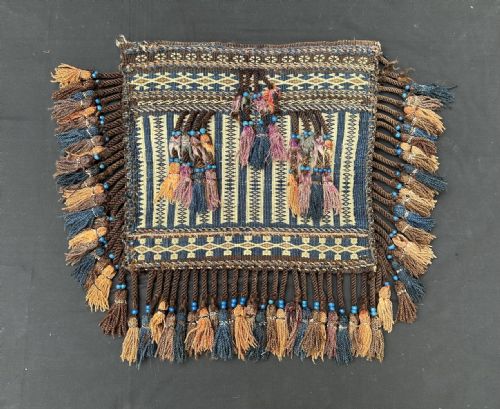
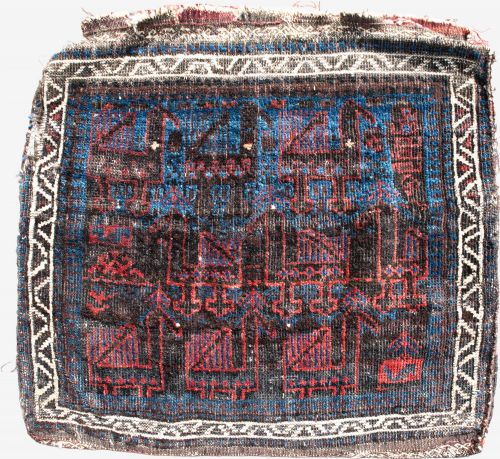
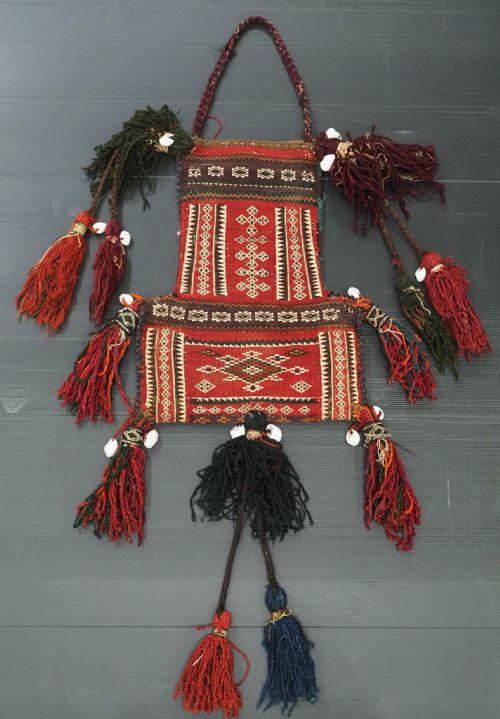
The antique baluch bag encompasses specific utilitarian forms created for nomadic life, including salt bags, storage pieces, vanity containers, and saddle bags. Many survive as single bag faces or complete double-sided examples originating from regions such as Khorassan, Sistan, and Western Afghanistan.
Makers produced these textiles for daily domestic and travel use rather than decorative display. Common functional types include the balisht or pillow-bag, the namakdan or salt bag, and various grain or storage receptacles woven by tribal groups.
Design vocabulary on these pieces draws on traditional motifs such as the Herati pattern, tile designs, snowflake motifs, and bird or cockerel representations. Pieces frequently originate from specific tribal affiliations like the Salar Khani, Timuri, and Zaggar Mengal.
Materials and construction
Weavers constructed these textiles primarily from wool, incorporating structural elements of cotton and goat hair for durability. Natural dyes provide the palette, while decorative accents occasionally utilise glass beads and cowrie shells.
Techniques range from pile weaving on bag faces to plain weave backs and banded weft work. Nomadic makers utilised portable vertical looms to produce dense pile surfaces paired with flatwoven reverse panels.
Materials recorded across the archive include wool, cotton, goat hair, natural dyes, cowrie shells, and glass beads.
Quality and variation
Quality rests in the fineness of the weave, the clarity of the tribal motifs, and the depth of the natural dyes. Tightly knotted bag faces with balanced proportions demonstrate superior technical execution by the weaver.
The retention of original backs, complete closing mechanisms, and supplementary materials like cowrie shells or glass beads elevate the integrity of a surviving piece. Distinctive pictorial elements, such as well-rendered bird designs or star in octagon patterns, also distinguish finer examples.
Salar Khani Tribe·Zaggar Mengal Baluch·Timuri Nomads
The Antique Baluch Bag Glossary
- Balisht
- A traditional pillow-bag or small cushion used within nomadic tents. These stuffed containers often double as small rugs or sleeping supports.
- Namakdan
- The specific term for a salt bag with a narrow neck designed to store rock salt for livestock. Woven with sturdy structures, these items hung inside the tent.
- Pushti
- A small rug or mat, frequently encountered as a bag face separated from its original reverse compartment. These panels display the primary pile-woven decorative field.
- Plain weave
- A simple interlace technique utilised for the reverse panels and structural backs of storage containers. This method reduces bulk where the bag rests against a pack animal.
- Herati
- A repeating floral lattice design centred on a rosette enclosed by leaves. This classical motif appears frequently across regional nomadic weaving.
Antique Baluch Bag: Frequently Asked Questions
What is an antique baluch bag used for?
These textiles served practical functions within nomadic households, carrying salt, grain, tobacco, and personal items during seasonal migrations.
Saddle bags transported goods on pack animals, while smaller vanity bags and pillow-bags provided storage and comfort inside tribal tents.
How do I identify a balisht?
A balisht is a specific pillow-bag or cushion form created by nomadic weavers for domestic use.
They generally feature a decorated pile face on the front with a plain weave back designed to hold stuffing materials.
Where were these bags made?
Nomadic and tribal groups produced these textiles across regions including Khorassan, Sistan, and Western Afghanistan.
Specific confederations and subtribes, such as the Salar Khani and Zaggar Mengal, worked within these geographic borders.
What materials make up the construction?
Weavers utilised local materials, relying primarily on sheep wool for the pile and cotton or goat hair for structural foundations.
Natural dyes coloured the yarns, and makers occasionally incorporated cowrie shells and glass beads for ornamentation.