


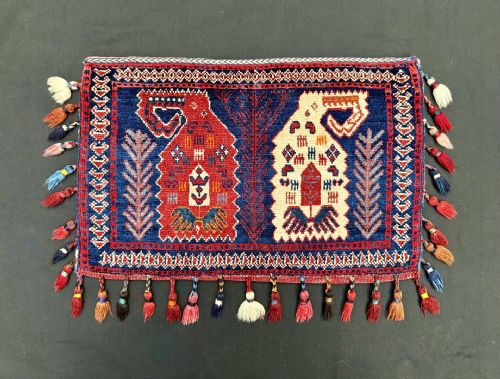

Blue Wool Tribal Pouch
A blue wool tribal pouch carries the nomadic artistry of Persia and Central Asia into domestic spaces.
Blue Wool Tribal Pouch
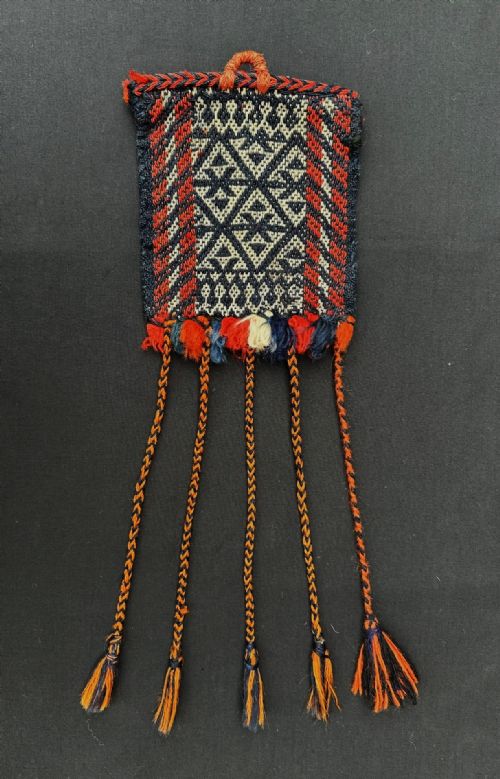
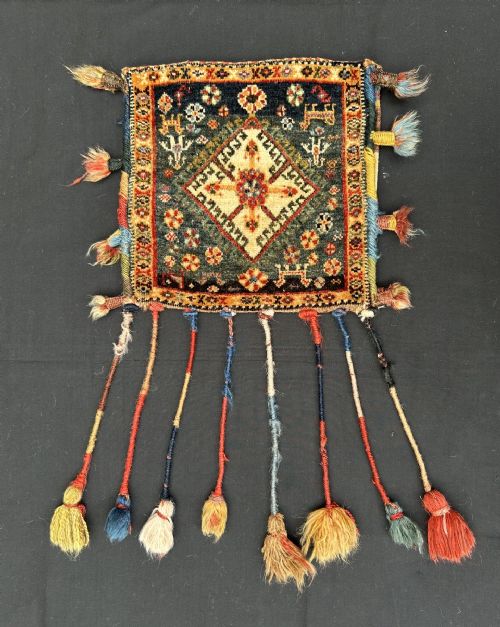
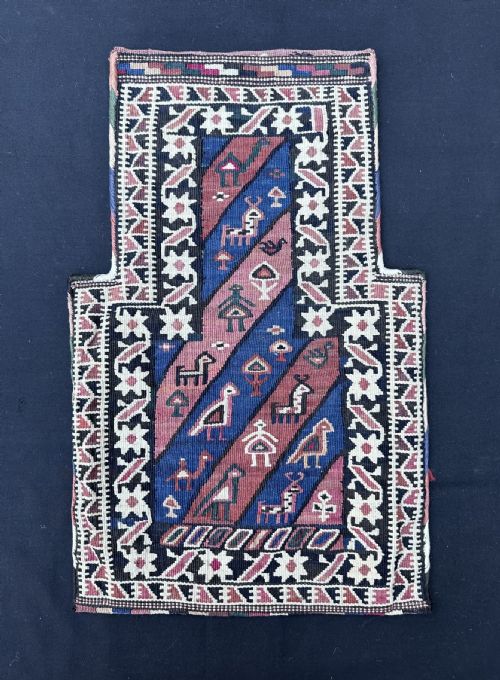
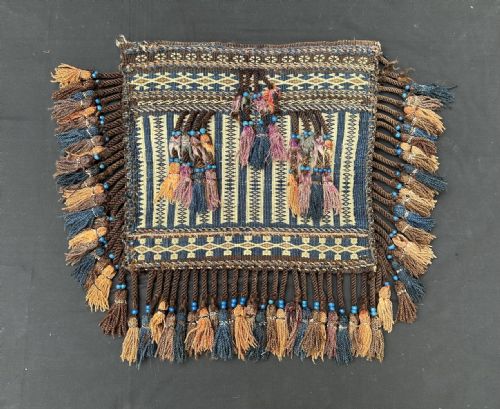
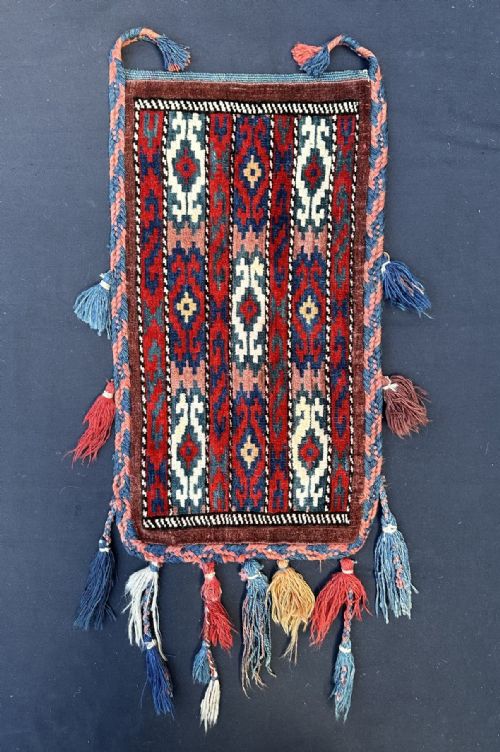
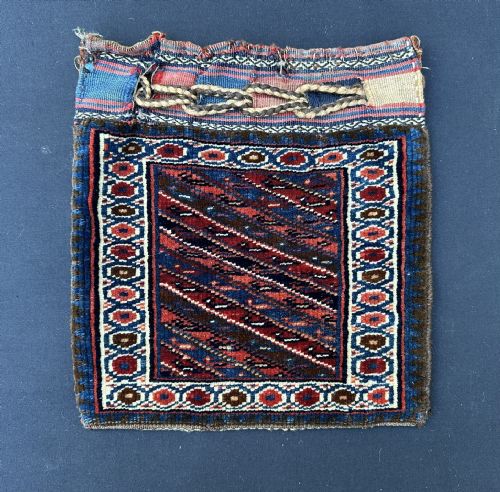
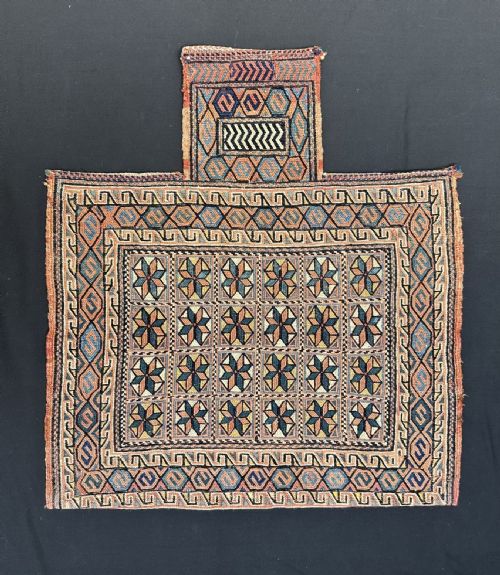
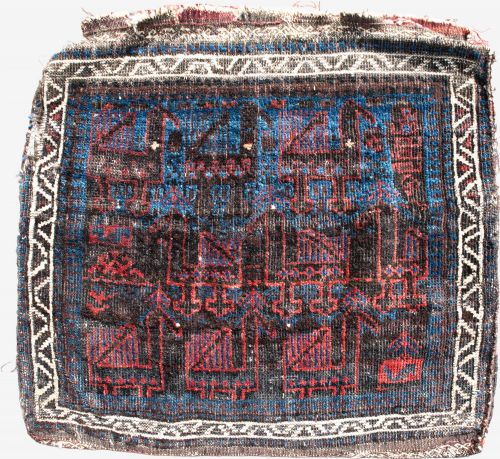
A blue wool tribal pouch represents the utilitarian weaving traditions of nomadic and village groups across Persia, Afghanistan, and Turkmenistan. These textile pieces include salt-bags, vanity-bags, spindle-bags, and storage-bags produced by regional confederacies and tribes.
The versions met on this page date from the mid-nineteenth century through the early twentieth century. Each piece served a specific daily function within tribal camps before surviving as an item of textile art.
How they were made
Weavers relied on hand-spun wool dyed with natural substances to create the dense pile and flatweave surfaces of these pouches. Cotton foundations and structural elements often appear alongside the predominant wool construction.
Surface decoration incorporates supplementary techniques such as soumak work and occasional glass bead embellishments. These methods produced durable structures designed for heavy transport and daily camp use.
Some bags were made entirely to hold spindle tools, proving nomads took their yarn security very seriously.
What varies in quality
The handling of natural dyes and the precision of tribal motifs determine the visual depth of a pouch. Finer examples display saturated indigo grounds and tightly beaten structures that maintain their integrity over generations.
Structural completeness, such as surviving plain-weave backs or complete paired sections, separates exceptional textile artefacts from fragmented remnants. The execution of regional tribal patterns reflects the individual weaver's mastery within established traditions.
The Blue Wool Tribal Pouch Glossary
- Soumak
- A flatweave technique involving wrapping supplementary weft threads over the warp wires to create a textured, braided surface. This method adds structural strength and distinct pattern definition to storage and salt bags.
- Salt-bag
- A utilitarian nomadic container traditionally used for transporting or storing salt within a tent. These bags typically feature a narrow neck and a tapering body.
- Plain weave
- A fundamental textile structure where warp and weft threads cross alternately to form a simple grid. This weave frequently forms the durable back panels of tribal pouches.
Blue Wool Tribal Pouch: Frequently Asked Questions
How were these tribal pouches used?
Nomadic groups utilised these textile containers for storing personal items, salt, or spinning implements inside tents and during seasonal migrations. Their portable forms suited the practical demands of pastoral life.
Over time, these utilitarian objects transitioned from functional camp gear into collected examples of tribal textile art.
How do I live with a tribal pouch?
Display these textile pieces by mounting them on neutral walls or placing them on flat surfaces where their textures remain visible. Avoid direct sunlight to protect the natural wool and indigo dyes from fading.
Gentle vacuuming through a mesh screen helps remove dust without disturbing the hand-spun fibres or beadwork.
How do I tell different tribal styles apart?
Regional groups utilised distinct colour palettes, structural techniques, and iconography passed down through generations. Afshar and Baluch pieces often display specific geometric field arrangements.
Turkmen and Shahsavan weaves reveal their origins through characteristic border systems and structural formats like soumak work or kilim construction.
What dates are common for these bags?
The pieces available here generally date from the mid-nineteenth century through the early decades of the twentieth century. Production years cluster around the late Victorian period up to the nineteen-twenties.
This timeframe captures the peak era of traditional nomadic weaving before synthetic dyes and modern settlement altered regional production.