





Traditional Baluch Weaving
Traditional baluch weaving brings tribal nomadic artistry into domestic spaces through hand-knotted wool rugs, prayer mats and utilitarian bags created across Persia and Afghanistan.
Traditional Baluch Weaving
Traditional baluch weaving encompasses a range of floor coverings, prayer rugs, kilims, dining sofreh, and storage bags produced by nomadic and village groups. Pieces originate predominantly from regions spanning south-west and western Afghanistan, Khorassan, Sistan, and north-east Persia.
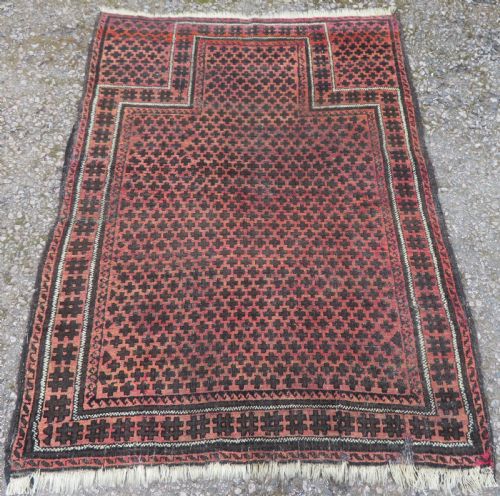
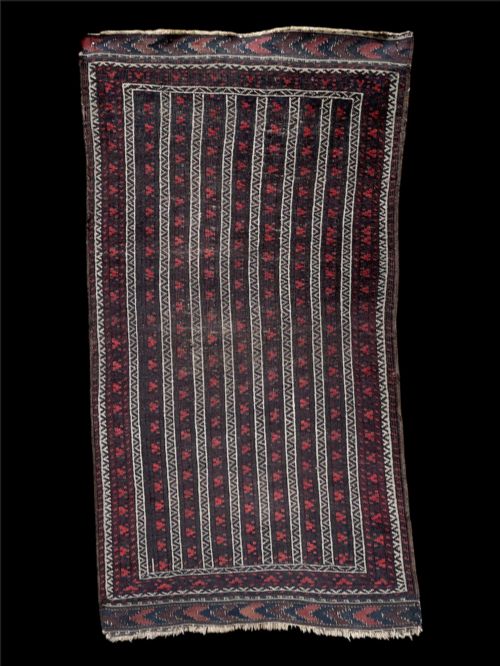
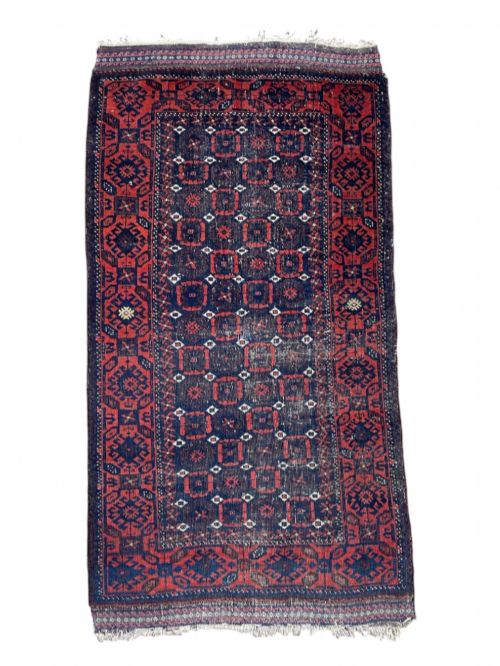
Buyers encounter items originating from the late nineteenth century through to the early decades of the twentieth century. Common formats include area rugs, main carpets, bag faces adapted as cushions, and small prayer rugs featuring distinctive tribal iconography.
The aesthetic vocabulary draws on localized tribal traditions, showcasing repeat motifs, box medallions, large guls, and specific patterns such as Mina Khani variants, Kalam Donneh pencil box designs, and triple mihrabs.
Materials and Construction
Traditional baluch weaving relies fundamentally on wool, often hand-spun and occasionally incorporating camel wool or goat hair for structural durability and textural contrast. Foundations generally employ wool or cotton yarns to support the dense pile and flatweave structures.
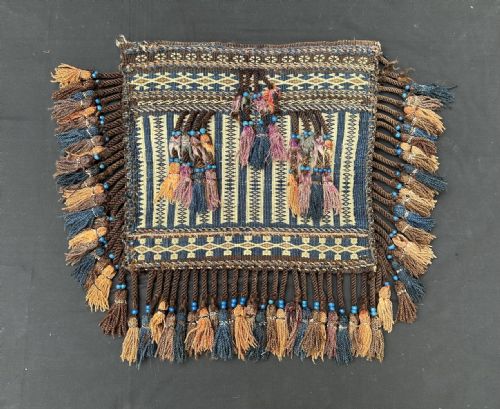
Natural dyes impart the characteristic colour palette found across these textiles, while supplementary elements like glass beads occasionally appear on utilitarian storage pieces and bag faces.
Weavers utilised traditional upright looms to construct rugs, kilims woven in two parts with chevron patterns, and specialised items like sofreh and storage bags using warp-faced or knotted-pile techniques appropriate to nomadic life.
Listings feature pieces dated from 1880 through to 1930, alongside items attributed broadly to the 19th Century.
Assessing Quality and Execution
Quality in traditional baluch weaving rests on the fineness of the knotting, the handling of the wool, and the clarity of the design motifs. Tighter structures and well-executed geometric or curvilinear patterns indicate skilled tribal production.
The depth and nuance of natural dyes contribute significantly to the visual success of a piece, as well-managed dye lots yield richer patination over time. The integrity of the foundational weave and survival of original borders also distinguish superior examples.
Material selection alters the character of the object, with hand-spun wool and camel hair introducing subtle variations in handle and resilience compared to standard commercial yarns.
Baluch Salar Khani Tribe·Mahdad Khani Baluch·Timuri·Quchan Kurds
The Traditional Baluch Weaving Glossary
- Sofreh
- A spread or cloth used for dining or food preparation, often woven with specific tribal iconography.
- Kalam Donneh
- A motif resembling a pencil box or stylized shrub, frequently found in western Afghan and Baluch carpets.
- Seh Mihrab
- A triple arch design layout typically used in prayer rugs to structure the visual field for devotion.
- Mina Khani
- A repeating grid pattern enclosing floral or geometric rosettes, adapted across various regional workshops.
- Gul
- A medallion or repeating octagonal motif used extensively as an identifier for specific tribal groups and weaving traditions.
Traditional Baluch Weaving: Frequently Asked Questions
How do I care for a tribal rug?
Vacuum gently without using a rotating brush roll to prevent catching loose wool or old foundation threads. Keep the textile out of direct sunlight to protect natural dyes from fading.
Professional cleaning should be handled by specialists experienced in antique tribal wool rather than standard domestic carpet cleaners. Allow adequate airflow beneath the piece if placed on hard flooring.
Where were these textiles made?
Production centred in the borderlands of Persia and Afghanistan, encompassing regions such as Khorassan, Sistan, and western Afghanistan. Nomadic and village communities created these pieces for daily utility and nomadic life.
Weavers belonged to specific tribal confederations and subgroups, passing down distinct pattern repertoires and dyeing techniques through generations.
What is a bag face?
A bag face is the decorative front portion of a larger utilitarian storage sack or saddlebag used by nomadic groups. These panels were often salvaged when the utility sacks wore out, preserving the finer weaving.
Many survive as small decorative mats or cushions, showcasing concentrated knotting and complex tribal designs that differed from larger floor carpets.
How do I distinguish regional styles?
Regional attribution relies on identifying specific structural traits, colour palettes, and recurring motifs such as the Kalam Donneh or box medallions. Afghan and Persian border regions each favoured particular border arrangements and structural wool colours.
Examining the selvedges, end finishes, and the presence of goat hair or camel wool provides further clues regarding tribal origin and period.