
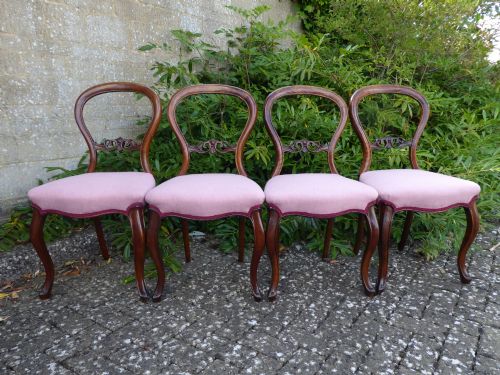
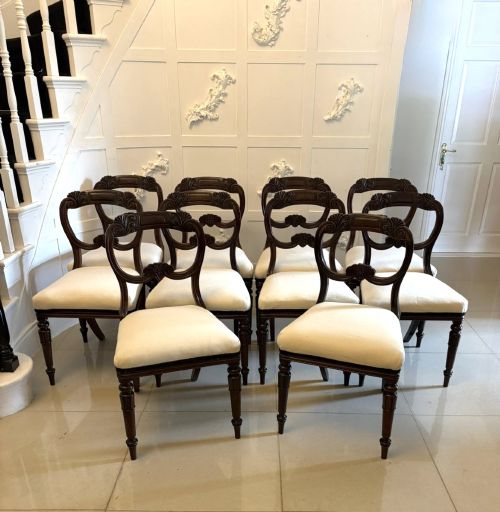
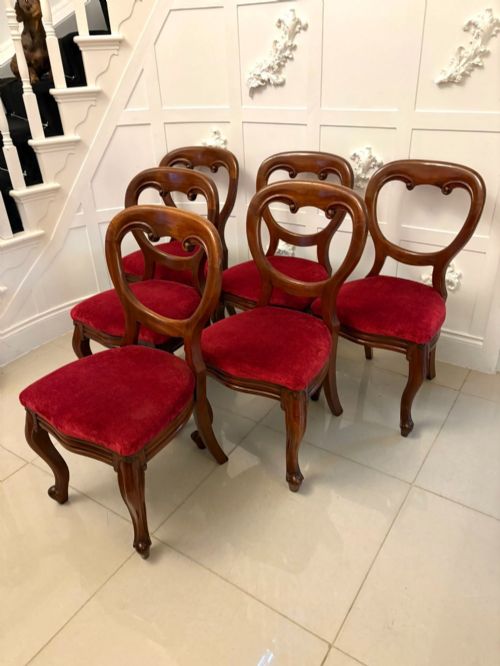
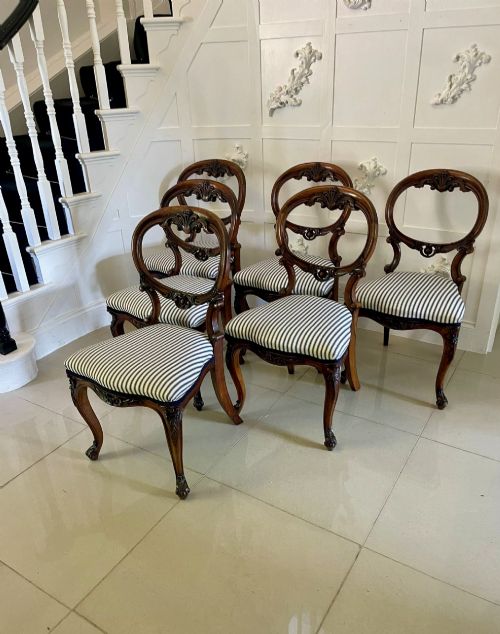
Antique Balloon Chair
An antique balloon chair brings curved, gracious 19th-century seating into modern dining rooms and parlours.
Antique Balloon Chair
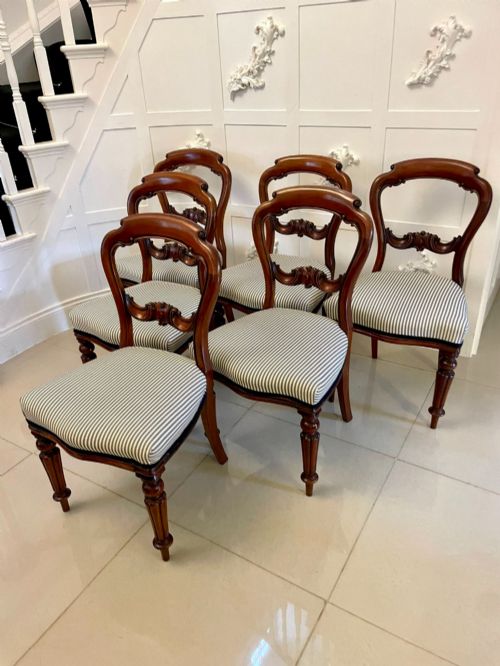
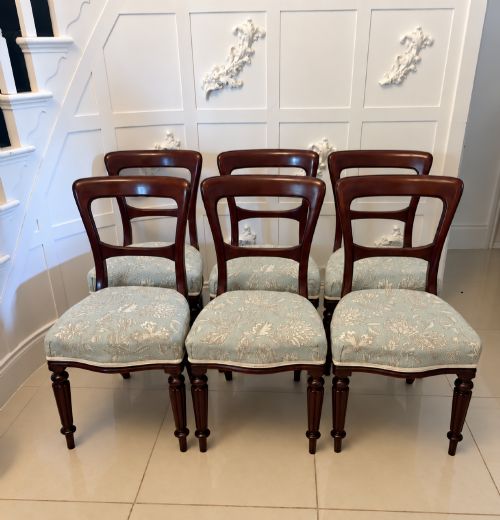
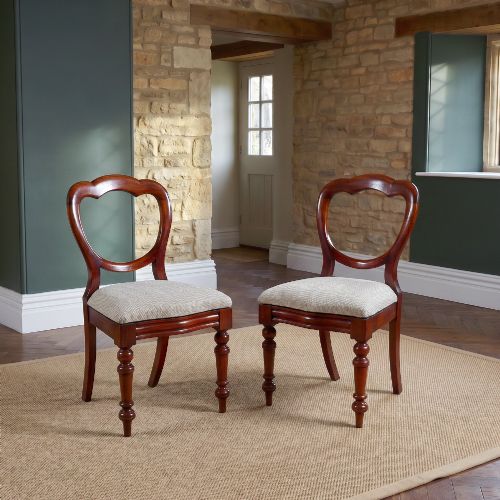
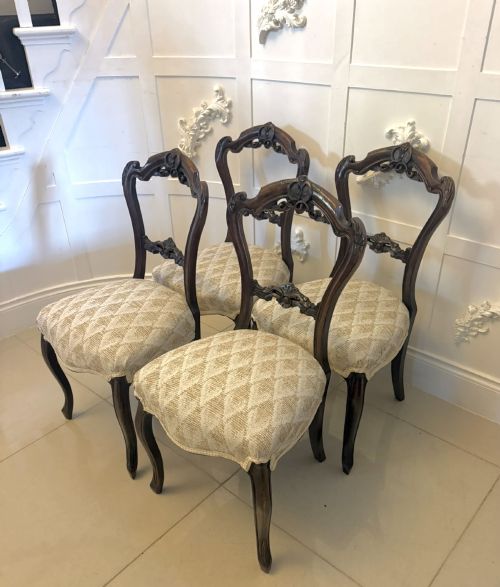
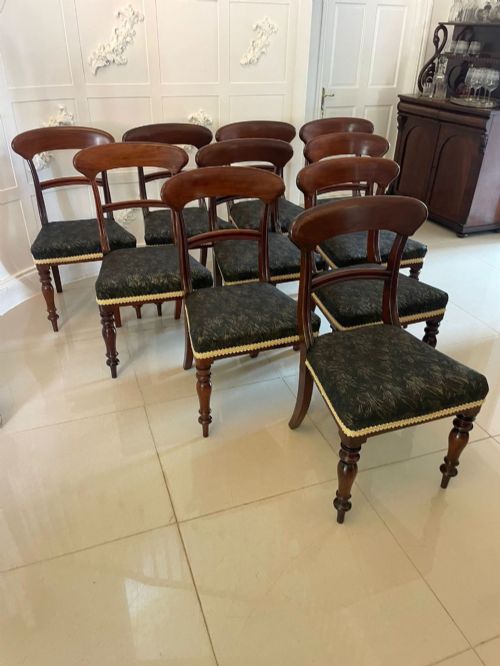
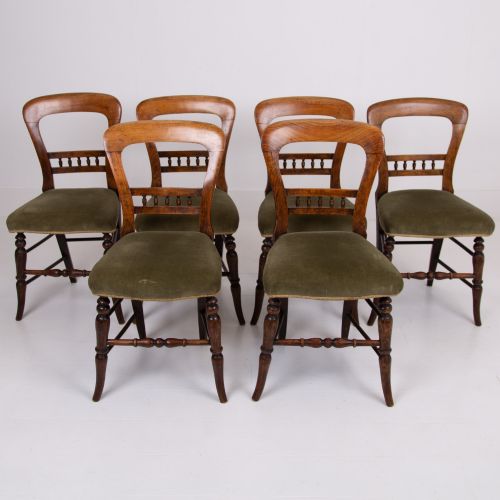
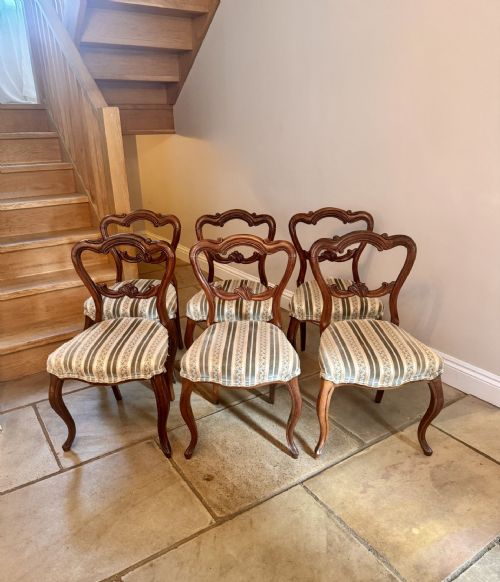
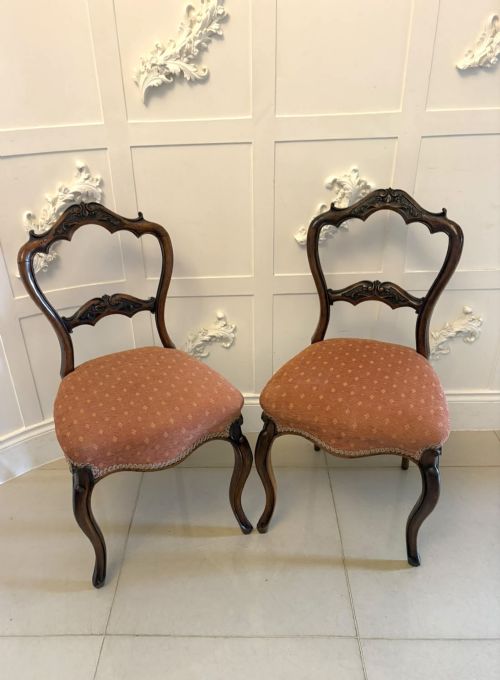
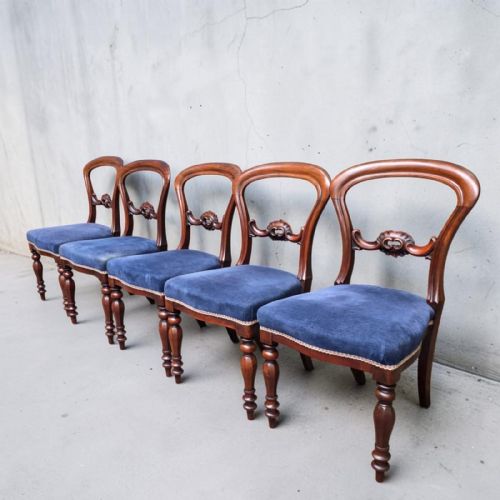
The antique balloon chair derives its name from the distinctive, rounded loop of the upper backrest, which mimics the silhouette of a hot-air balloon. These seats emerge primarily during the Victorian era, alongside earlier Regency and William IV precedents that set the stage for curved woodwork.
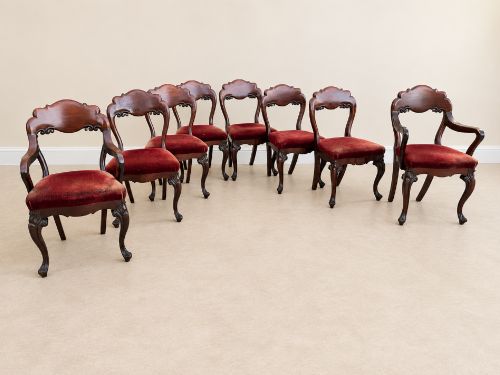
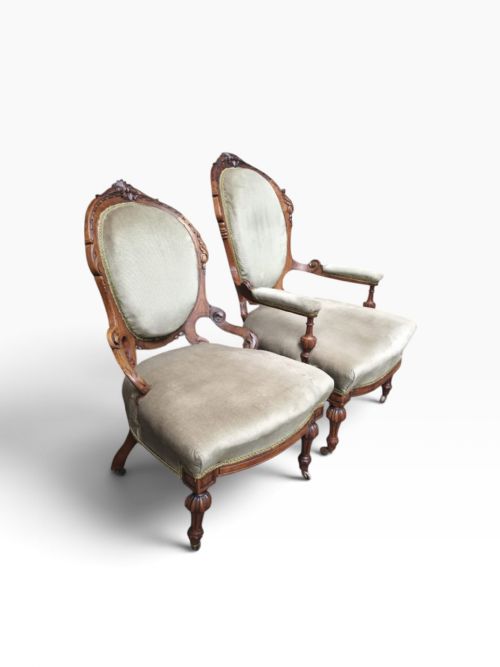
Most examples found in commerce are dining chairs, offered individually, in pairs, or in matched sets ranging from four to ten pieces. Alongside formal dining seating, the form appears in occasional chairs, bedroom chairs, and low-slung gentleman's armchairs designed for parlours.
Materials and construction methods
Cabinetmakers select rich dark hardwoods like mahogany, walnut, and occasional rosewood to provide the tensile strength required for the continuous curved back rail. These timbers are steam-bent or carved from solid stock, ensuring the frame maintains structural integrity under daily use.
Upholstery forms an integral part of the construction, utilising traditional horsehair stuffing, coil springs, and webbing secured over drop-in or fixed frames. Finish materials range from utilitarian leather to patterned velvet, brocade, and contemporary fabric replacements.
Concealed joinery such as mortise and tenon joints anchor the legs to the seat rails, often supported by front cabriole legs or turned supports equipped with brass castors on finer models.
Dating spans from Regency and William IV origins through to late Victorian productions around eighteen-eighty.
Evaluating the hierarchy of craftsmanship
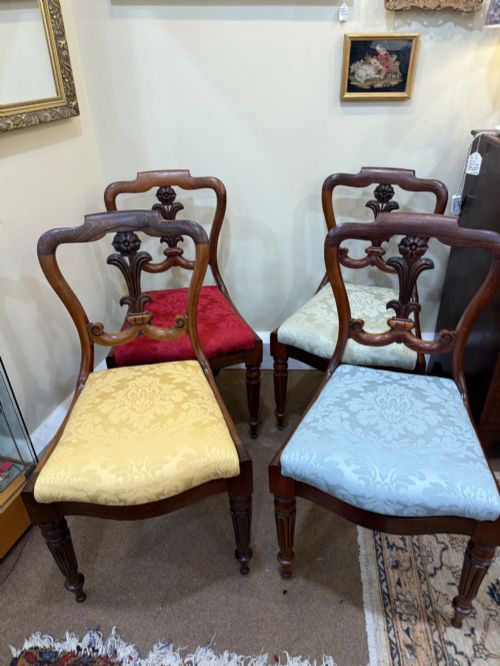
The distinction between ordinary and exceptional seating lies in the depth and sharpness of the hand-carving applied to the balloon back and crossrail. Superior examples exhibit crisply rendered foliage and well-defined mouldings rather than shallow, mechanical milling.
Timber selection and grain continuity dictate the upper tier of the market, where matched sets display consistent colour and unblemished figuring across every frame. Lesser pieces combine mismatched grain patterns or employ secondary timbers concealed beneath dark secondary finishes.
Rigidity of the frame and the quality of the original joinery separate stable survivors from compromised chairs. Master workshops ensure the back loop remains securely fixed to the seat rail without movement or stress fractures at the primary tension points.
Gillows·John Manuel & Son
The Antique Balloon Chair Glossary
- Balloon back
- A chair back shaped into a continuous oval or loop resembling a hot-air balloon, popular during the mid-nineteenth century. This silhouette defines the primary aesthetic of Victorian dining seating.
- Cabriole leg
- A furniture leg that curves outward at the knee and tapers inward toward the ankle, finishing in a scroll or plain foot. This shape borrows from eighteenth-century design revivals seen across Victorian walnut frames.
- Rosewood
- A dense, heavily figured tropical hardwood prized for its dark grain and reddish-brown colouration. Cabinetmakers utilise it selectively for high-status dining and occasional furniture.
- Splat
- The central vertical strip of wood connecting the seat to the top rail of a chair back. In balloon chairs, this element frequently bears elaborate scrollwork or carved ornamentation.
- Brocade
- A heavy, shuttle-woven fabric featuring raised floral or pictorial patterns, often utilised for recovering period upholstery. It provides the heavy texture traditional to Victorian formal interiors.
Antique Balloon Chair: Frequently Asked Questions
How do I date an antique balloon chair?
Dating relies heavily on secondary timber choices, leg profiles, and the transition from earlier Regency frameworks into the fully developed Victorian balloon shapes of the 1850s and 1860s. Earlier examples retain heavier rosewood proportions, while later Victorian pieces lean toward lighter walnut and mahogany.
Secondary indicators include upholstery remnants, hand-cut screw heads, and structural assembly methods hidden beneath the drop-in seat frame. Comparing the carved motifs against documented workshop styles helps narrow the decade of production.
Were these chairs strictly for dining?
While the vast majority survive as sets intended around a dining table, the form adapts easily to office, salon, and bedroom use. Smaller side chairs and occasional chairs served various domestic functions throughout the Victorian home.
Low-backed varieties also functioned as desk chairs or vanity seating, while larger padded versions served as gentleman's armchairs in private studies. Their lightweight frames permitted easy movement from room to room.
How should I care for the show wood?
Maintenance requires gentle cleaning with a soft, dry cloth to remove dust without disturbing the polished patina built up over generations of use. Avoid modern silicone-based sprays, which penetrate open grain and degrade historic finishes.
Feeding the dry hardwood with appropriate paste wax preserves moisture levels in older mahogany and walnut. Keeping the chairs away from direct heat sources prevents timber shrinkage and subsequent joint loosening.
Can I mix different sets around one table?
Mixing individual pairs or matching subsets requires careful attention to seat height, timber tone, and the precise curve of the balloon back. Heights varied across nineteenth-century workshops, making uniform alignment difficult if seat frames differ significantly.
Matching woods like mahogany together provides visual harmony even when carving details vary slightly between chairs. Ensure the arm height clears the underside of the dining table if incorporating armchairs into the arrangement.