



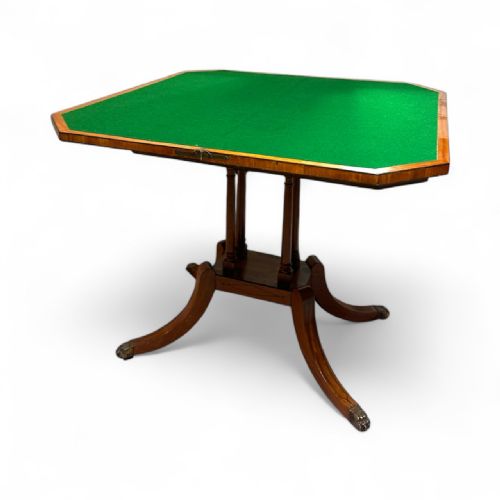

Antique Baize Card Table
An antique baize card table brings folding leaves, wool surfaces and clever mechanisms into the home for evening play.
Antique Baize Card Table
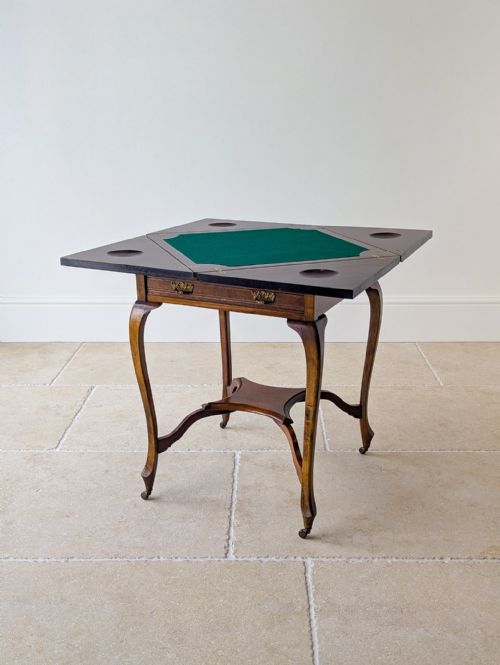
An antique baize card table is primarily designed for domestic entertainment, appearing in forms such as fold-over tops, envelope designs, and concertina actions. These tables date across the Georgian, Regency, William IV, Victorian, and Edwardian periods.
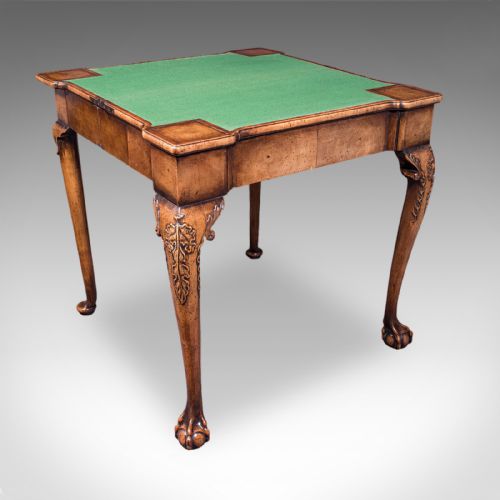
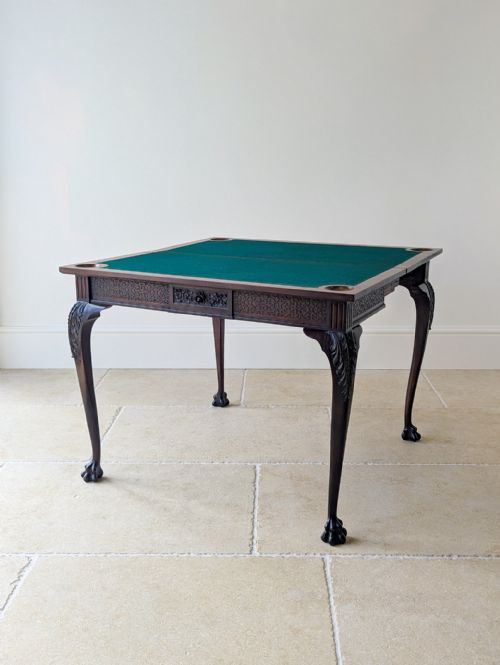
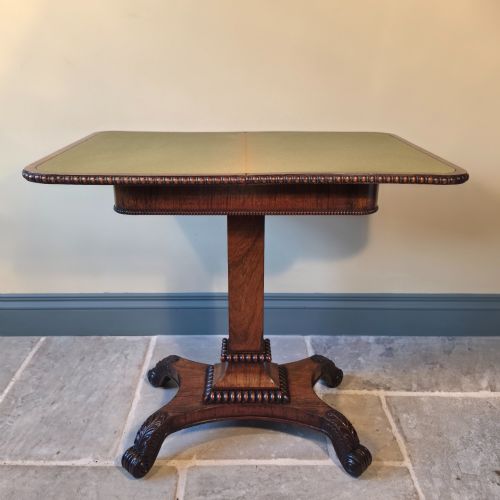
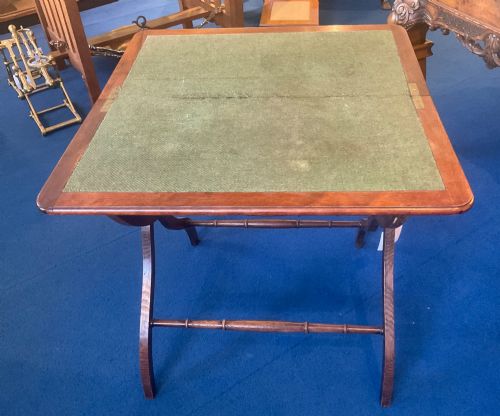
The version most commonly encountered on this page is the fold-over mahogany or walnut table from the Victorian or Georgian eras. Such pieces often conceal storage compartments or pivot open to reveal a wool baize playing surface.
Makers and workshops across England and France produced these items in various regional styles, ranging from demilune console shapes to triangular bentwood frames and tea trolley hybrids.
Materials and Technique
Cabinetmakers utilised dense timbers like mahogany, rosewood, walnut, and satinwood, frequently applying veneers of burr walnut, amboyna, or maple to display rich grain patterns. Inlays of brass, mother-of-pearl, and parcel gilding accent specific ebonised or polished frames.
The traditional playing surface consists of wool baize, secured to the timber interior to provide a soft, tactile counter for cards and chess pieces. Structural joints rely on concertina actions, pivoting hinges, and folding brackets to support the heavy tops when opened.
Some tables hide tiny wells beneath the baize designed to hold ivory gaming counters safely away from stray elbows.
Craftsmanship and Mechanism
Quality rests in the precision of the folding mechanism and the stability of the timber hinges or concertina frames. Superior tables maintain a flat surface when open, without sagging at the folding leaf.
The selection of timber veneers and the crispness of inlaid details distinguish standard production from workshop pieces by notable makers. Original wool baize linings and well-executed joinery elevate the standing of an antique baize card table.
James Shoolbred & Co·Gillows·Thonet·Lamb of Manchester·Howard & Sons·Edwards & Roberts
The Antique Baize Card Table Glossary
- Baize
- A coarse woollen material, typically green, used to line the playing surface of games tables. It provides a durable, non-slip texture for cards.
- Concertina action
- An expanding frame mechanism that allows the table rails to pull forward and support the unfolded top evenly. This technique is often found on fine Georgian tables.
- Envelope table
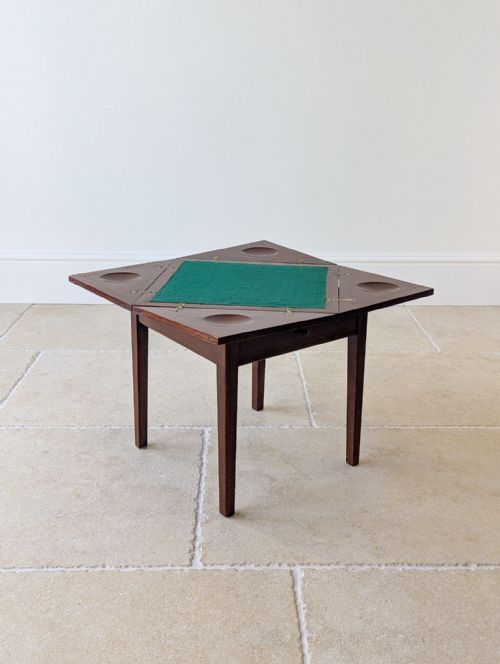
- A square table with four triangular flaps that fold inward and rotate to open like an envelope. Edwardian makers produced these in large numbers.
- Demilune
- Half-moon shaped, describing tables with a semicircular top that sit flat against a wall when closed. They open into a full circle for play.
- Parcel gilt
- Partially gilded with gold leaf or paint, highlighting specific carved or applied details on the timber frame.
Antique Baize Card Table: Frequently Asked Questions
How do you open a fold-over card table?
The top leaf rotates on a pivot or lifts on hinges, swinging through ninety or one hundred and eighty degrees to rest upon the frame.
Support brackets or a pull-out concertina rail extend from beneath to hold the weight of the unfolded surface.
What games were played on these tables?
Gentlemen and families gathered around these surfaces to play whist, bridge, and various card games of the period.
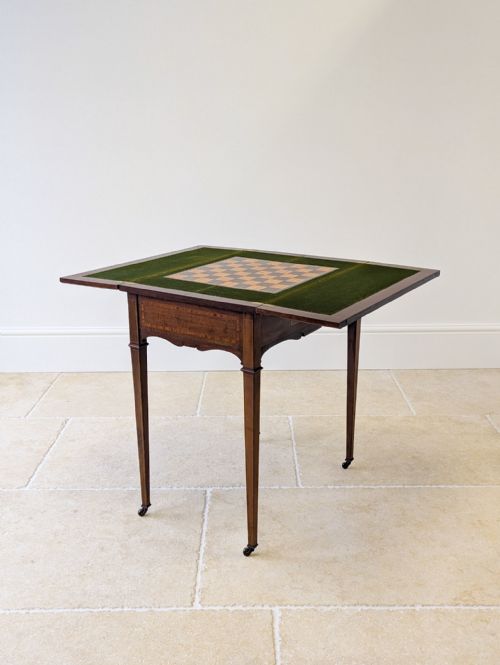
Many tables also include inlaid chess boards or compartments for counters and dice beneath the folding top.
How do you care for wool baize?
The wool surface requires gentle brushing to remove dust and crumbs without pulling the woven fibres.
Moisture must be kept away from the baize and timber to prevent staining and warping of the internal frame.
How do I identify a Georgian card table?
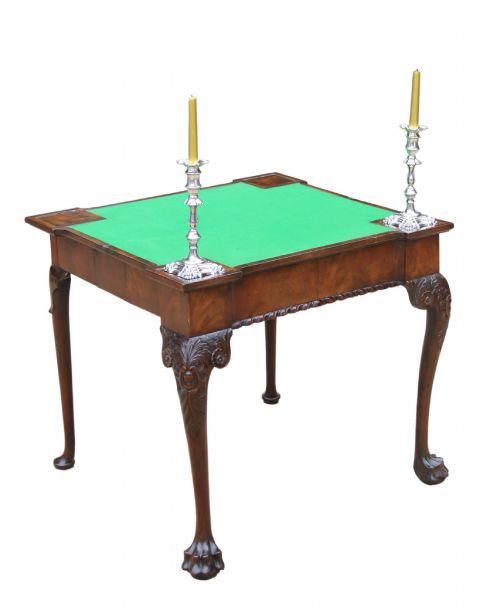
Georgian examples often feature solid mahogany or rosewood construction with straightforward fold-over tops and candle corners.
Concertina frames and restrained carving without excessive ornamentation typically point towards eighteenth-century craftsmanship.