



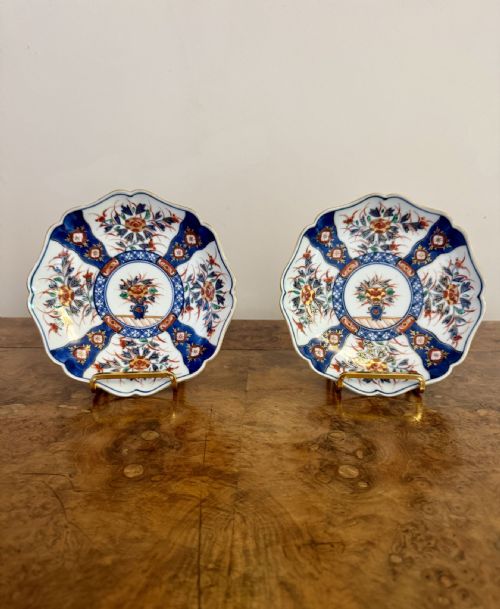
Antique Asian Chargers
These antique asian chargers bring bold ceramic and metalwork traditions into the room, spanning Meiji period Japanese design and Chinese export porcelain.
Antique Asian Chargers
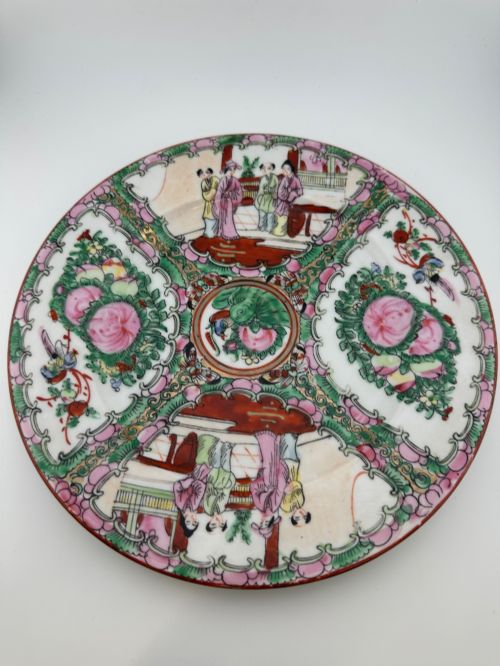
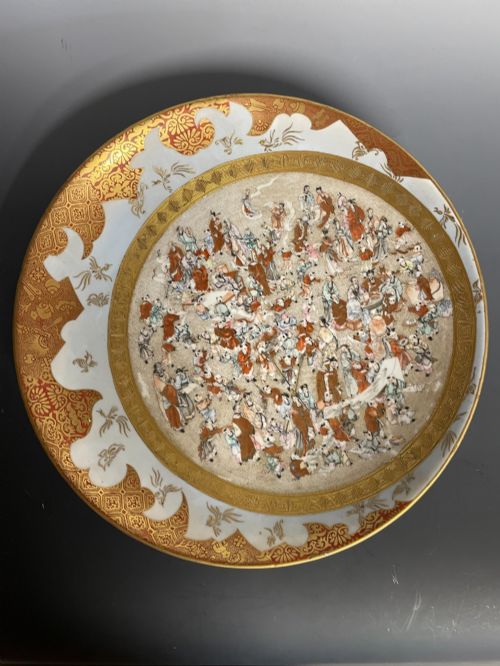
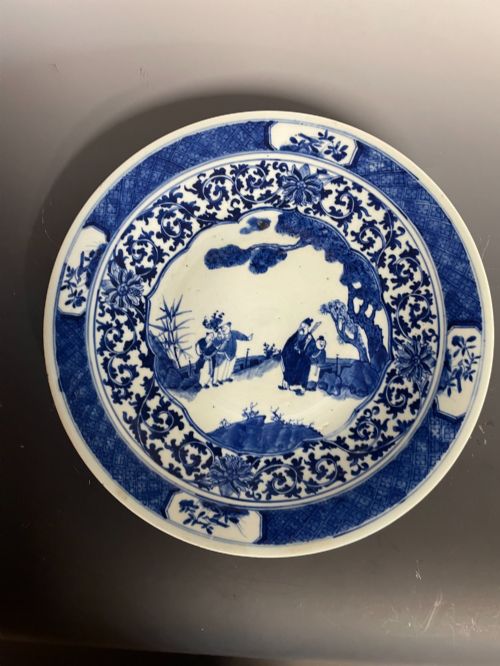
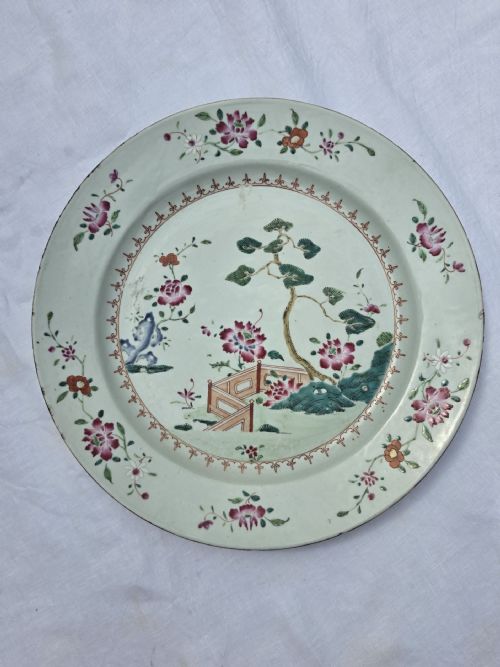
When searching for antique asian chargers, collectors encounter large decorative plates, dishes, and plaques produced in Japan and China. The selection on this page relies heavily on Japanese Meiji period examples alongside Chinese export wares from the eighteenth and nineteenth centuries.
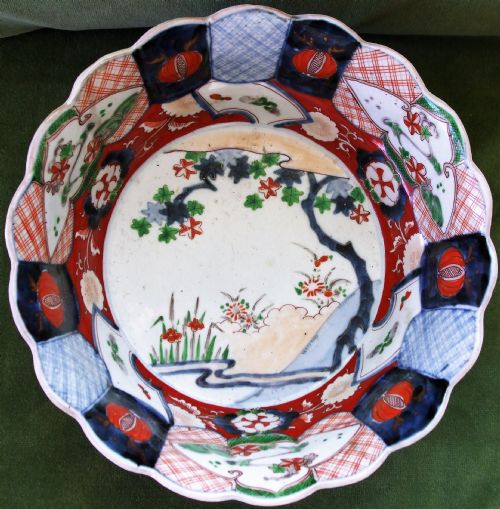
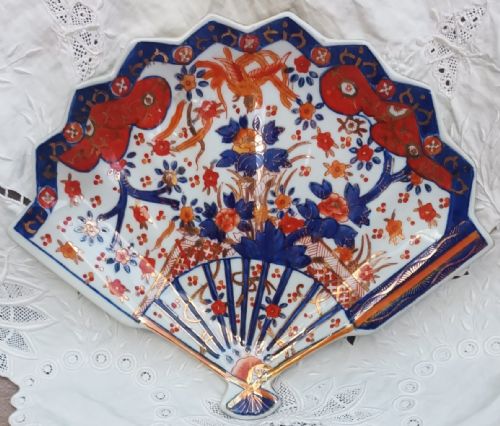
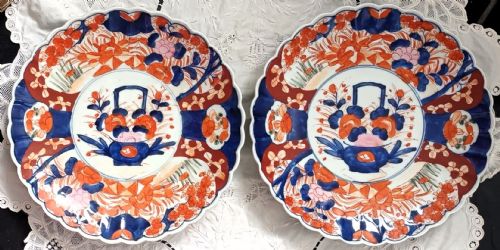
Most entries span the late nineteenth and early twentieth centuries, capturing the height of Meiji craftsmanship and traditional Imari production. Forms range from broad scalloped bowls and flat presentation platters to heavy cloisonne enamel trays.
How they were made
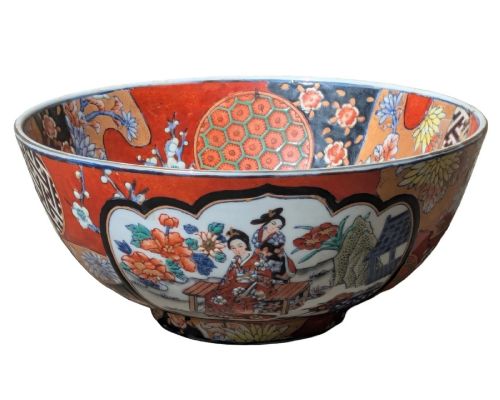
Potters shaped porcelain and clay before applying hand-painted glazes, cobalt blue underglazes, and iron-red overglaze enamels. Chinese export and Japanese Kutani and Imari pieces demonstrate intensive brushwork and kilning techniques.
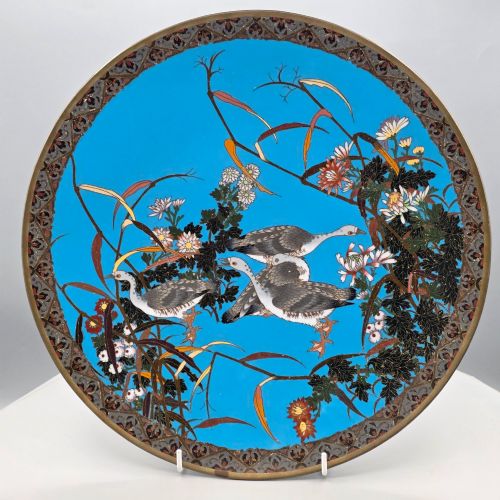
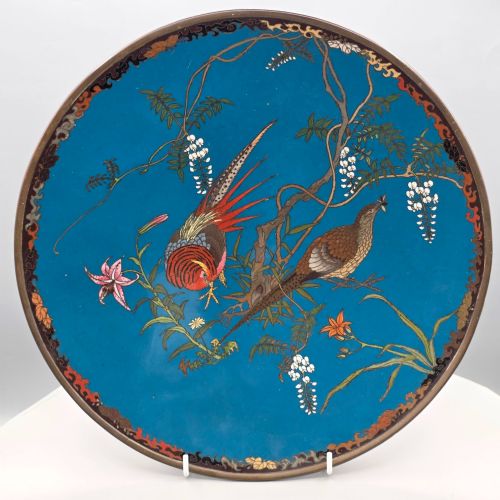
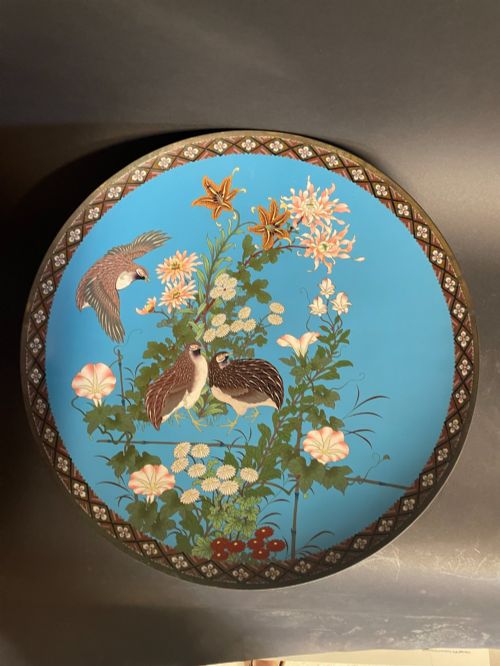
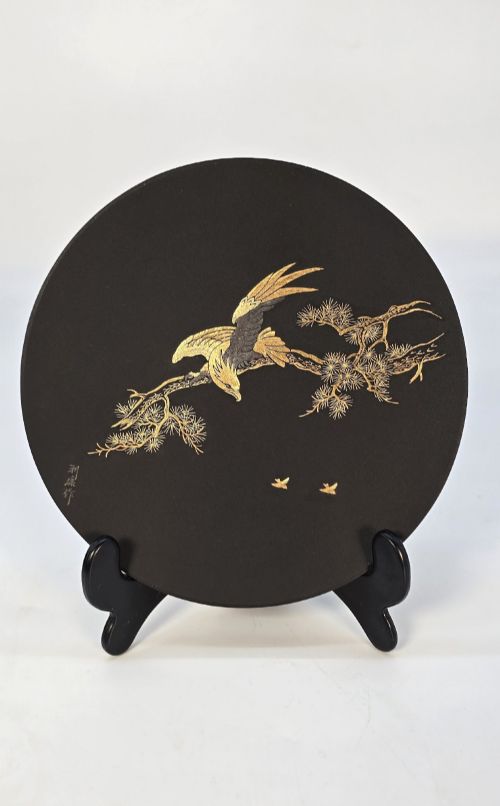
Metalwork items utilise copper or patinated iron foundations fitted with delicate wire cloisonne compartments filled with coloured enamel pastes. Artisans also integrated gold and silver inlay to define intricate avian and floral motifs.
Among the feathered subjects gracing these metal and ceramic surfaces, an owl perched near Mount Fuji shares space with leaping koi and proud phoenixes.
What varies in quality
The sophistication of the hand painting and the crispness of the enamel separation dictate the distinction between standard production and masterwork items. Complex pictorial subjects like birds, deities, and koi require exceptional brush control and wire-laying precision.
The weight of the porcelain body, the depth of the glaze vitrification, and the intact survival of gold leaf or surface patination separate basic utility wares from exhibition-grade presentation pieces.
Koshida
The Antique Asian Chargers Glossary
- Imari
- A traditional Japanese style of porcelain decorated in underglaze blue, iron red, and gold. These pieces originated from the town of Arita and became widely exported to European markets.
- Cloisonne
- A metalwork technique where thin wire partitions are soldered to a copper or bronze base to create cellular compartments. These cells are then packed with enamel paste and fired in a kiln.
- Kutani
- A style of Japanese coloured porcelain noted for bold pictorial designs and heavy use of green, yellow, purple, and red pigments. Production centres in Ishikawa Prefecture revived these kilns during the nineteenth century.
- Famille Rose
- A major palette of Chinese ceramic glazes introduced in the eighteenth century, distinguished by opaque pink or purple enamels derived from colloidal gold. This palette allowed for subtle tonal gradations in floral and figural scenes.
Antique Asian Chargers: Frequently Asked Questions
What is an antique asian charger?
A charger is a large decorative plate or dish intended primarily for display rather than table service. These substantial vessels were produced across Asian export and domestic markets to showcase elaborate ceramic and metalwork artistry.
In historical settings, they anchored sideboard displays or served as centrepieces on large dining tables. Today they function as wall-hung art or statement cabinet pieces.
How should I display a heavy cloisonne charger?
Heavy cloisonne enamel and patinated metal chargers require sturdy wall hangers designed specifically for thick rims and considerable weight. Ensure the support grips the edge securely without placing undue pressure on the enamel surface.
Alternatively, use a deep-grooved wooden display stand placed on a stable cabinet or mantelpiece. Position the piece away from direct sunlight to protect the coloured enamel pastes from potential fading.
What period do most of these pieces date from?
The majority of the items on this page originate from the Meiji period in Japan, spanning the late nineteenth and early twentieth centuries. This era saw a surge in export production aimed at Western collectors.
Earlier examples stretch back to the eighteenth century under Chinese export porcelain traditions, while later items extend into the Taisho and Showa eras.