


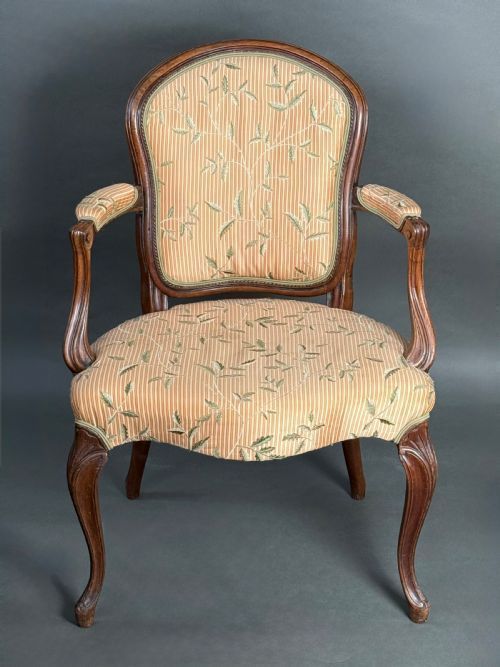
Antique Armchair with Arms
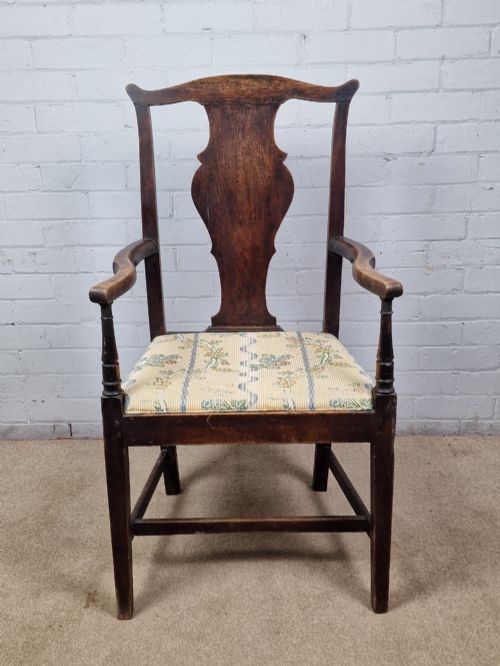
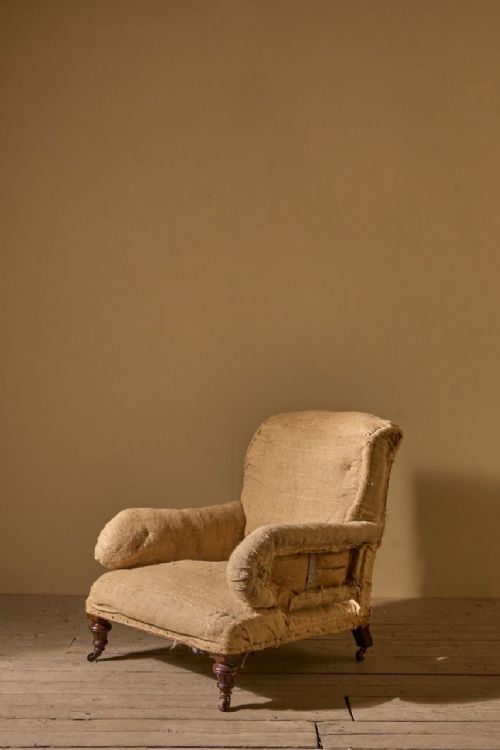
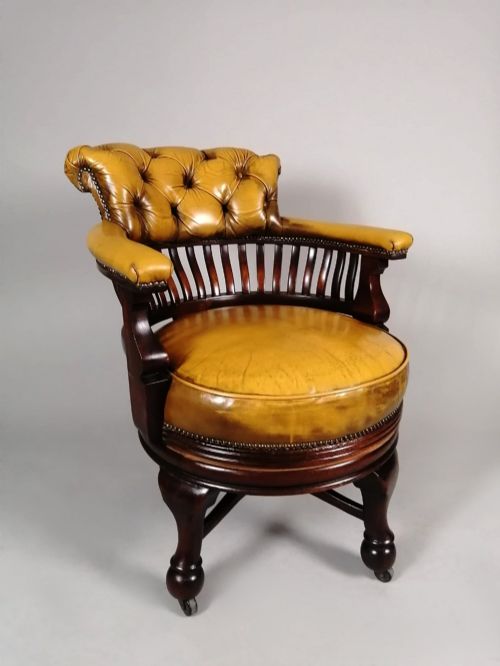
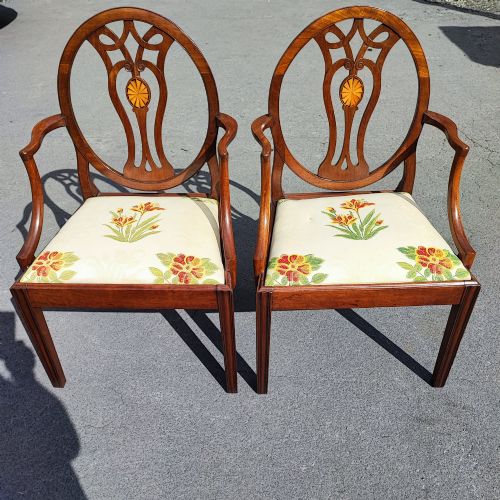
An antique armchair with arms offers substantial seating built through centuries of cabinet-making, combining sturdy timber frames with traditional upholstery.
Antique Armchair with Arms
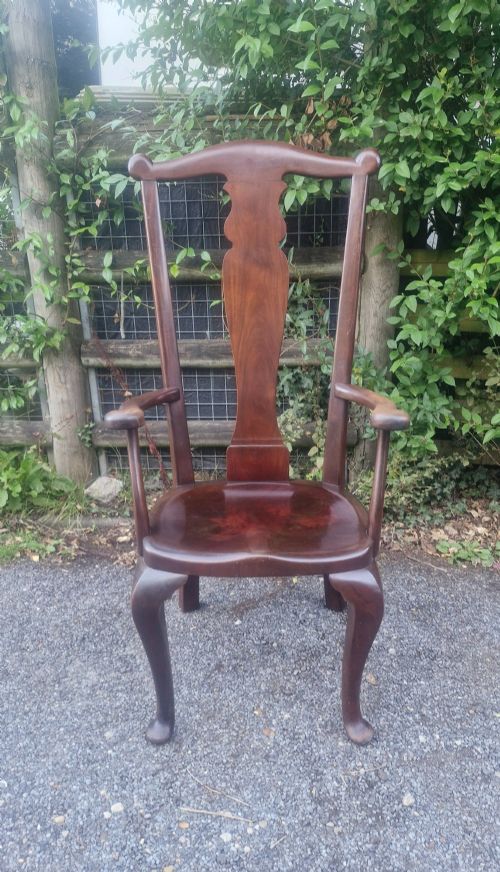
An antique armchair with arms brings together centuries of seating forms, ranging from formal library library chairs and gentleman's reading seats to relaxed country house models. When searching this phrase, buyers encounter pieces spanning the eighteenth, nineteenth, and early twentieth centuries, reflecting diverse domestic uses.
Origins vary across English country house styles, French carved frames, Anglo-Indian teak designs, and Chinese horseshoe backs, providing considerable variety in proportion and silhouette. Buyers select these chairs for daily use in studies, bedrooms, and drawing rooms where architectural presence matters.
Materials and construction methods
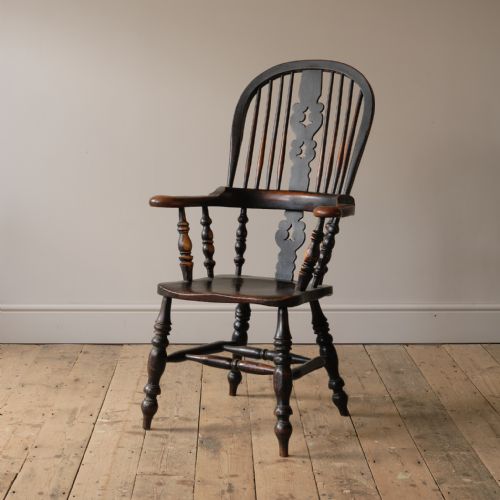
Timbers form the structural backbone of these seats, with dense hardwoods such as mahogany, oak, walnut, yew, and teak dominating the framing and legs. Joinery relies on traditional pegged mortise and tenon joints, hand-carving, and steam-bending for curved elements like Windsor hoops and scroll arms.
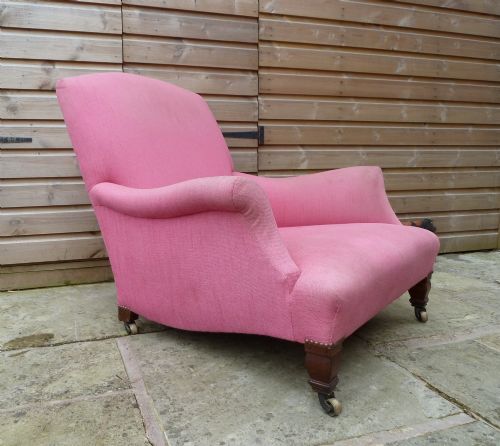
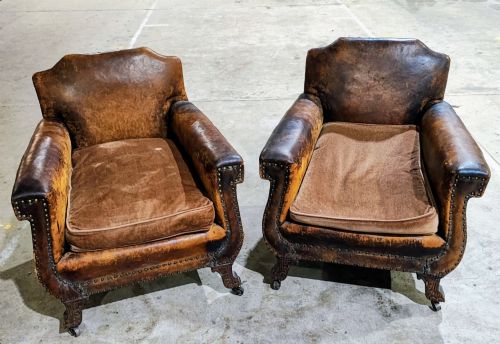
Upholstery techniques involve traditional stuffing materials held by webbing, springs, and horsehair beneath top coverings of leather, velvet, needlework, crewel work, and printed fabric. Hand-dyed leathers and original ticking or kilim textiles often survive on the most enduring frames.
Some Victorian oak Gothic hunting armchairs feature detailed hand-carved dogs and hounds keeping watch from the wooden arms.
Factors separating exceptional pieces
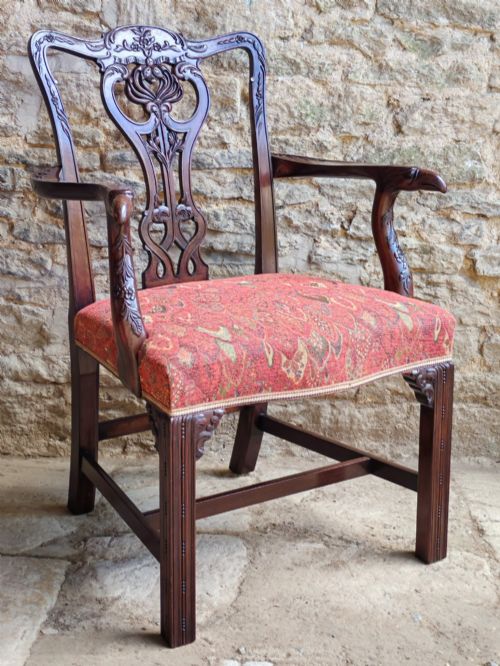
Quality rests in the precision of the timber carving, the integrity of the underlying joinery, and the harmony of the overall proportions. Crisp acanthus scrolls, well-defined barley twist turnings, and deeply figured wood grain distinguish superior examples from standard workshop output.
The retention of original upholstery foundations, hand-dyed leathers, and maker stamps elevates specific seating forms. Pieces maintaining their early frame stability and untouched surface patination command deeper appreciation from collectors.
Howard and Son's·Morris and Co
The Antique Armchair with Arms Glossary
- Bergere
- An enclosed upholstered armchair with a wooden frame, typically featuring cane work on the back and sides.
- Carver chair
- A dining chair fitted with arms, historically placed at the head of a table for the host.
- Elbow chair
- A traditional term for a seating piece with integrated armrests, often used informally in bedrooms or writing rooms.
- Horseshoe back
- A continuous curved wooden rail forming the back and arms of traditional Chinese seating forms.
- Scroll arm
- An armrest carved into an inward or outward-curling volute shape, common on Regency and Victorian frames.
Antique Armchair with Arms: Frequently Asked Questions
How do I identify a Regency armchair?
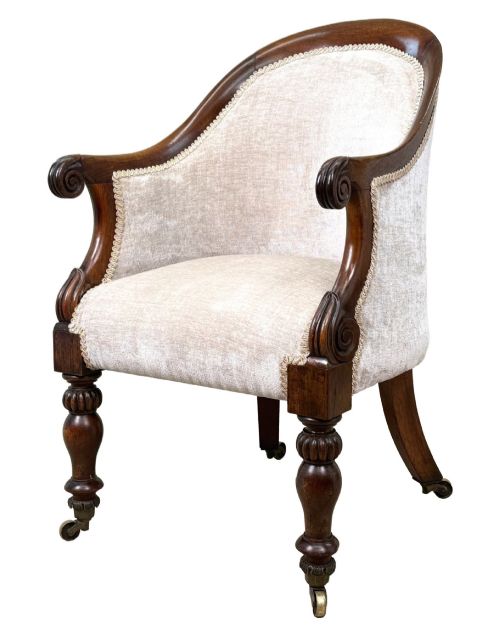
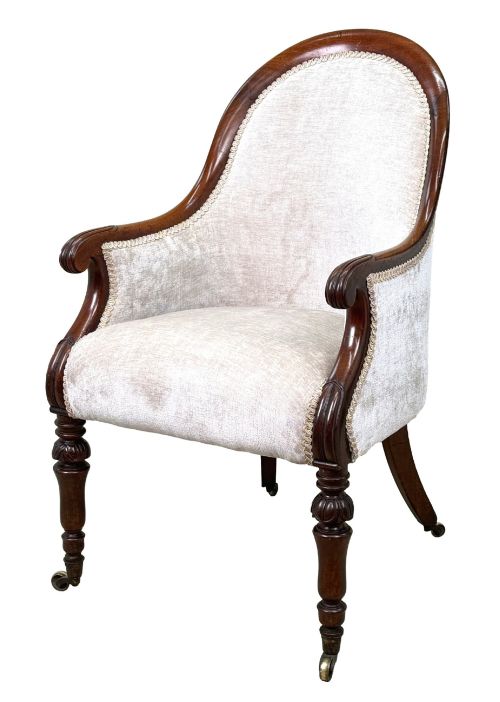
Regency armchairs typically exhibit classical restraint, utilising dark mahogany timbers, sabre legs, and subtle brass inlay or scroll arm details influenced by ancient Greek and Roman designs.
These pieces date roughly from the early nineteenth century and prioritize clean lines and architectural balance over heavy carving.
What is a library armchair?
Library armchairs were built for reading rooms and studies, offering wide proportions, supportive padded arms, and often sliding mechanisms or cane panels for comfort during long periods of study.
They frequently feature high backs and durable leather or velvet upholstery designed to withstand heavy daily use.
Are Windsor armchairs comfortable?
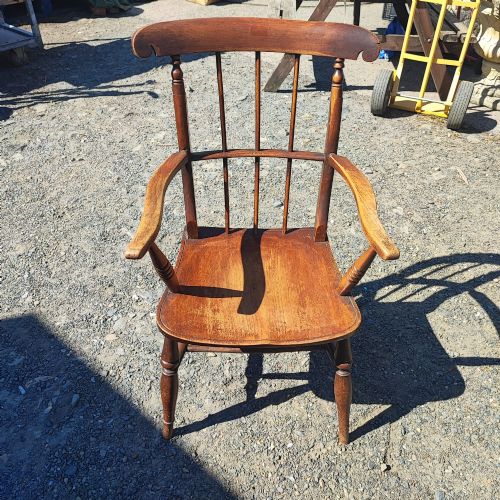
Windsor armchairs derive comfort from their sculpted wooden seats and steam-bent spindle backs, which conform naturally to the body without relying on deep padding.
Built using mixed timbers like yew and elm, they provide sturdy, upright support suited for country houses and kitchens.
How do I care for antique leather upholstery?
Antique leather requires gentle cleaning with specialised saddle soaps and occasional conditioning to prevent the hide from drying out and cracking over time.
Keeping these chairs away from direct sunlight and heat sources preserves the natural patina and hand-dyed colour.