





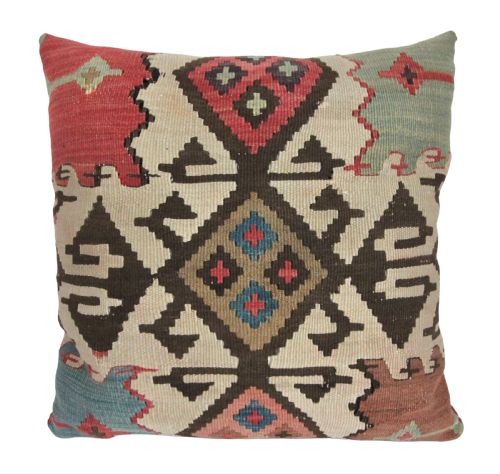
Antique Anatolian Kilim
An antique anatolian kilim brings tactile warmth and graphic depth to an interior through flatweave geometry.
Antique Anatolian Kilim
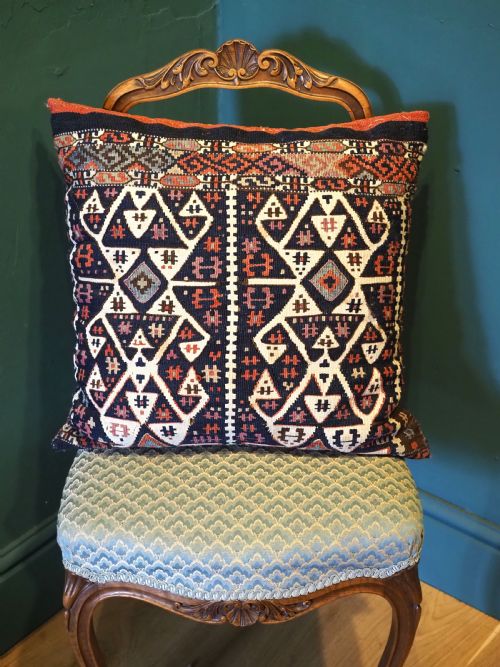
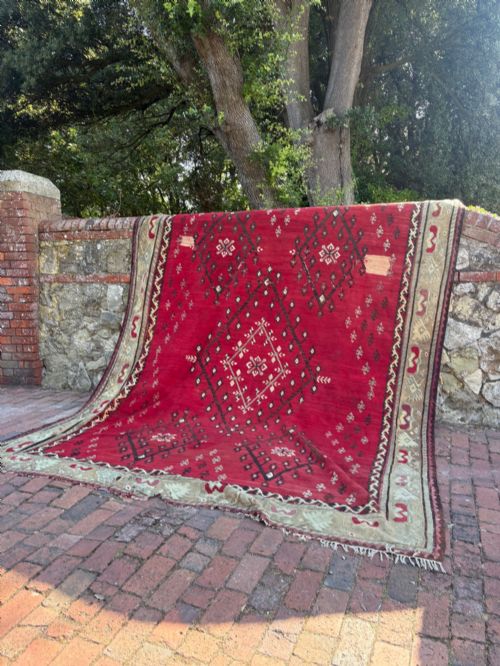
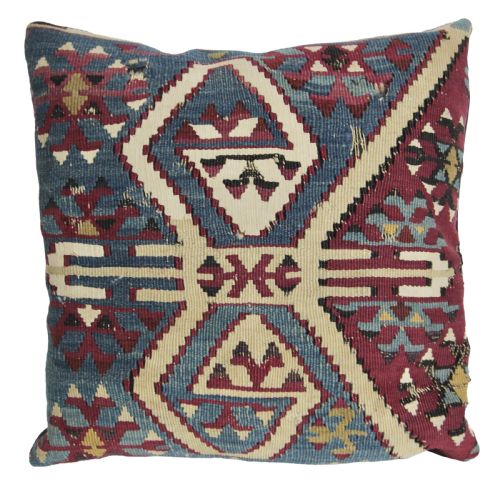
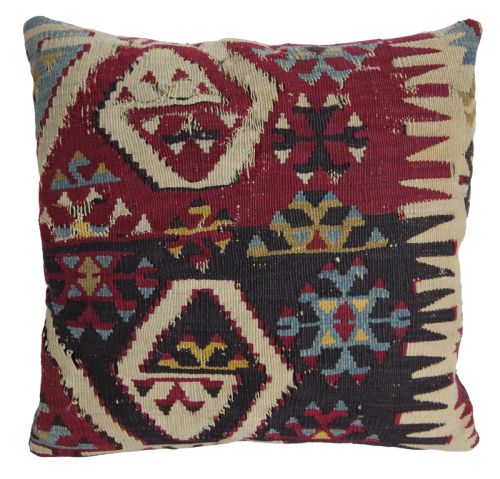
When you search for an antique anatolian kilim, you encounter flatweave textiles originating from villages, nomadic camps, and regional centres across Anatolia, spanning the nineteenth and early twentieth centuries. These pieces encompass large room-size carpets, long runners, prayer formats, and smaller utility items such as saddle bags and cushions.
The version you are most likely to meet on this page is a flatweave rug or a repurposed cushion dating from periods between eighteen-fifty and nineteen-thirty. Their origins trace to specific weaving regions including Malatya, Konya, Ushak, and Sarkoy, reflecting diverse tribal traditions.
How they were made
Weavers constructed these textiles primarily using wool for the patterned weft faces and structural warps, occasionally incorporating cotton and leather elements in functional components like saddle bags. The slit-weave flatweave technique creates distinct geometric boundaries where different colour blocks meet without knotting.
Additional surface enrichment involved supplementary weft techniques such as cicim embroidery, where decorative patterns are laid onto the woven ground. Natural dyes yielded the traditional reds, greens, and soft earthy tones recorded across regional workshops and nomadic groups.
Listings feature flatweaves spanning the nineteenth and early twentieth centuries, constructed from wool, cotton, and leather.
What varies in quality
The distinction between ordinary and exceptional pieces rests upon the precision of the geometric design and the saturation of the colour palette. Strong regional characteristics and well-balanced compositions elevate certain flatweaves above standard domestic production.
Structural integrity and the condition of the wool weave influence desirability, though historical repairs and timeworn patination frequently accompany genuine age. Pieces retaining distinct tribal iconography and clear regional provenance demonstrate the highest standard of craftsmanship.
Malatya·Konya·Ushak·Bergama·Sarkoy
The Antique Anatolian Kilim Glossary
- Kilim
- A pileless flatwoven textile produced by tightly interweaving warp and weft strands to form geometric patterns. These pieces function historically as floor coverings, wall hangings, and utility bags.
- Cicim
- A decorative embroidery technique where supplementary threads are sewn onto a completed flatweave foundation. This method introduces raised surface patterns to tribal panels and rugs.
- Chuval
- A large storage sack woven by nomadic groups to transport household possessions. Fragments of these bags frequently survive as decorative cushions or small rugs.
- Prayer kilim
- A textile featuring a distinct mihrab design indicating the direction of prayer. These formats were woven across various Anatolian regions for personal devotion.
- Slit weave
- A foundational flatweaving technique where the weft threads reverse direction around adjacent warps, creating a small vertical split between colour areas. This method defines the sharp geometric edges characteristic of tribal flatweaves.
Antique Anatolian Kilim: Frequently Asked Questions
How do I clean an antique anatolian kilim?
Gentle surface brushing and professional specialist washing preserve the wool fibres and natural dyes. Avoid harsh chemical treatments and excessive water immersion.
Regular light vacuuming without a rotating brush prevents dust accumulation within the flatweave structure. Rotating the textile periodically ensures even wear in high-traffic interior spaces.
Can I use these flatweaves on the floor?
Many large formats and runners serve well as floor coverings when paired with a quality non-slip underlay. This extra layer reduces friction and movement on hard surfaces.
Smaller formats and delicate wall-hanging panels benefit from low-traffic placement or display away from heavy footfall. This protects the historic wool structure from premature fibre fatigue.
What is a saddle bag kilim?
Nomadic weavers constructed large paired utility sacks, known as heybe or chuval, to carry belongings during seasonal migrations. These durable wool containers featured bold geometric patterns on their visible faces.
Modern interiors often showcase these bag faces as decorative cushions or small wall panels. Their survival preserves authentic tribal weaving methods from the nineteenth century.
How do I identify a prayer kilim?
Prayer formats typically display a distinctive pointed arch or mihrab motif at one end of the field. This architectural element directed the user toward Mecca during daily devotions.
Regional weaving centres such as Obruk and Sivrihisar produced these specific devotional designs. Their symmetrical layouts and symbolic motifs distinguish them from standard tribal carpets.