



Antique Amethyst Lavalier
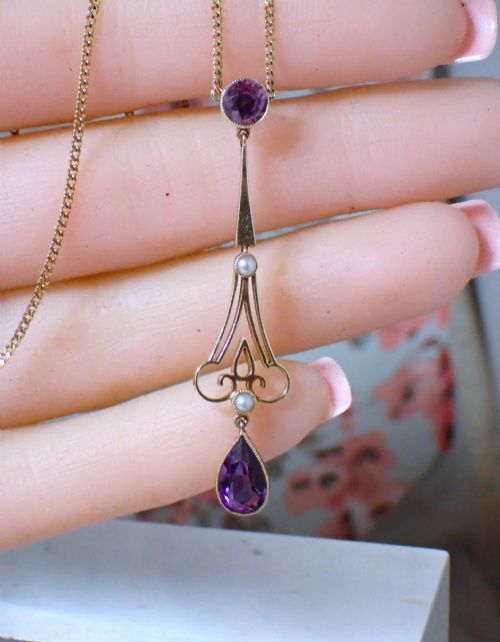
An antique amethyst lavalier suspends a rich purple quartz from delicate drops, bringing Edwardian and Victorian grace straight to the neckline.

Antique Amethyst Lavalier
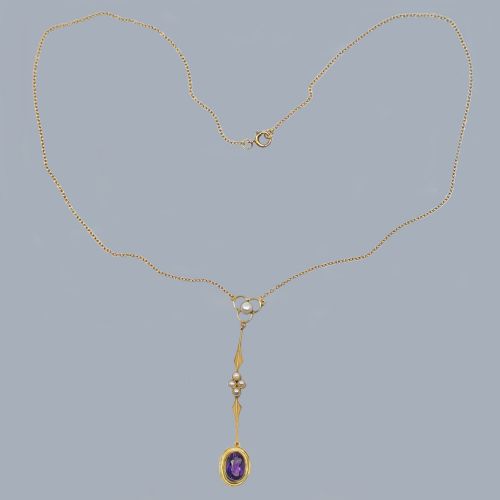
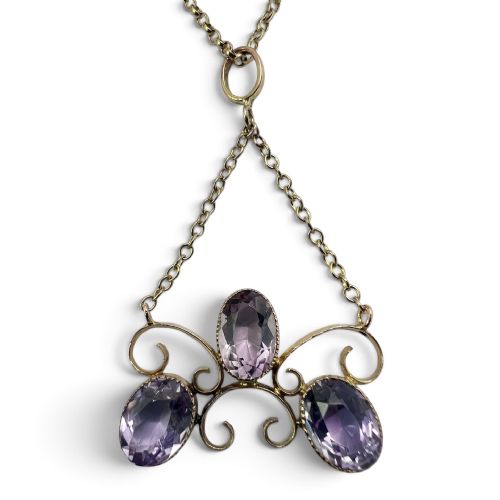
When you search for an antique amethyst lavalier, you are looking at pendant necklaces characterised by suspended stones and free-swinging drops that epitomise early twentieth-century jewellery design. The pieces on this page span the Victorian, Edwardian, and Art Nouveau periods, alongside later twentieth-century examples.
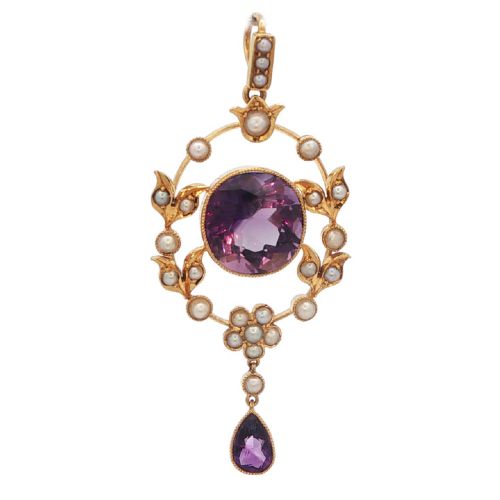
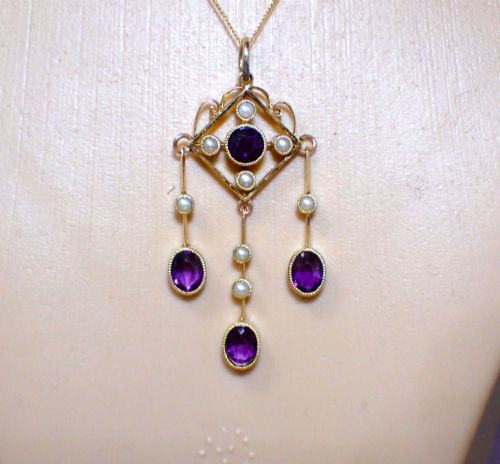
You will most frequently encounter Edwardian and Art Nouveau designs executed in nine-carat or fifteen-carat gold, often paired with seed pearls. These works rely on symmetrical foliate motifs or flowing organic lines to frame the central purple gem.
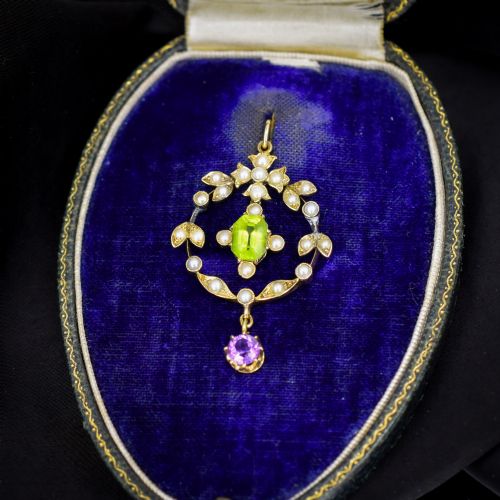
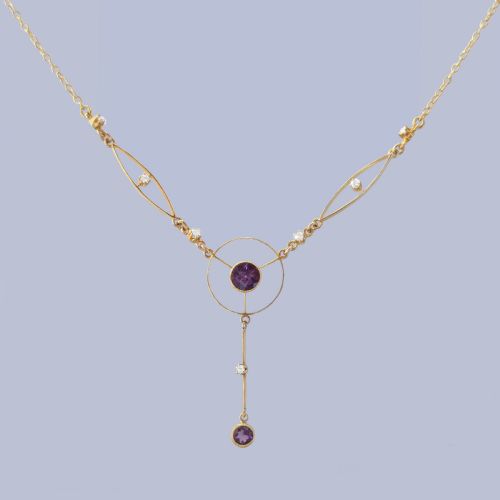
Object forms range from dedicated pendant necklaces and convertible brooch-pendants to simple drop chains. The amethyst itself remains the constant focal point, whether cut as a clean oval or set alongside peridots and diamonds.
Materials and Making
Goldsmiths of the nineteenth and early twentieth centuries constructed these lavaliers primarily in nine-carat yellow gold, fifteen-carat yellow gold, or silver. Metal components were shaped into delicate wirework settings, collets, and articulated links to allow gentle movement.
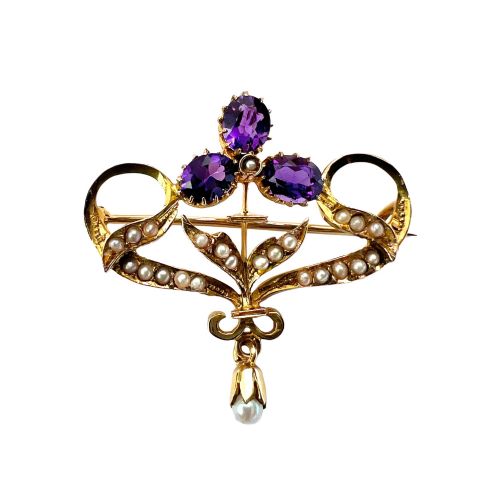
Amethysts provide the primary colour, complemented by natural seed pearls, pearls, peridots, and occasional old-cut diamonds. Pearls were typically half-drilled and secured onto tiny pins or glued into millegrain and bezel settings alongside the main quartz.
Techniques combine traditional casting with hand-piercing and fine wire assembly characteristic of Edwardian and Arts and Crafts workshops. Art Nouveau pieces utilise fluid, whiplash lines in gold to cradle the central stones without heavy prongs.
Antique Amethyst Lavalier Retail Price Guide 2026
Typical asking prices for amethyst lavalier among the pieces listed under this phrase on Sellingantiques today, from the lower quarter to the upper quarter. They describe what is for sale here now, not the wider market.
Several pieces double as brooches, allowing a Victorian lady to pin her amethyst to her collar when she tired of the chain.
Distinctions in Quality
Quality rests principally on the carat weight and purity of the gold, with fifteen-carat pieces generally commanding higher regard than nine-carat alternatives. The depth of colour and clarity of the central amethyst also dictate the piece's visual impact.
The finesse of the subsidiary work separates ordinary examples from superior ones. Finely matched seed pearls, crisp millegrain edges, and well-executed articulated drops show a maker's dedication that simple mass-produced items lack.
Originality of components, such as matching gold chains and intact clasps, elevates a lavalier's standing. Pieces retaining their fitted boxes or bearing maker's marks offer clearer provenance and superior craftsmanship.
S. Blanckensee & Son·Hamilton & Co
The Antique Amethyst Lavalier Glossary
- Lavalier
- A pendant necklace featuring a suspended drop or stones hanging below the main mount. This style gained immense popularity during the Edwardian era.
- Seed Pearl
- A very small, naturally formed or cultured pearl used widely in clusters and borders. They add delicate white contrast to the deep purple of the amethyst.
- Millegrain
- A technique involving a row of tiny raised metal beads along the edge of a setting. It creates a soft, textured border typical of Edwardian jewellery.
- Art Nouveau
- A design style characterised by asymmetrical, flowing lines inspired by natural forms. This aesthetic heavily influenced the curves seen in these pendant mounts.
- Collet
- A band or collar of metal that holds a gemstone in place. It forms a secure bezel around the girdle of the amethyst.
Antique Amethyst Lavalier: Frequently Asked Questions
What is an antique lavalier necklace?
A lavalier is a pendant necklace featuring one or more dangling drops suspended below the main setting. The form became particularly fashionable during the late Victorian and Edwardian periods.
These pieces are designed to sway with the wearer, catching the light on central stones like amethyst paired with seed pearls or diamonds.
How do I date an Edwardian lavalier?
Dating relies on stylistic clues such as garland motifs, platinum-topped gold, and flowing Art Nouveau lines characteristic of the early nineteen-hundreds. Hallmarks stamped on the reverse or jump rings provide specific assay office marks and date letters.
Material choices, such as fifteen-carat yellow gold and natural seed pearls, also point directly to the Edwardian and late Victorian eras.
Are amethyst lavaliers fragile?
While amethysts are relatively durable quartz varieties, the delicate gold wirework and seed pearls require careful handling. Many pieces feature fine articulated drops that can bend if caught in clothing.
Storing them flat in dedicated boxes and removing them before physical activity protects the fragile pearl settings and thin gold chains.
Can these pendants be worn daily?
These antique necklaces can be worn regularly provided they receive gentle care and periodic checks by a jeweller. The thin chains and seed pearls demand more caution than modern solid gold jewellery.
Avoid exposing pearls to perfumes, cosmetics, or ultrasonic cleaners, which can damage the organic nacre and weaken historic adhesives.