

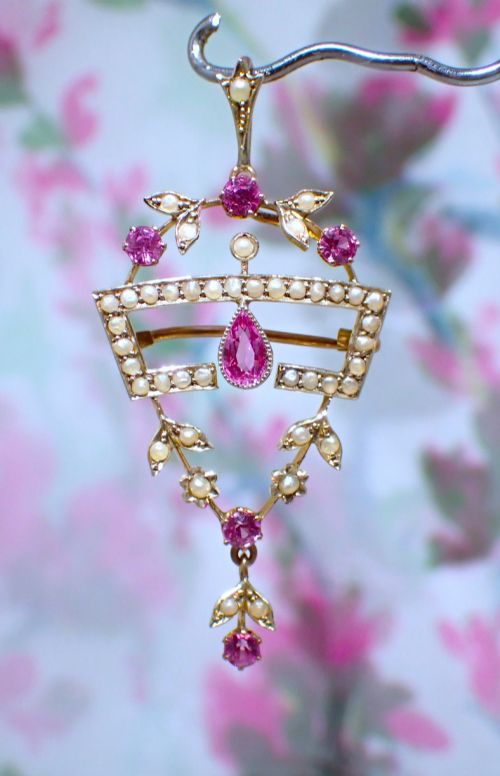
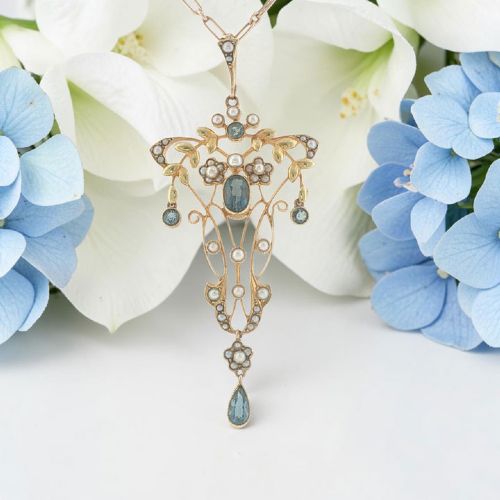
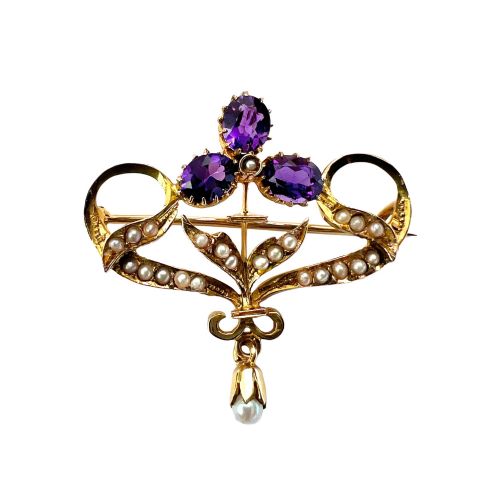
Edwardian Pearl Drop
When searching for an edwardian pearl drop, you seek delicate pendants, lavaliers, and earrings featuring suspended pearls characteristic of the early twentieth century.

Edwardian Pearl Drop
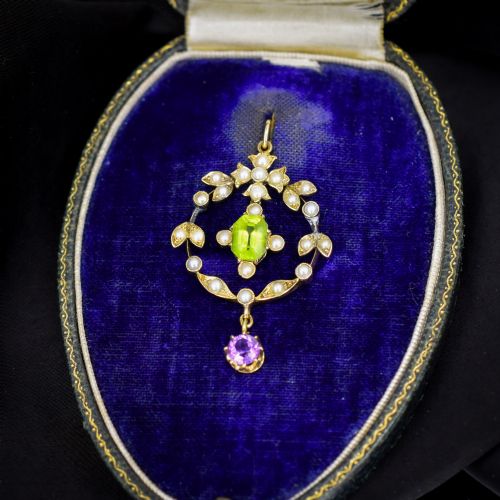
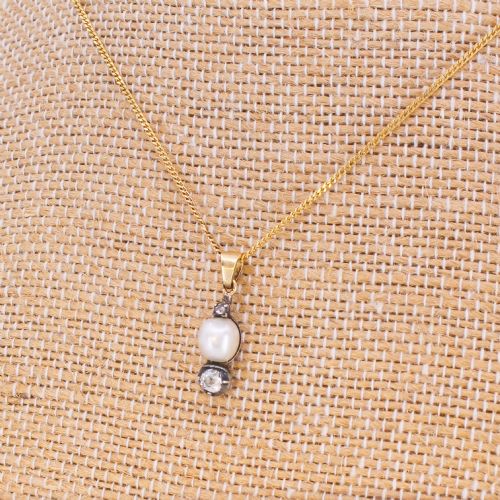
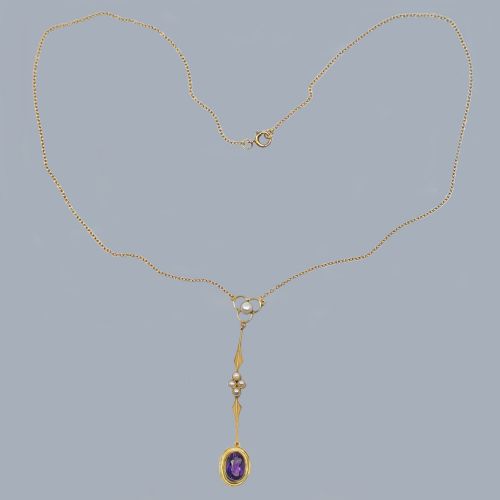
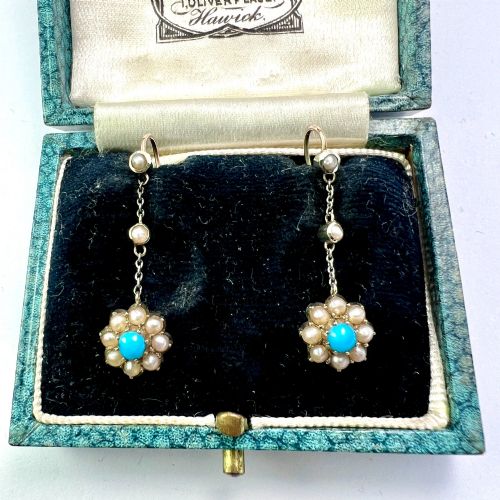
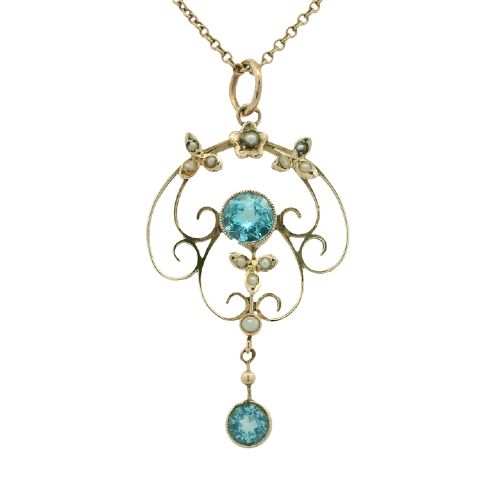
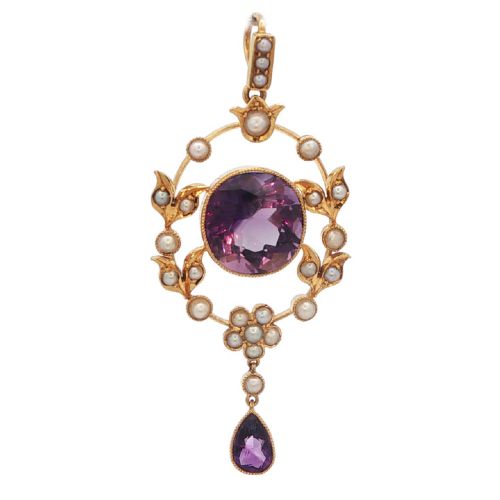
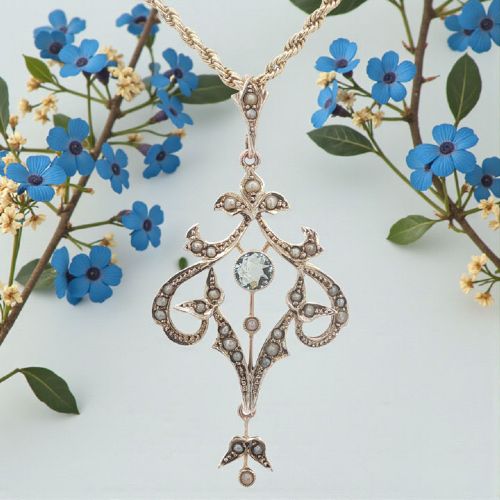
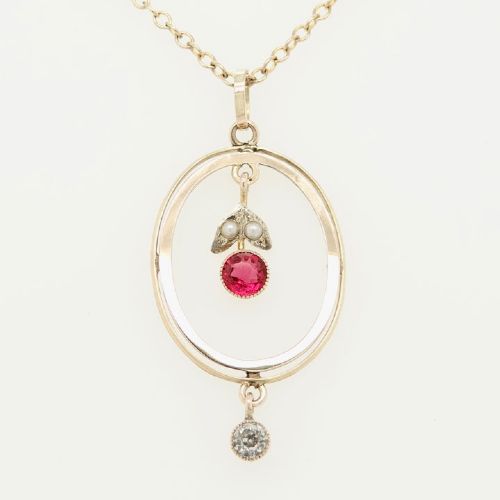
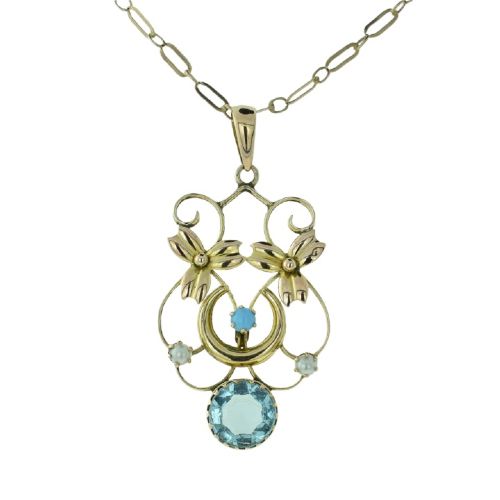
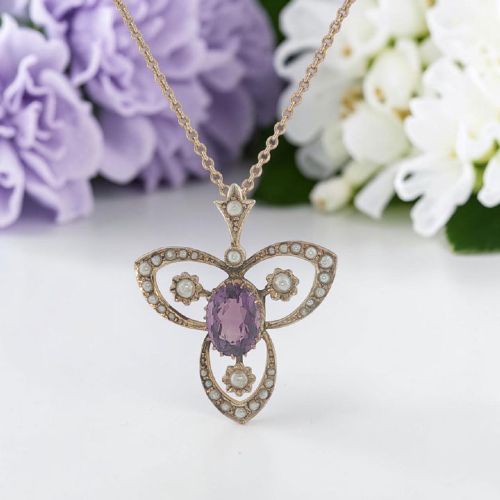
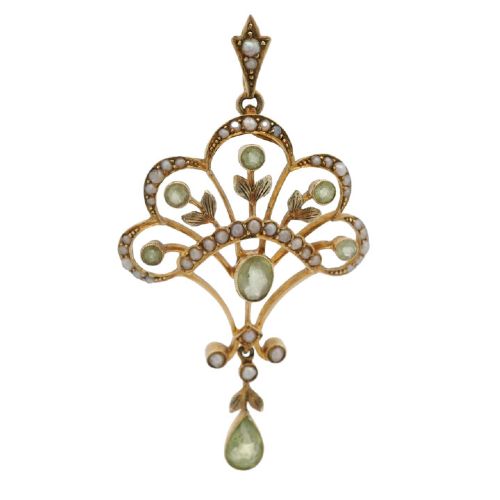
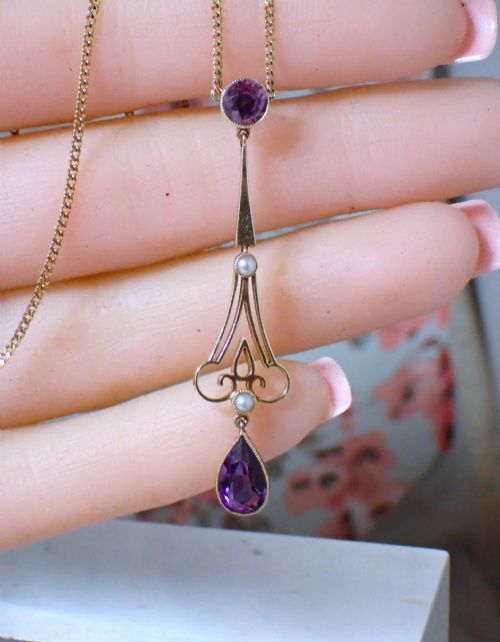
An edwardian pearl drop encompasses pendant necklaces, lavaliers, and earrings created primarily during the Edwardian period, alongside related examples from late Victorian and early twentieth-century eras. These jewels typically feature a central gemstone or floral cluster from which a pearl is suspended.
Pendants and drop earrings dominate the available forms, often incorporating articulated elements that allow the pearl to swing freely. The design focus centres on lightness and grace, reflecting the aesthetic sensibilities of the period.
How They Were Made
Maker-craftsmen constructed these pieces using nine-carat and fifteen-carat yellow and rose gold, platinum, and silver, frequently combining precious metals with natural or seed pearls. Gemstones such as amethyst, peridot, aquamarine, and diamond were bezel- or collet-set into intricate openwork mounts.
Techniques such as plique-à-jour enamel and fine wirework appear alongside traditional casting and stone-setting methods. Artisans utilised articulated joints to create fluid movement in drop earrings and pendant necklaces.
Some drop earrings include clever screw fittings designed for ears that lacked piercings, keeping grandmothers comfortable through long evenings.
What Varies in Quality
Quality in an edwardian pearl drop lies in the selection of materials, the precision of the metalwork, and the integrity of the pearls. Higher-tier examples feature natural pearls with good lustre paired with well-matched coloured stones like aquamarine or demantoid garnet in fifteen-carat gold or platinum settings.
Lesser pieces utilise seed pearls and lower-carat nine-carat gold with simpler stamped mounts. The finesse of the pierced openwork and the subtlety of the colour combinations distinguish standard production from finer workshop output.
S. Blanckensee & Son·Archibald Knox·Liberty & Co·Murrle Bennett
The Edwardian Pearl Drop Glossary
- Lavalier
- A pendant necklace featuring a central stone with one or more drops hanging below. This style gained popularity during the Edwardian and Art Nouveau periods.
- Seed pearl
- A very small, naturally formed pearl, often half-drilled and glued or pegged onto gold settings. These are frequently used in clusters and floral motifs.
- Plique-à-jour
- An enamelling technique where enamel is applied in cells without a backing, resembling miniature stained glass. It appears on select Arts and Crafts and Art Nouveau pendants.
- Collet setting
- A metal collar that wraps around the girdle of a gemstone to hold it securely in place. This method defines many Edwardian bezel settings.
Edwardian Pearl Drop: Frequently Asked Questions
What defines an edwardian pearl drop?
An edwardian pearl drop is defined by its characteristic early twentieth-century design, featuring suspended pearls combined with gold, silver, or platinum mounts.
These pieces often incorporate gemstones like amethyst, peridot, or aquamarine within delicate openwork settings.
How were these drop pendants worn?
Pendants and lavaliers were suspended from fine gold chains, often worn at the collarbone or slightly lower depending on the fashion of the period.
Drop earrings were secured with wire hooks or screw fittings for pierced and non-pierced ears.
How do I care for antique pearl jewellery?
Antique pearls require gentle handling because organic materials are sensitive to acids, cosmetics, and perfumes. Wipe them softly with a dry cloth after wearing and store them separately.
Avoid immersing antique pearl pieces in liquid cleaners or ultrasonic baths.
How can I tell Edwardian from Victorian pieces?
Edwardian jewellery typically favours lighter, airier platinum and yellow gold mounts with pastel gemstones and white pearls. Victorian pieces often display heavier gold work and darker or more saturated stone selections.
Stylistic overlaps occur around the turn of the century, requiring examination of construction methods and hallmarks.