


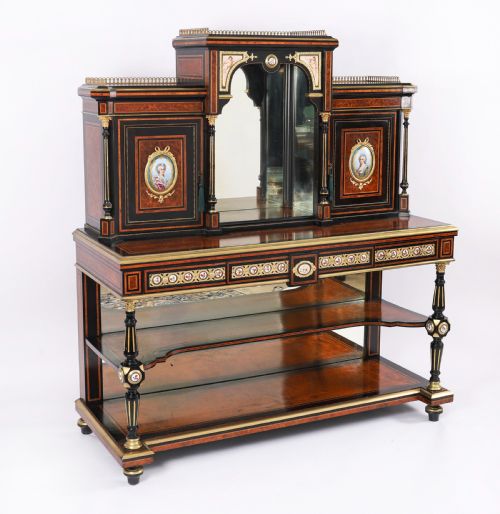
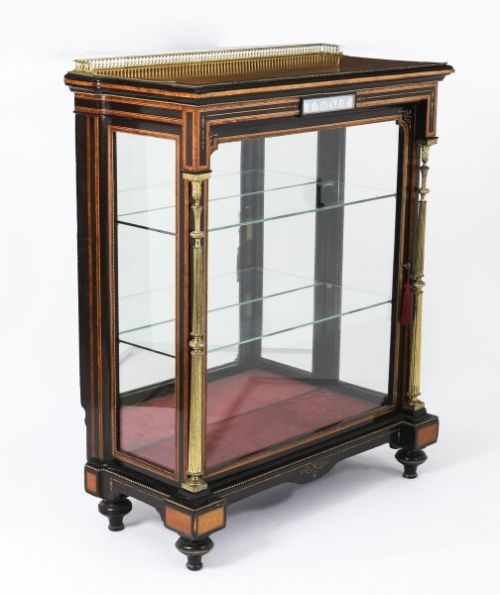


Antique Amboyna Cabinet
An antique amboyna cabinet brings a rich, golden-brown exotic wood grain into a room, offering both practical storage and striking visual depth.
Antique Amboyna Cabinet
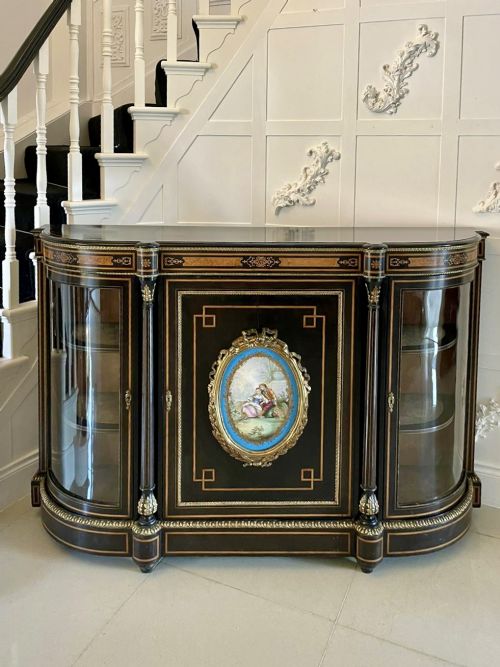
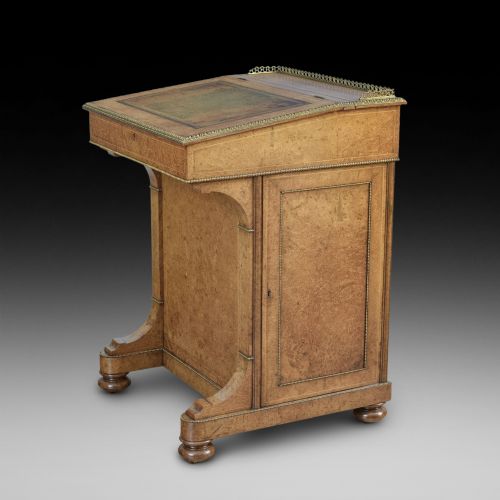
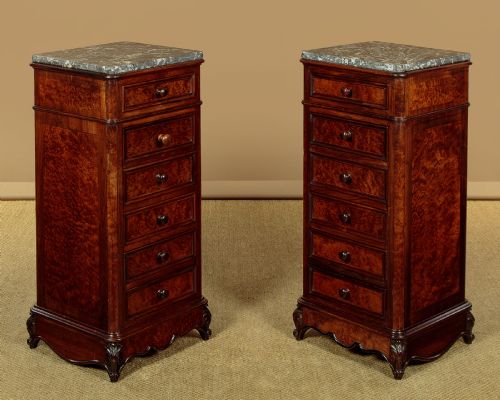
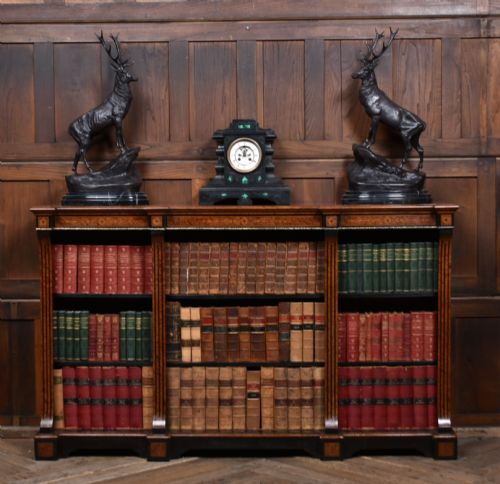
When you search for an antique amboyna cabinet, you encounter a selection of refined nineteenth-century furniture pieces, ranging from large breakfront credenzas and display cabinets to compact writing desks and bedside pedestals. The wood itself, prized for its intricate, swirling burr patterns, defines these items across various formal forms.
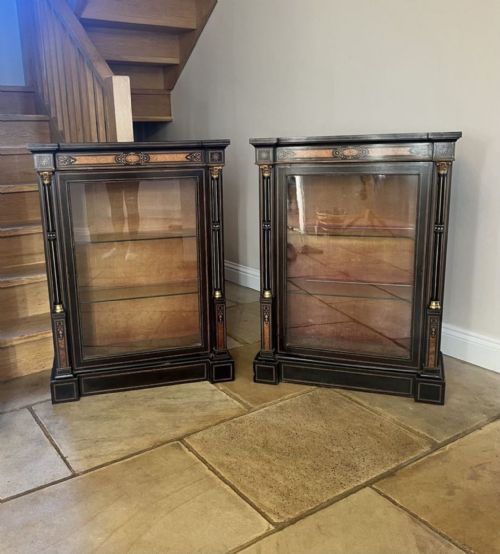
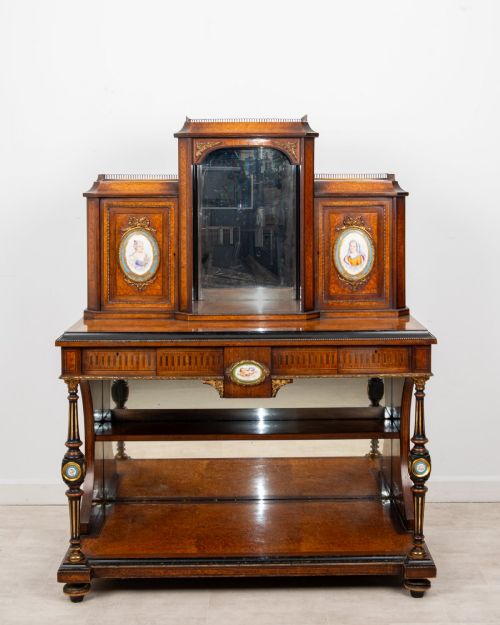
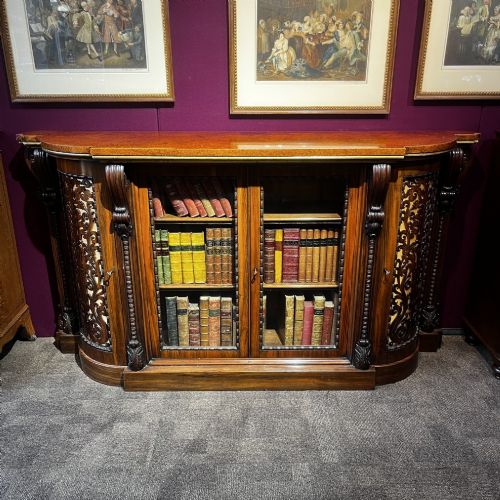
You are most likely to meet Victorian examples on this page, particularly credenzas and pier cabinets that combine the warm timber with ebonised wood frames, brass mounts, or porcelain plaques. English and French workshops produced these refined items during the mid-to-late nineteenth century.
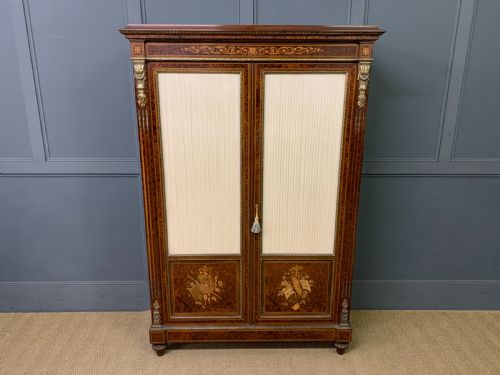
Beyond the main Victorian pieces, the listings extend to earlier Regency models, Aesthetic Movement designs, and twentieth-century Art Deco bar carts or sideboards. Each variation uses the distinctive grain to draw the eye, whether applied as a full veneer or as subtle marquetry highlights.
How they were made
Cabinet makers applied amboyna as a fine veneer over a stable secondary timber, slicing the burr wood to expose its characteristic mottled and knotty grain. This method allowed craftsmen to wrap curved surfaces and flat door panels in the expensive exotic material without warping.
Makers frequently combined the golden-brown amboyna with ebonised wood to create high-contrast borders and columns, enhancing the warmth of the primary timber. Ormolu mounts, brass stringing, and inset porcelain plaques were then added to elevate the status of the furniture.
French workshops often incorporated floral marquetry and elaborate gilt-bronze fixtures into pieces like the bonheur du jour, while English cabinet makers focused on precise architectural lines and breakfront proportions.
Listings span from seventeenth-century William and Mary pieces to twentieth-century Art Deco designs, with Victorian items forming the majority.
What varies in quality
The visual impact of the amboyna veneer sets the baseline for quality, with tightly packed, highly figured burr patterns commanding attention over sparse or plain grain selection. Superior pieces display a seamless flow of the veneer across drawer fronts and doors, matched carefully at the centre seams.
The intricacy and execution of accompanying details distinguish finer examples from standard production, particularly the precision of brass inlay, hand-carved ebonised elements, and the quality of porcelain plaques. Structural integrity in the underlying carcass and the preservation of the original polished surface finish also determine the standing of the piece.
Lamb of Manchester
The Antique Amboyna Cabinet Glossary
- Credenza
- A grand Victorian reception room cabinet, typically low-profile with central doors flanked by curved glass display sections. These items frequently combined amboyna veneer with ebonised columns and gilt mounts.
- Ebonised
- Wood treated with a dark stain or finish to imitate expensive ebony. Victorian makers frequently used this technique to frame panels of figured amboyna.
- Ormolu
- Gilt-bronze decorative mounts applied to the corners, feet, and friezes of fine nineteenth-century furniture. The metallic finish highlights the rich tones of the surrounding exotic veneers.
- Bonheur du jour
- A small, elegant lady's writing desk featuring a tiered superstructure with drawers, shelves, or a cabinet above the writing surface. These desks often showcase elaborate amboyna and marquetry work.
Antique Amboyna Cabinet: Frequently Asked Questions
What is an amboyna cabinet?
An amboyna cabinet is a piece of furniture veneered in the distinctively figured, golden-brown burr wood native to Southeast Asia. These cabinets were predominantly produced in nineteenth-century England and France for wealthy drawing rooms and parlours.
Cabinet makers utilised the decorative timber to highlight central panels on credenzas, sideboards, and display cases, often pairing the warm grain with dark ebonised framing.
How do I date an antique cabinet?
Dating relies on observing the overall style, construction methods, and secondary timbers used in the carcass. Victorian pieces frequently feature ebonised frames and intricate brass stringing, while earlier Regency examples display cleaner neoclassical lines.
Examining the backboards, drawer linings, and hardware provides further clues to the period of manufacture, aligning the piece with the eras recorded in nineteenth-century cabinet making.
Where were these cabinets placed?
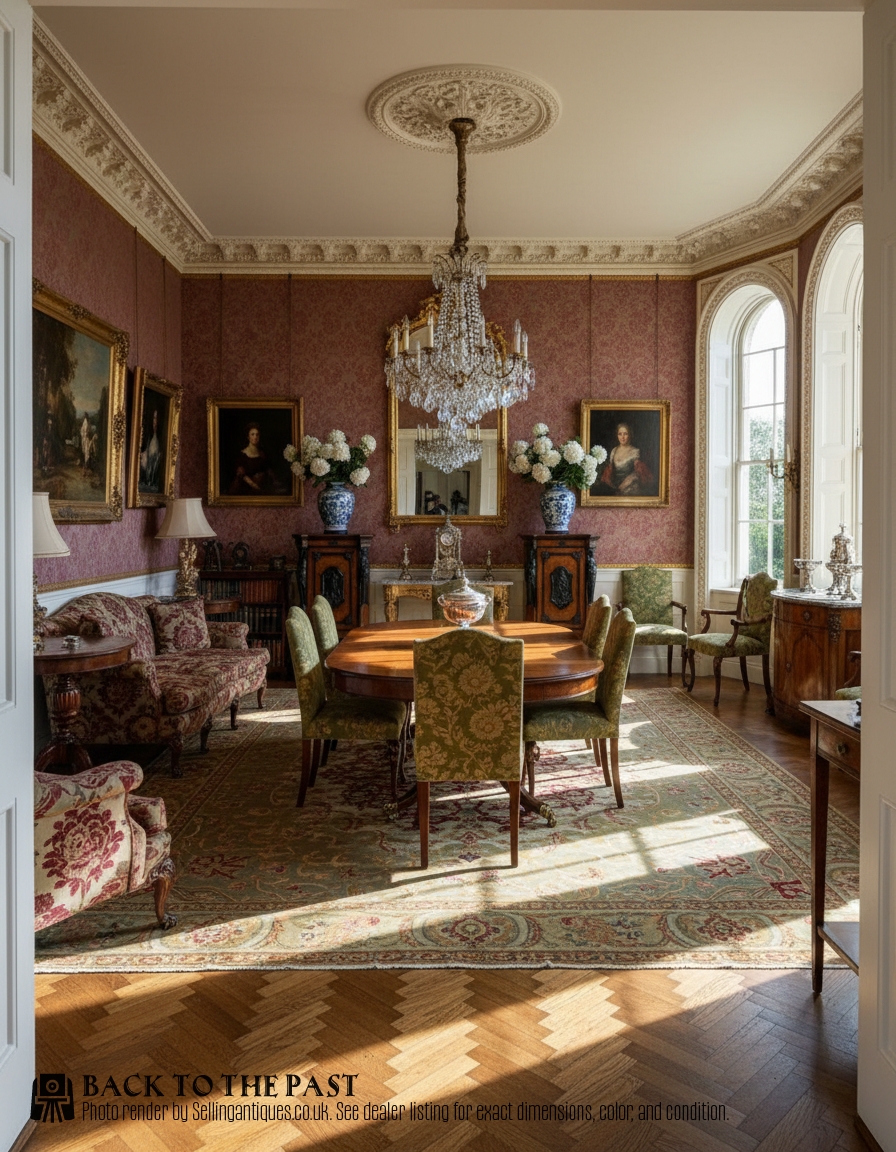
These cabinets served as focal points in formal reception rooms, dining rooms, and parlours during the Victorian period. Low credenzas and pier cabinets were designed to sit against drawing room walls beneath mirrors or paintings.
Smaller variations, such as bedside pedestals and writing desks, found their places in private bedchambers and studies, combining display space with practical utility.
How should I care for amboyna veneer?
Maintenance requires keeping the cabinet away from direct sunlight and steady heat sources to prevent the delicate veneer from drying out or cracking. Gentle dusting with a dry, soft cloth preserves the polished surface without damaging the historic finish.
Applying occasional appropriate wax feeds the timber and maintains the depth of the burr grain without introducing moisture that could harm the underlying glue.