



Ebonised Furniture Pair
An ebonised furniture pair brings striking dark contrast and symmetrical balance to a room, offering matching design through coordinated dual pieces.
Ebonised Furniture Pair
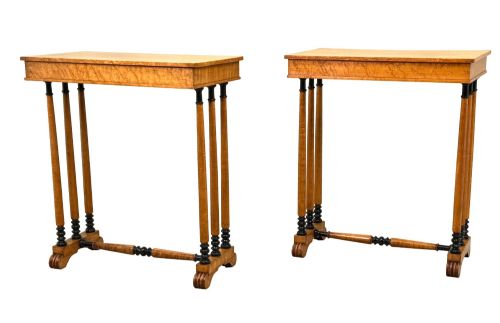
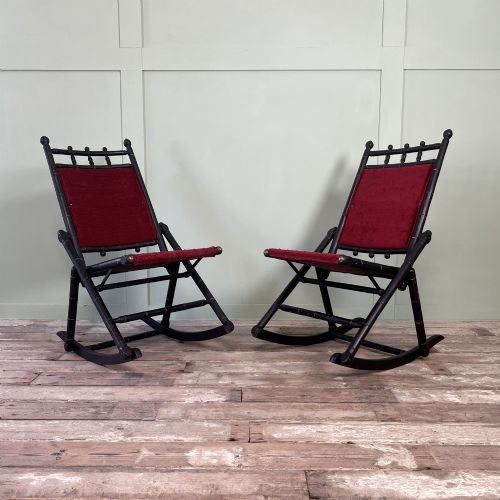
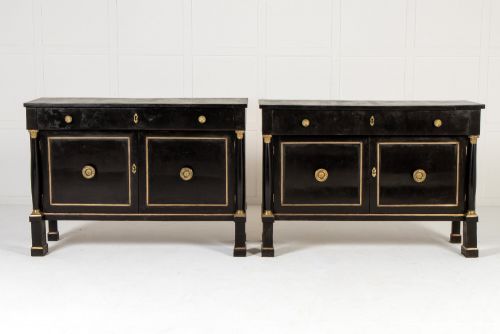
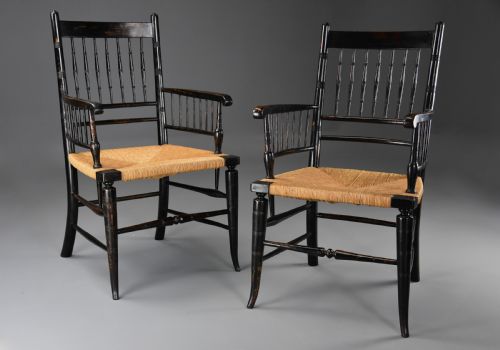
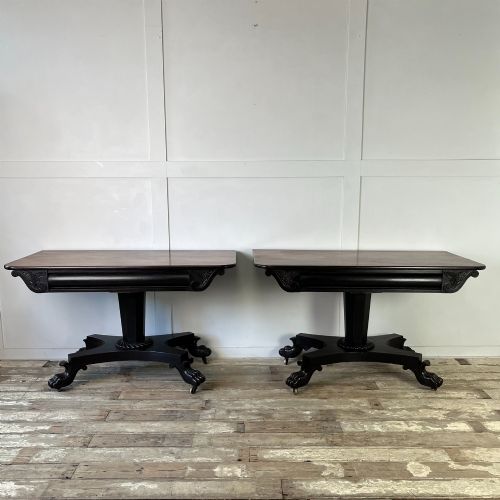
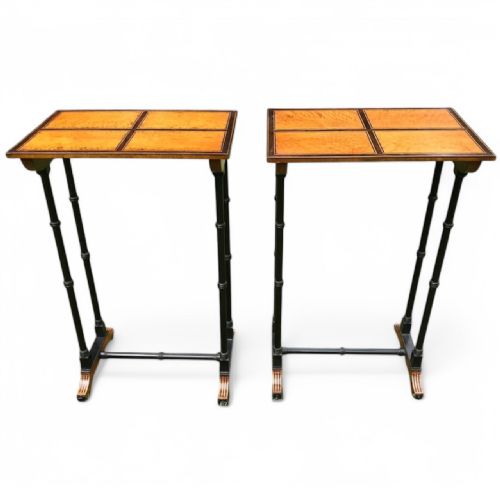
When you search for an ebonised furniture pair, you encounter matching sets created primarily during the nineteenth and eighteenth centuries. These items range from occasional tables and console tables to side cabinets and armchairs, reflecting styles such as Victorian, Regency, and the Aesthetic Movement.
The pieces on this page lean heavily towards Victorian and nineteenth-century examples, incorporating diverse cabinetwork and seating forms. European workshops produced these balanced sets for formal interiors, utilising dark finishes to create dramatic visual symmetry.
Originating across Britain, France, and Italy, these matched items demonstrate the historical preference for symmetrical arrangement in period interiors. Buyers find both utilitarian seating and decorative display furniture designed to complement each other across a room.
Materials and Construction
Maker workshops utilised dense hardwoods finished in a deep black stain to imitate costly ebony, often combining this dark surface with contrasting inlays of amboyna, burr walnut, and maple. Ormolu mounts, brass details, and porcelain plaques frequently decorate the structural carcase.
Cabinetmakers employed traditional joinery techniques alongside delicate marquetry and parquetry work to ornament surfaces. On seating and tables, structural integrity relied on solid framing paired with turned supports and applied mouldings.
Listings feature eighteenth and nineteenth-century periods, incorporating materials like brass, ormolu, amboyna, and ebonised hardwood.
Design and Execution
The standard of a matched set rests upon the precision of the dual construction and the harmony between the components. Superior examples display crisply carved details, intact contrasting inlays, and balanced proportions that maintain their symmetry over generations.
Makers who invested finer craftsmanship into secondary woods and durable surface finishes elevated the status of the pieces. The sophistication of the mounts and the clarity of decorative elements distinguish standard utility items from high decorative commissions.
Liberty and Co·Morris and Co
The Ebonised Furniture Pair Glossary
- Ebonised
- Wood stained or painted to resemble solid ebony. This dark finish gained immense popularity during the nineteenth century for furniture and decorative objects.
- Amboyna
- A highly prized exotic wood known for its rich, speckled grain. Cabinetmakers used its warm tones to contrast against dark ebonised surfaces.
- Ormolu
- Gilded bronze applied as decorative mounts on furniture. It provides bright metallic contrast against dark wood.
- Boulle
- A marquetry technique using brass and tortoiseshell inlay. French makers applied this intricate method to luxury cabinetwork.
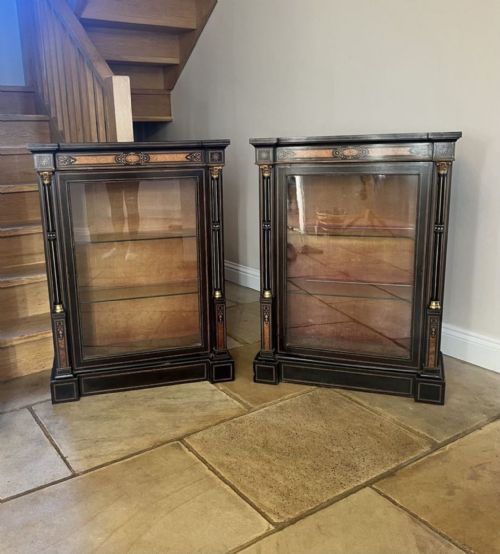
- Pier Cabinet
- A low display cabinet designed to stand against the wall between windows. These pieces often feature glass doors and elaborate mounts.
Ebonised Furniture Pair: Frequently Asked Questions
How were these pieces used historically?
Historically, matched pairs served to anchor large formal rooms by providing balanced focal points on opposing walls or flanking fireplaces. They held decorative objects, books, or served seating functions.
Owners displayed them in parlours and drawing rooms to demonstrate refined taste through symmetrical interior arrangement.
How do I live with ebonised furniture?
Living with these dark pieces involves positioning them where natural light highlights the contrast between the ebonised finish and lighter inlaid woods. They anchor bright spaces by introducing strong, grounding tones.
Care for the surfaces requires gentle dusting and avoiding abrasive polishes to preserve the integrity of the dark stain and metallic mounts.
How do I tell different periods apart?
Distinguishing periods relies on observing stylistic markers such as Regency restraint versus Victorian elaboration or Aesthetic Movement minimalism. Construction methods and secondary woods also shift between the eighteenth and twentieth centuries.
Examining the specific mounts, structural joints, and inlay styles clarifies the era in which the workshop produced the items.