



Antique Amber Glassware
Antique amber glassware brings warm honeyed tones to any table, offering centuries of blown, moulded and enamelled vessels that catch the light.
Antique Amber Glassware
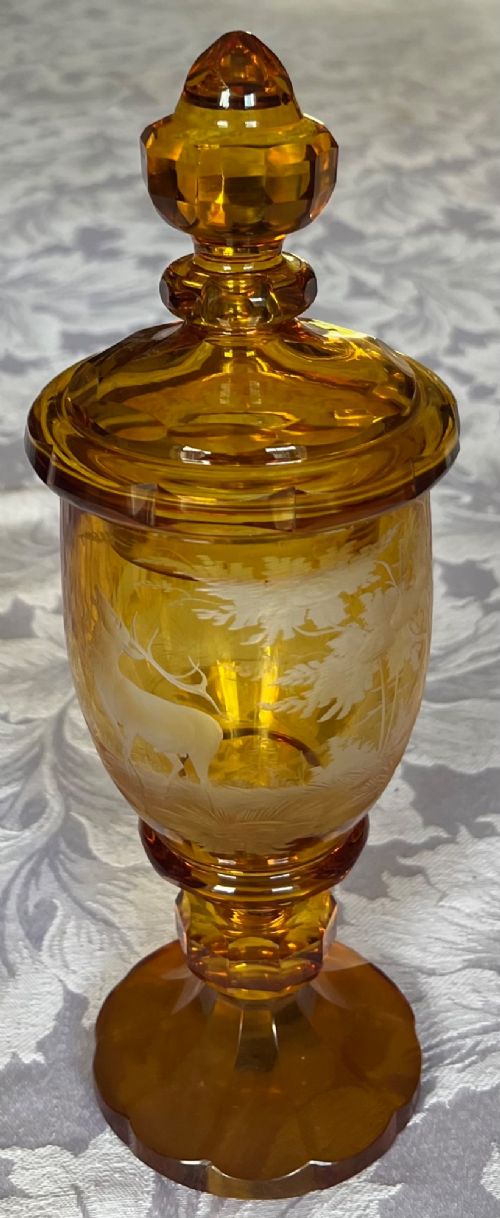
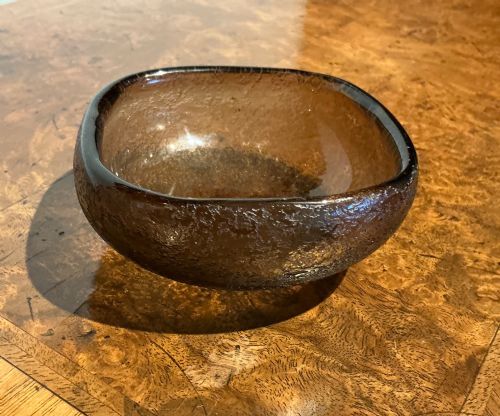
When you search for antique amber glassware, you encounter a diverse array of decorative and utilitarian vessels spanning several centuries of European production. The selection encompasses everything from Georgian wine roemers and Victorian decanters to organic Art Nouveau vases and Art Deco cocktail services.
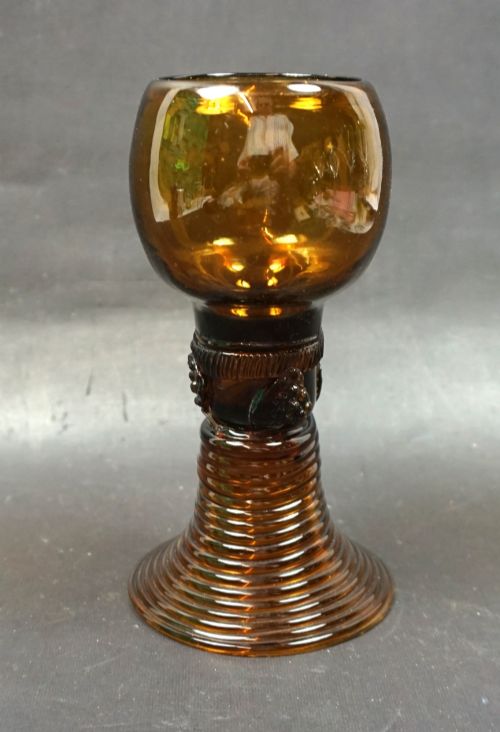
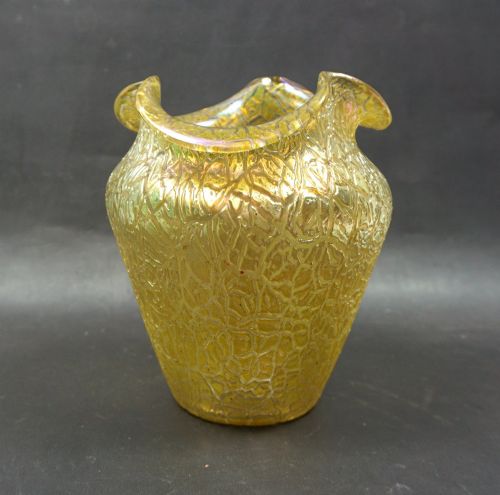
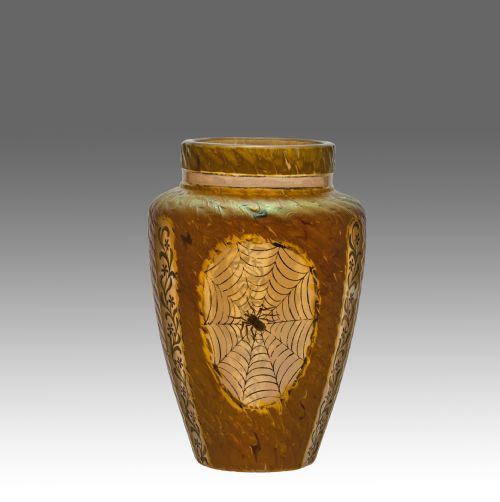
You are most likely to meet Bohemian and German roemers, alongside iridescent art glass from continental makers. Forms range from tall display vases and stemmed goblets to complete table settings and decorative plates.
The objects cross multiple stylistic movements, reflecting changing tastes from formal Georgian engraving through Victorian enamelling to the fluid contours of the early twentieth century.
Materials and methods of production
Makers utilised lead crystal, blown glass and amber glass, often combining techniques to achieve depth of colour and texture. Molten metal was shaped by hand-blowing into moulds or free-blown before receiving applied threads, coiled feet and pontil marks.
Decoration relied heavily on cameo carving, intaglio engraving and polychromatic enamelling. Acid-etching and staining produced iridescent surfaces that shimmered with metallic sheens.
Skilled artisans layered contrasting tones, such as yellow over crystal, or applied sepia stains to highlight intricate surface motifs.
Materials range from simple blown glass to complex cameo glass, lead crystal and iridescent finishes.
Judging the quality of pieces
Quality rests upon the crispness of the hand-finishing, the depth of the glass colour and the sophistication of the decorative technique. Fine cameo carving displays precise contrast between layers, while superior engraving shows remarkable control and clean lines.
Weight and balance matter greatly in stemmed drinkware and decanters. Pieces with hand-applied details, such as coiled feet or intricate enamel work, demonstrate higher workshop capability than mass-produced moulded equivalents.
The clarity of the material and the subtlety of iridescent or shaded effects distinguish standard utility items from exceptional studio pieces.
Loetz·Kralik Glass·Stevens and Williams·Gallé·Rene Lalique·Moser·Murano·LC Tiffany·Daum·Paul Nicholas·Legras
The Antique Amber Glassware Glossary
- Roemer
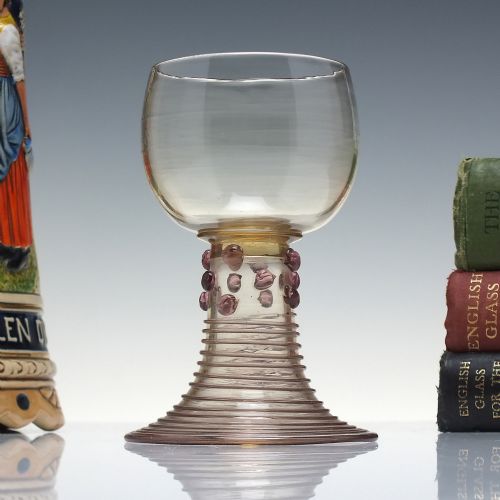
- A traditional Germanic stemmed drinking glass with a wide bowl and a cylindrical foot formed by wrapping molten trails around a core. They frequently feature raspberry prunts for grip.
- Cameo glass
- A vessel formed of two or more distinct layers of coloured glass fused together, where the outer layer is carved away to reveal the contrasting colour beneath. This technique demands immense patience and skill from the cutter.
- Iridescent glass
- Glass treated with metallic oxides while hot to produce a shimmering, rainbow-like sheen on the surface. Favoured heavily by Art Nouveau makers to mimic natural phenomena.
- Intaglio
- A design carved into the surface of the glass rather than raised above it, creating a sunken relief. When viewed from the inside, the motif appears in low relief.
- Tazza
- An ornamental cup or shallow bowl raised on a high foot and stem, used traditionally for display or serving sweetmeats on a formal table.
Antique Amber Glassware: Frequently Asked Questions
Can I use these glasses for drinks?
Many antique glasses, particularly Victorian roemers and cocktail sets, remain entirely functional for occasional modern use. Treat them with care by hand-washing only and avoiding acidic beverages left sitting for long periods.
Delicate iridescent art glass vases and heavily enamelled display pieces are better suited for visual appreciation rather than daily dining service.
How do I date antique amber glass?
Dating relies upon examining the pontil mark on the base, the stylistic indicators of the period such as Art Nouveau curves or Georgian proportions, and any signature or registration marks. Ground pontil scars usually indicate nineteenth-century or earlier manufacture.
Comparing the manufacturing technique and decorative motifs with documented examples helps narrow down the decade of production.
What is the difference between Bohemian and English glass?
Bohemian production often leaned towards heavy enamelling, deep amber staining, and intricate cutting influenced by regional Baroque and Historismus traditions. English pieces frequently utilised lead crystal with refined intaglio engraving or clear tonal layering.
Both traditions produced exceptional decanters and stemware, yet their aesthetic signatures reflect distinct regional artisan guilds.