


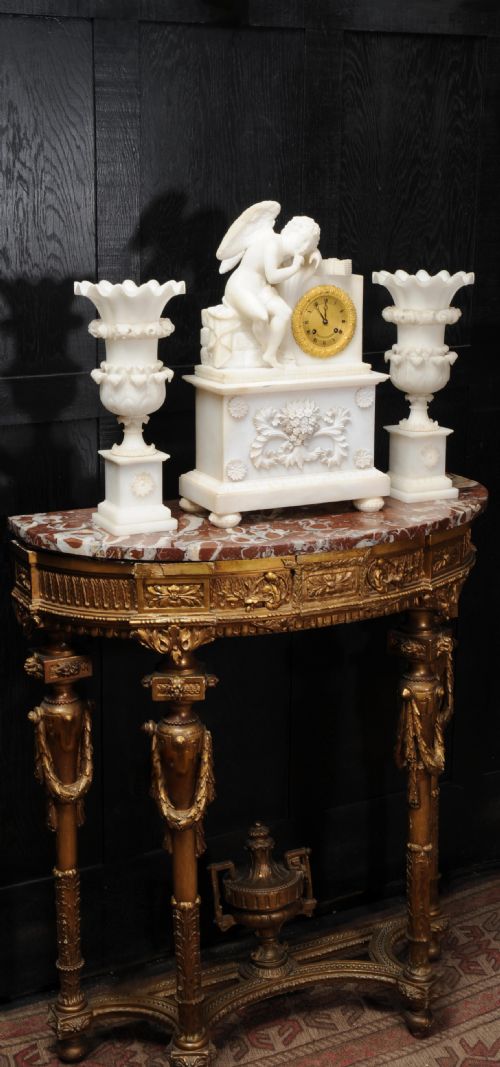
Antique Alabaster Clock
An antique alabaster clock brings the tactile warmth of carved stone and the gleam of ormolu into any room.
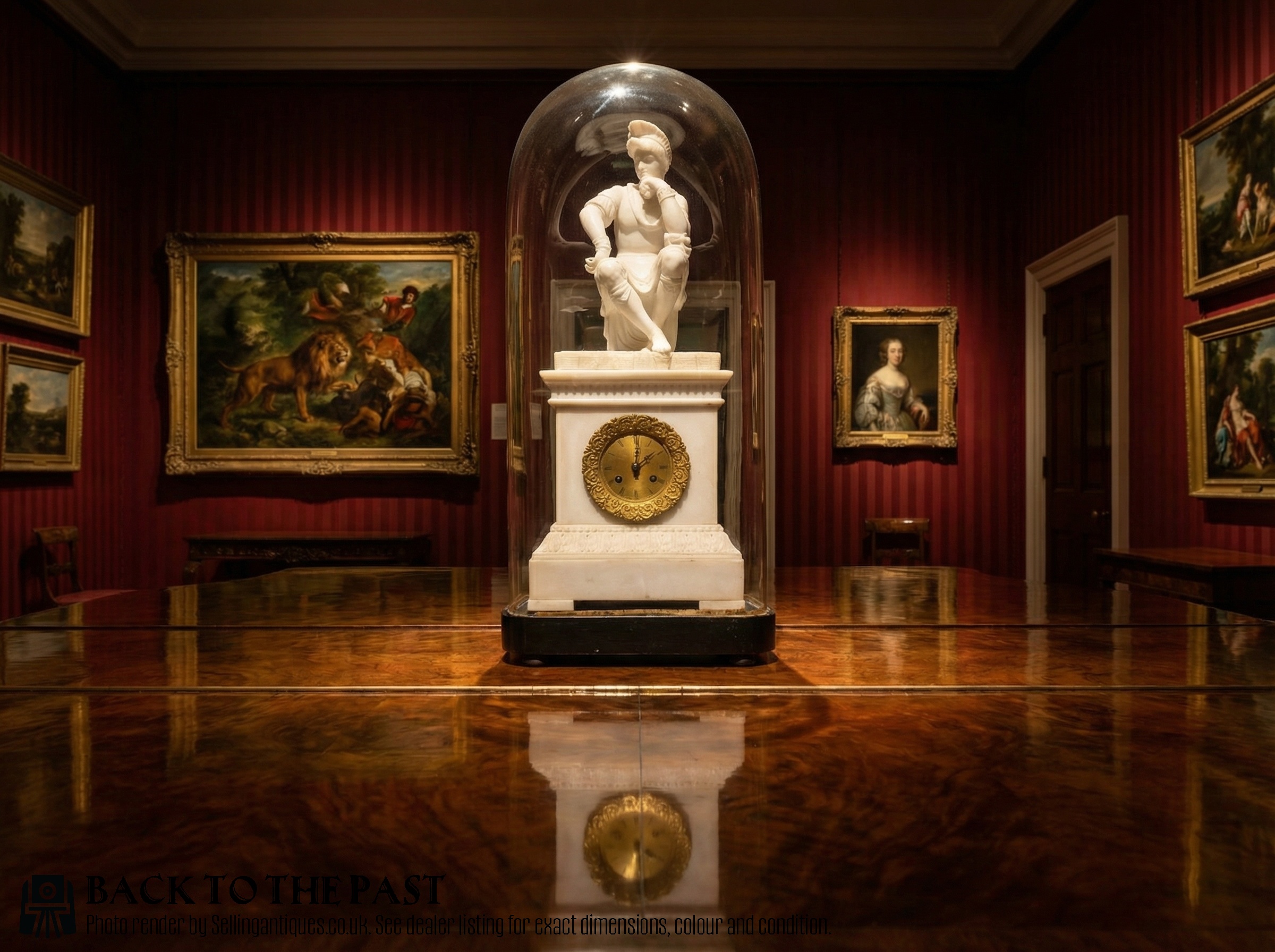
Antique Alabaster Clock
The material itself varies from smooth white Italian carved alabaster to mottled marble combinations, often paired with gilt bronze, brass, or ormolu mounts. French makers dominate the selection, bringing classical Louis styles and neoclassical proportions to the mantelpiece.
Many of these clocks house eight-day French movements, and some retain glass domes to protect the delicate stone and metalwork. You will encounter both simple architectural cases and theatrical designs featuring swinging cherubs or mythological figures.
How they were made
Carvers shaped soft alabaster and marble by hand, creating smooth columns, plinths, and urns that required careful handling to avoid bruising the stone. Foundries cast bronze and brass into intricate mounts, scrolling feet, and bezels before applying fire-gilding or ormolu finishes.
Enamel dials with painted Roman or Arabic numerals were fitted behind bevelled glass, housing mechanical movements driven by springs or fusee chains. Clockmakers integrated these brass gear trains precisely into the stone and metal housings to ensure reliable timekeeping.
Listings feature nineteenth-century French and Victorian architectural forms, combining white marble, alabaster, and gilt bronze.
What varies in quality
The depth and crispness of the alabaster carving separate ordinary domestic timepieces from exceptional gallery pieces. Deeply undercut foliage, finely articulated figures, and unblemished stone surfaces indicate superior craftsmanship.
The integration of the metal mounts dictates the overall harmony of the piece. Heavy, finely chased gilt bronze or ormolu that fits the stone contours precisely elevates a clock far above those with mass-produced, poorly aligned brass fittings.
James Ritchie And Son·Farcot
The Antique Alabaster Clock Glossary
- Alabaster
- A fine-grained, translucent stone used for carving architectural clock cases and ornaments. It offers a soft, milky appearance that takes a smooth polish.
- Ormolu
- Gilded bronze created by applying a mercury and gold amalgam to cast bronze. This technique produced a rich, lasting metallic lustre on nineteenth-century clock mounts.
- Garniture
- A set consisting of a central clock flanked by matching decorative objects such as candelabras or urns. These sets balanced Victorian and neoclassical mantelpieces.
- Portico clock
- A timepiece housed within a architectural frame supported by four columns, resembling a classical portico. They often feature a suspended pendulum visible through the central opening.
- Fusee
- A conical pulley used in better-quality mechanical clocks to maintain an even pull on the movement as the mainspring unwinds. This mechanism improved timekeeping accuracy.
Antique Alabaster Clock: Frequently Asked Questions
How do I wind an antique alabaster clock?
Most of these clocks use a key inserted into winding holes on the enamel dial to tension the spring behind the movement. Turn the key gently until you feel resistance, taking care not to overwind the mainspring.
Ensure you match the correct key size to the square arbor so you do not damage the delicate brass winding square over years of use.
Can I place an alabaster clock in direct sunlight?
Alabaster is a relatively soft, porous stone that can dry out, discolour, or lose its subtle translucency if exposed to harsh, prolonged sunlight. Keep these clocks away from south-facing windows and active heat sources.
Gentle ambient light preserves the carved surfaces and protects the original enamel dials and delicate gilt bronze mounts from fading.
How do I clean carved alabaster stone?
Dust the stone regularly using a soft, dry artist's paintbrush or a lint-free microfibre cloth to prevent dirt settling into the porous surface. Avoid using water, chemical cleaners, or abrasive polishes, as moisture can permanently stain alabaster.
Professional restoration is recommended if the stone accumulates stubborn grime or if the gilt bronze mounts require cleaning.