



Antique Adjustable Piano Chair
An antique adjustable piano chair combines mechanical ingenuity with domestic comfort, providing musicians with stable yet adaptable seating.
Antique Adjustable Piano Chair
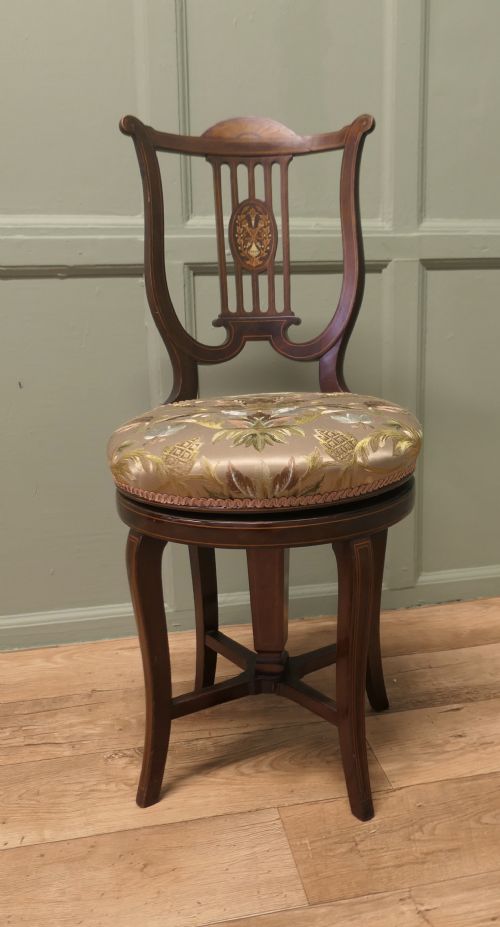
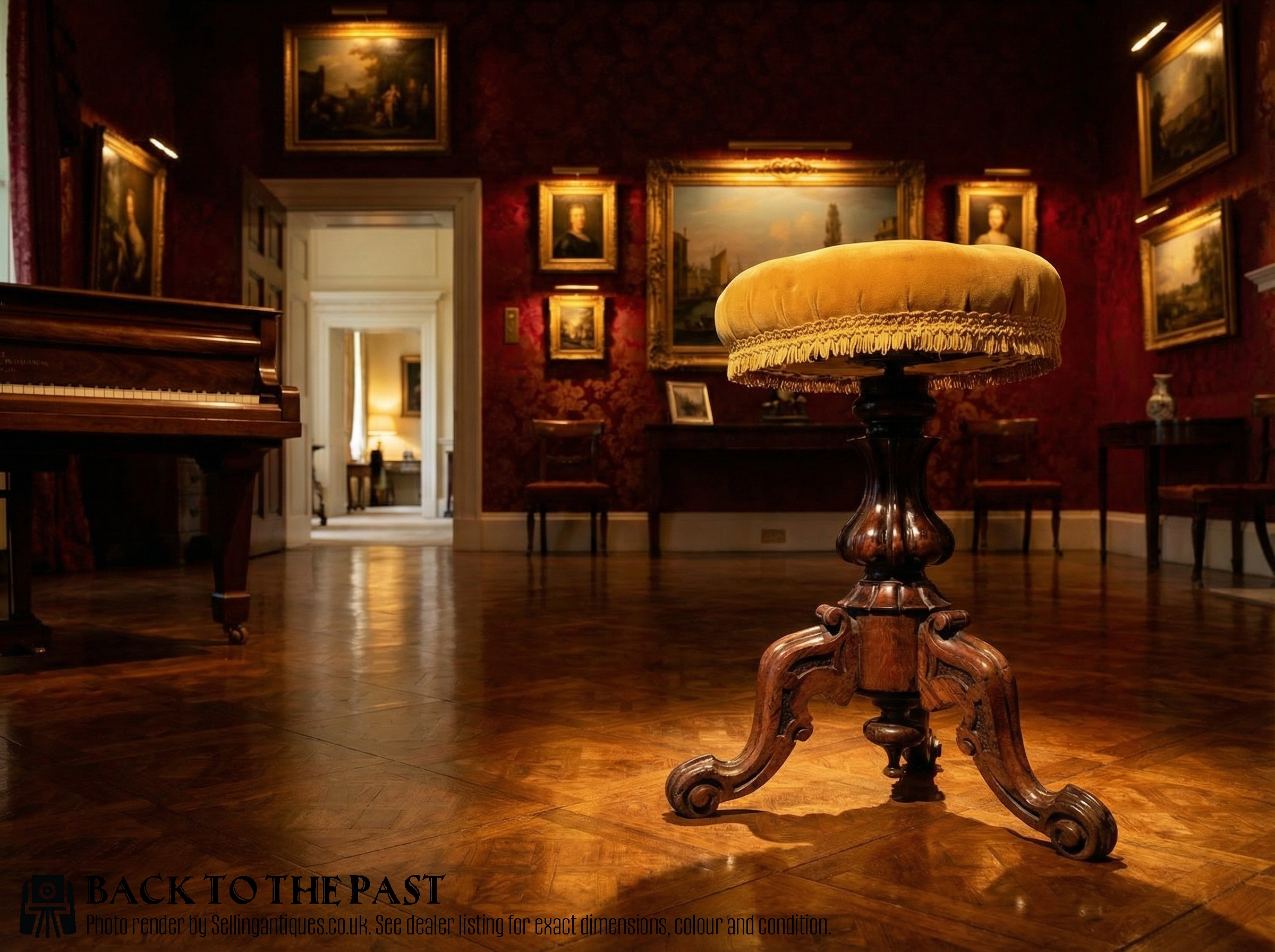
An antique adjustable piano chair serves musicians and performers by offering height adjustment and revolving movement for the keyboard or instrument. These pieces primarily date from the 19th century, encompassing Victorian, Regency, and William IV periods.
Victorian examples dominate the selection alongside Regency and Edwardian pieces, often serving dual purposes as dressing table chairs or desk chairs. Buyers encounter revolving music stools with upholstered seats in fabric, velvet, or leather.
Materials and construction methods
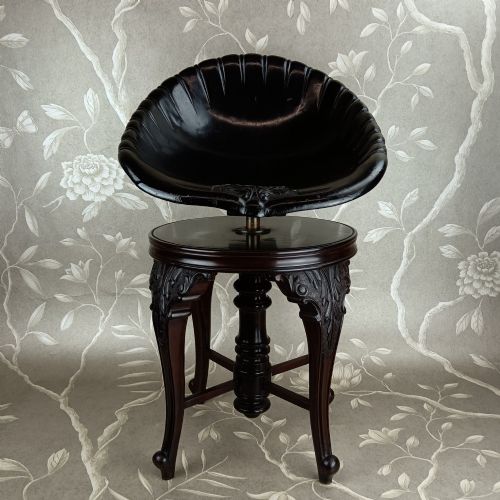
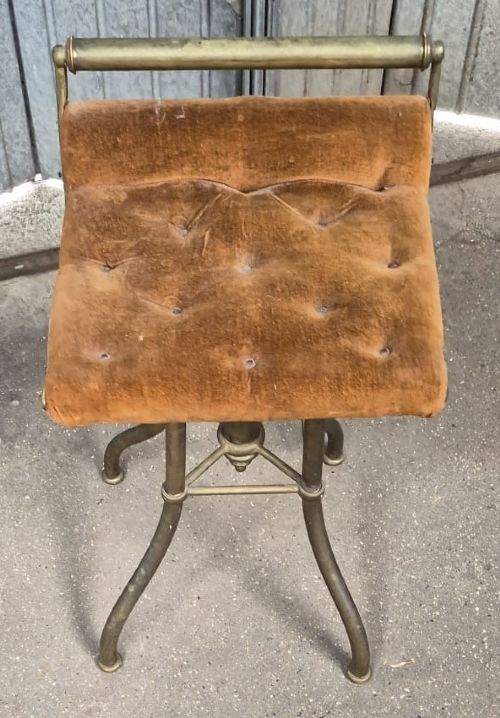
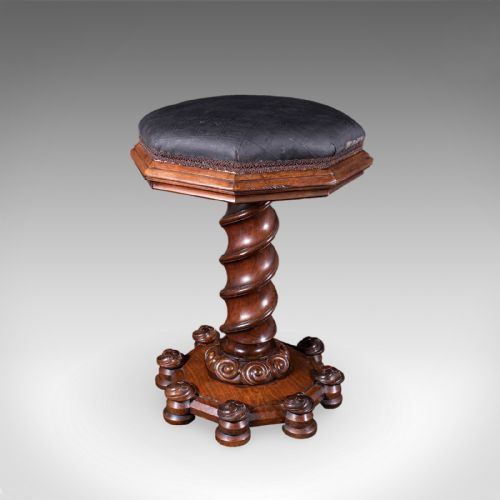
Cabinet makers utilised dense hardwoods such as mahogany, walnut, and rosewood, frequently incorporating carved details, brass inlay, or ebonised finishes. Papier-mâché appears on specific Victorian music stools alongside industrial cast iron and wood combinations.
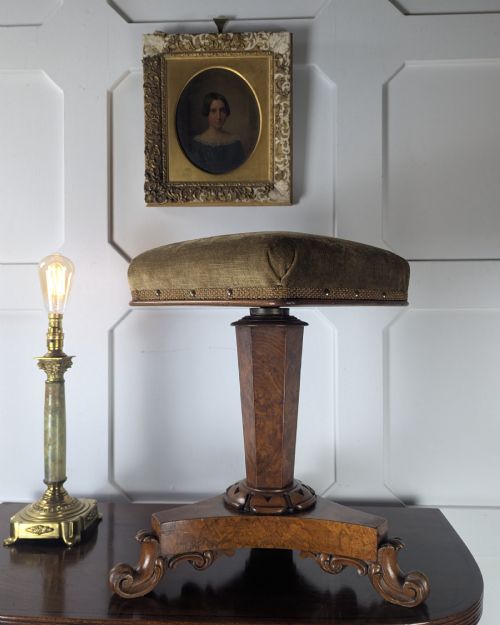
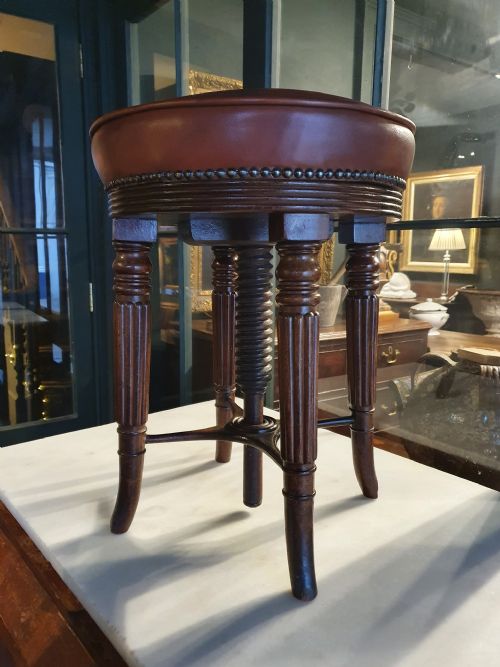
Mechanical components rely on metal screws, rise and fall mechanisms, and swivel bases that allow the seat to rotate. Upholstered tops feature materials like leather, velvet, and fabric stretched over padded seats.
Determinants of quality
Quality rests in the precision of the mechanical action, the smoothness of the revolving movement, and the integrity of the timber frame. Pieces bearing maker attribution or sophisticated patent designs stand apart from standard utility seating.
Carved ornamentations, figuration in walnut and mahogany veneers, and original brass hardware elevate the status of an antique piano chair. The retention of original upholstery materials and stable height adjustment mechanisms indicate superior craftsmanship.
Jennens & Bettridge·Gillows·James Shoolbred
The Antique Adjustable Piano Chair Glossary
- Rise and fall
- A mechanical system utilising a central wooden or metal screw to alter the height of the seat. This mechanism allows the musician to set a precise seating level.
- Revolving
- A seat construction that permits 360-degree rotation on a central axis. This movement assists musicians in positioning themselves comfortably at the keyboard.
- Lyre back
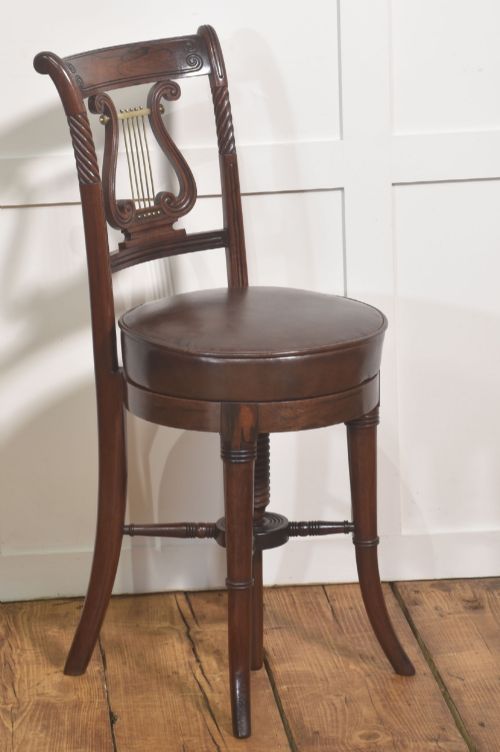
- A chair backrest shaped to resemble the ancient musical instrument, frequently seen on music chairs and harpist stools. This design motif reflects classical revival styles.
- Ebonised
- Timber treated with a dark stain or finish to imitate ebony. This technique provides a stark, formal appearance on Victorian seating.
- Patent
- A designation indicating a mechanical improvement registered by the maker. These pieces often feature complex internal hardware for height adjustment.
Antique Adjustable Piano Chair: Frequently Asked Questions
How do I adjust the height?
Most antique adjustable piano chairs operate by rotating the seat itself, which turns an internal wooden or metal screw to raise or lower the platform.
Some patent models utilise levers or side mechanisms to release and lock the height position securely.
Can I use these at a modern desk?
Many antique piano stools and music chairs feature height ranges suitable for standard modern writing desks and dressing tables.
Their compact footprints and revolving seats make them practical for alternative seating roles around the home.
How do I distinguish Regency from Victorian examples?
Regency and William IV pieces often display classical restraint, brass inlay, and richer rosewood or figured mahogany timbers.
Victorian variants frequently embrace heavier carved walnut, elaborate papier-mâché, or industrial cast iron components.
Are these chairs comfortable for long periods?
Upholstered seats filled with horsehair or padding and covered in leather, velvet, or fabric provide traditional support for musicians.
Revolving movement also reduces strain during extended practice or performance sessions.