

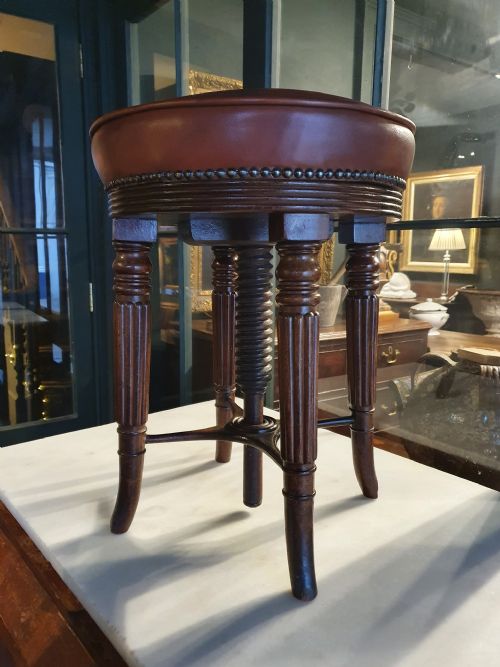


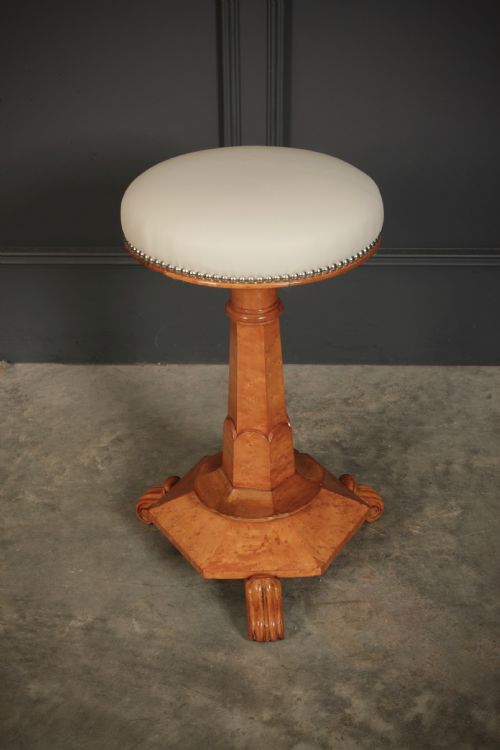
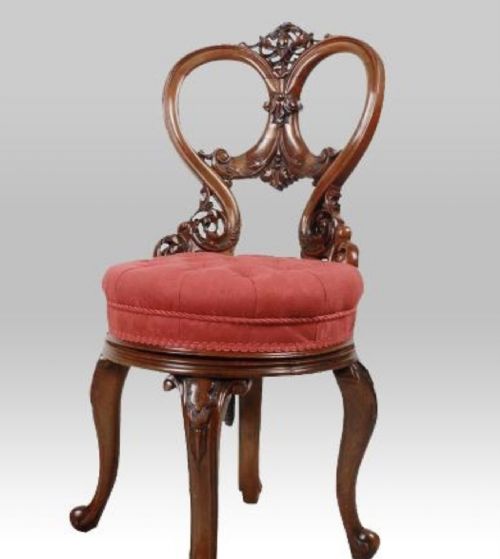


Vintage Revolving Stool
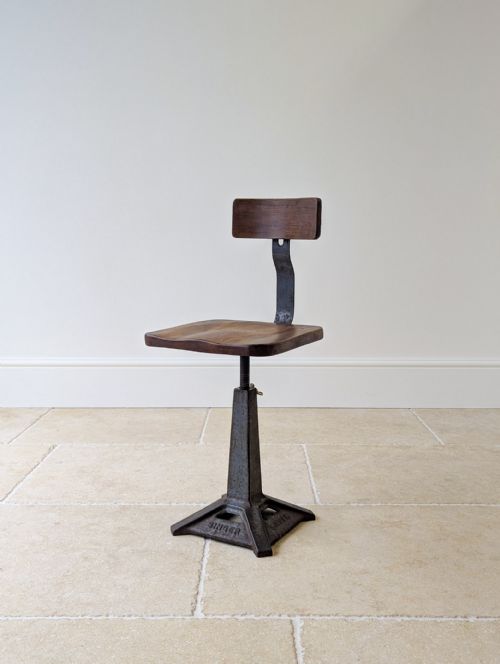
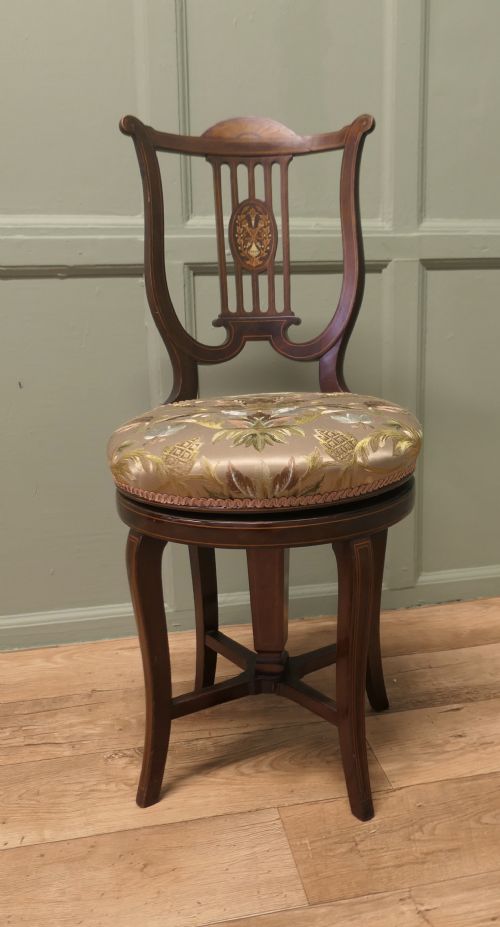
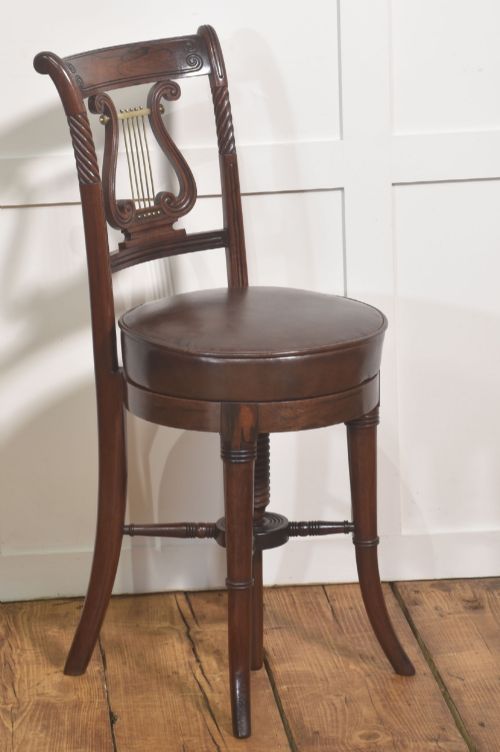
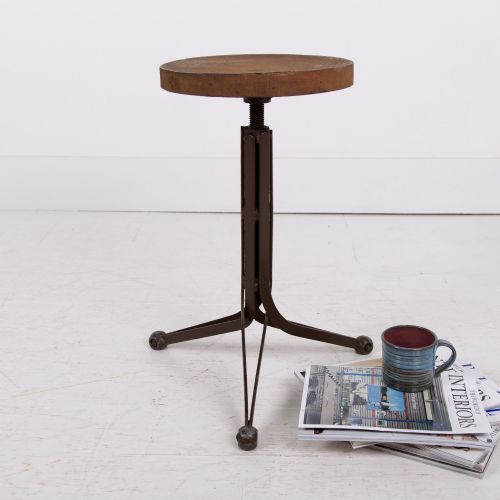
These vintage revolving stool examples range from elegant parlour piano seats to sturdy industrial workshop designs.
Vintage Revolving Stool
When you search for a vintage revolving stool, you encounter a surprisingly varied group of adjustable seats spanning domestic music rooms and heavy workshops. The selection here leans heavily towards Victorian and nineteenth-century piano stools alongside twentieth-century industrial screw-top seating.
Domestic versions often feature upholstered tops in velvet or leather paired with turned mahogany, walnut, or rosewood frames. Industrial variants typically combine cast iron mechanisms with robust wooden seats intended for daily workshop use.
Materials and construction
Makers utilised dense timbers like mahogany, rosewood, and walnut for domestic frames, often incorporating intricate carving or classical details. Industrial pieces relied on heavy cast iron for reliable height adjustment and durability under working conditions.
Upholstery materials included velvet, leather, and various fabrics fitted over padded seats for musician comfort. Simple screw mechanisms or threaded metal spindles allowed smooth height rotation across both domestic and workshop types.
Vintage Revolving Stool Retail Price Guide 2026
Typical asking prices for vintage revolving stool among the pieces listed under this phrase on Sellingantiques today, from the lower quarter to the upper quarter. They describe what is for sale here now, not the wider market.
Assessing quality and craftsmanship
Quality shows in the smoothness of the revolving mechanism and the stability of the central screw or swivel joint. Finer domestic examples display crisp carving on the timber legs and superior joinery in the seat frame.
Industrial items derive their merit from honest wear, robust cast iron components, and solid timber tops that remain straight and true. Lesser pieces often suffer from stripped threads in the adjustment mechanism or loose leg joints.
Gillows·James Shoolbred·Rubery Owen
The Vintage Revolving Stool Glossary
- Revolving stool
- A seat designed to turn on a central spindle or screw mechanism to alter its height or orientation. This allows the user to adjust the seating position easily.
- Piano stool
- A seat specifically built for keyboard players, frequently featuring a swivelling top to assist posture during performance. They appear in various nineteenth-century timber styles.
- Industrial stool
- A utilitarian seat originating from workshops or factories, usually pairing iron components with a plain wooden top. These pieces prioritise functional durability above decorative carving.
- Screw top
- An adjustable height mechanism operating on a threaded metal rod that raises or lowers the seat when rotated. It represents a common engineering method for vintage seating.
Vintage Revolving Stool: Frequently Asked Questions
How do I adjust the height on these stools?
Most models use a central threaded screw mechanism that raises or lowers the seat platform as you rotate it clockwise or anti-clockwise. Some domestic examples rely on a rising centre spindle secured by a side lever.
Ensure the mechanism is clean and lightly lubricated if movement feels stiff to prevent damage to the historic threads.
Were all these stools meant for pianos?
While the majority of domestic pieces served musicians at the piano or harp, many other variations existed. Workshop seating served industrial workers, and dressing table chairs provided adjustable vanity seating.
Examining the seat diameter and general build usually reveals whether a piece belonged in a formal parlour or a busy workshop.
Can I use a vintage piano stool daily?
Domestic nineteenth-century stools easily handle normal daily sitting provided the central thread and leg joints remain secure. Industrial variants are exceptionally robust and suit modern desk or kitchen use.
Check that the revolving action remains level and stable before placing heavy daily demands on the piece.
How do I date an antique revolving stool?
Dating relies on timber choices such as rosewood or mahogany alongside the style of the legs, such as Regency reeding or Victorian cabriole shapes. Industrial pieces usually display mid-twentieth-century workshop characteristics or cast iron foundry marks.
Comparing the construction methods against documented periods helps establish a reliable timeframe for the piece.