


Anglo Indian Carved Tripod Table
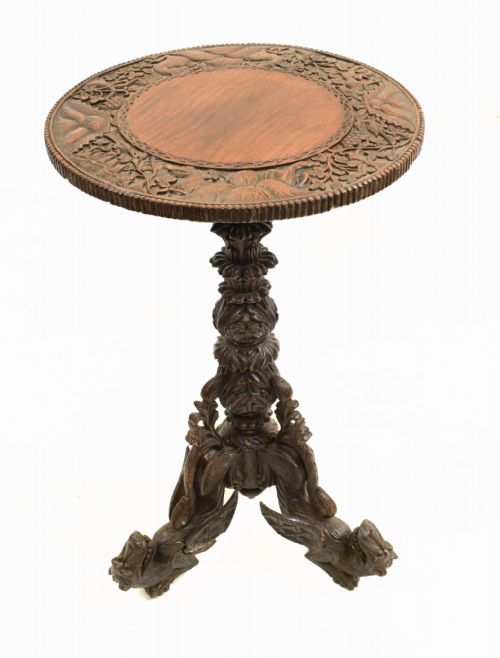
An anglo indian carved tripod table brings dense colonial craftsmanship and intricate plant motifs into a room through sturdy indigenous timbers.
Anglo Indian Carved Tripod Table
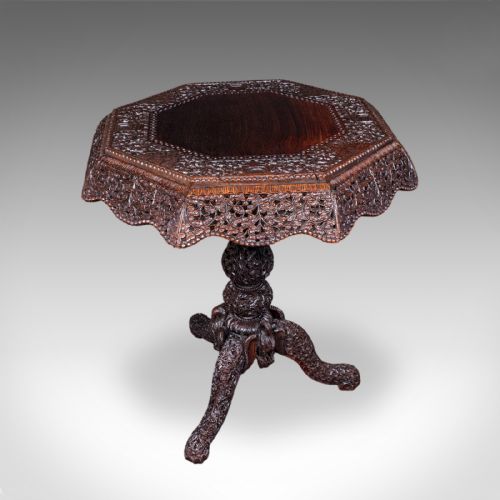
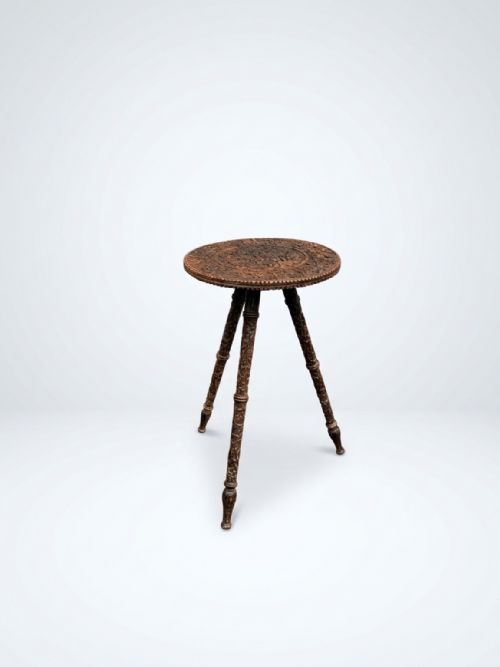
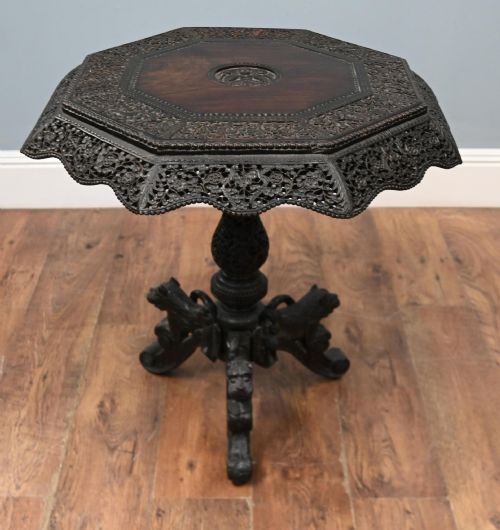
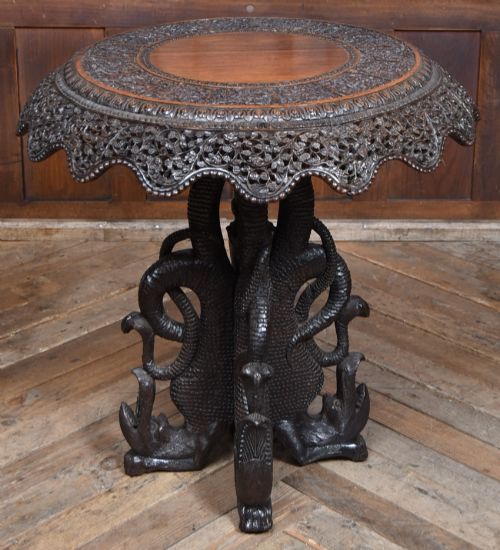
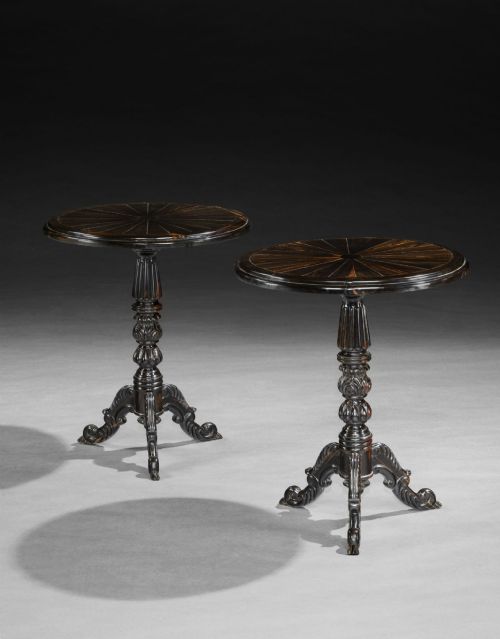
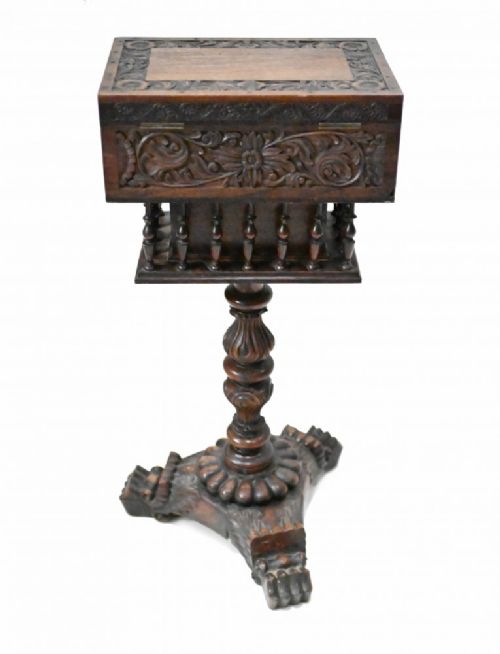
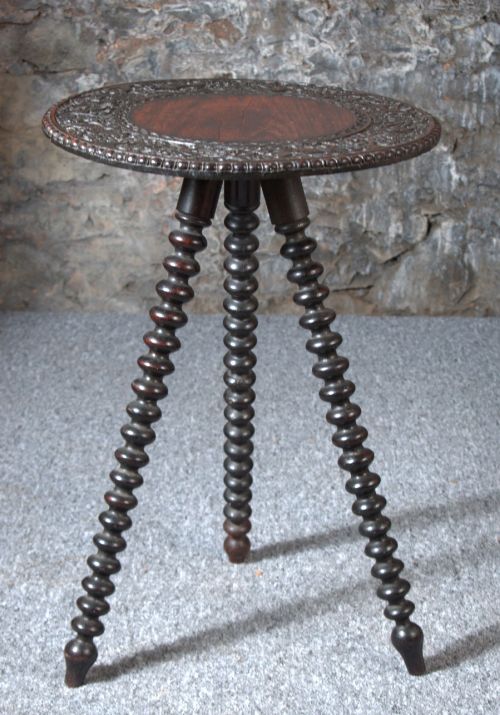
An anglo indian carved tripod table combines British domestic furniture forms with the rich, deep-relief carving traditions of the Indian subcontinent and Burma. These pieces appear most frequently as occasional tables, side tables, and tilt-top tables supported by three carved legs or a central pedestal.
The regional origins span across specific stylistic centres such as Bombay, Ceylon, and Hoshiarpur, often reflecting Victorian colonial tastes. Buyers encounter circular tops, shield shapes, and occasionally figural forms featuring animal motifs alongside traditional plant ornamentation.
How They Were Made
Artisans utilised dense tropical timbers including teak, padouk, ebony, rosewood, and general hardwoods that provided a stable surface for deep, sculptural carving. These substantial woods were seasoned to withstand tropical climates before undergoing extensive hand-chiselling across the tops, friezes, and pedestals.
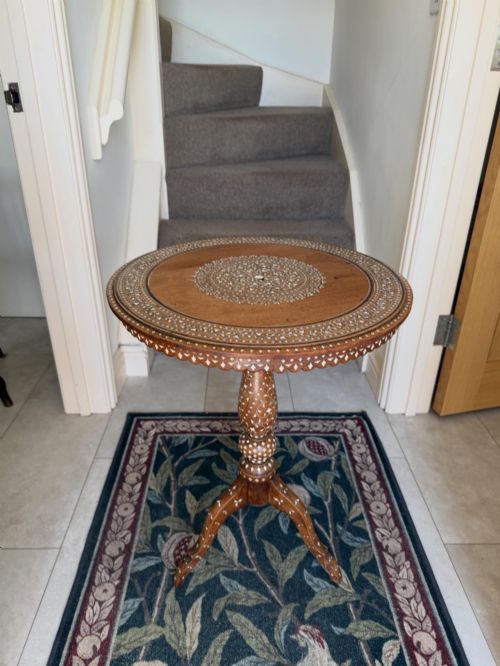
Decorative embellishments frequently incorporated contrasting materials set directly into the primary timber, utilising bone, mother-of-pearl, and exotic specimen woods. Tilt-top mechanisms and pedestal joints relied on traditional joinery combined with turned structural elements to support the heavy carved surfaces.
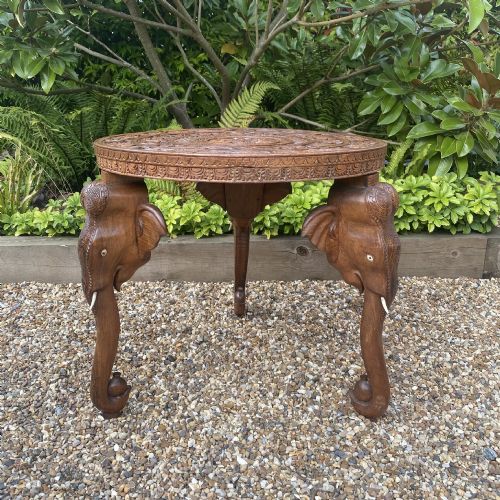
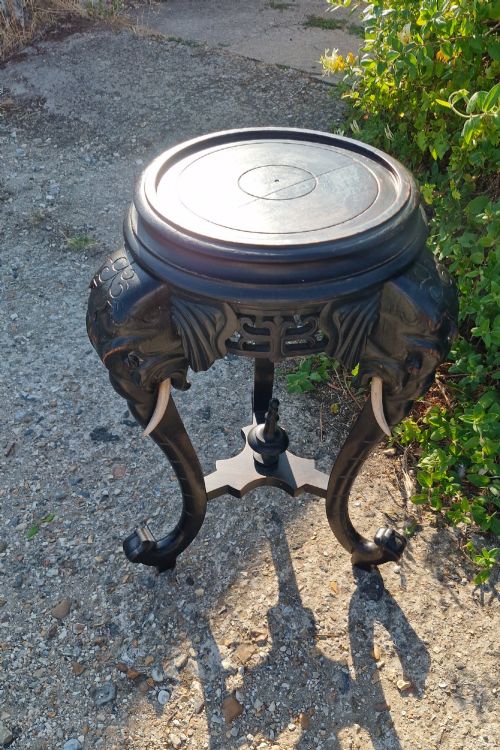
Some nineteenth-century tables come equipped with painted wooden tusks protruding from elaborate carved elephant heads.
What Varies in Quality
The depth, crispness, and complexity of the chisel work distinguish exceptional examples from standard production, as master carvers achieved remarkable levels of undercut detail in foliage and figures. The harmony between the proportion of the top and the stability of the three supporting legs determines the structural integrity.
The selection and integration of secondary materials, such as precise bone inlay or shimmering mother-of-pearl placement, elevate the visual richness of the piece. Regional specialisation also plays a role, with certain workshops demonstrating superior control over dense timbers like ebony and padouk.
The Anglo Indian Carved Tripod Table Glossary
- Tilt top table
- A table featuring a hinged mechanism that allows the surface to pivot into a vertical position when not in use. This design saved space in colonial drawing rooms.
- Padouk
- A heavy, durable reddish-brown tropical hardwood favored for colonial furniture construction. It accepts fine carving without splintering.
- Hoshiarpur
- A region in northern India renowned for intricate woodwork involving detailed geometric carving and bone inlay. Pieces from this area often incorporate Taj Mahal motifs.
- Teapoy
- A small occasional table traditionally used for serving tea or holding tea equipment. In colonial contexts, the term adapted to describe various small pedestal tables.
Anglo Indian Carved Tripod Table: Frequently Asked Questions
What is an anglo indian carved tripod table?
These are nineteenth-century occasional tables produced in the Indian subcontinent and Burma for British colonial and export markets. They combine European furniture shapes with traditional Asian woodcarving.
Most examples feature a circular or shaped top resting on three carved legs or a central pedestal base. Common variations include tilt-top mechanisms and figural supports.
Where were these tables made?
Production took place across multiple workshops in regions under British administration, notably Bombay, Ceylon, and Burma. Northern centres like Hoshiarpur specialised in distinct inlay techniques.
Local craftsmen adapted indigenous woodworking traditions to suit the domestic requirements of British officials and merchants. This fusion created recognisable regional styles.
How do I care for tropical hardwood?
Maintain stable humidity levels in the room to prevent the dense timbers from drying out and splitting. Avoid placing the furniture near direct heat sources or strong sunlight.
Dust regularly with a dry cloth and occasionally apply a neutral wax suitable for antique hardwoods. This preserves the natural grain and the depth of the carving.
What woods were commonly used?
Craftsmen relied on heavy indigenous hardwoods such as teak, padouk, rosewood, and ebony. These species offered the density required for deep sculptural carving.
Lighter specimen woods and decorative additions like bone and mother-of-pearl were often incorporated for contrast. The natural colours of these materials formed intricate patterns across the surfaces.