
Victorian Anglo Indian Side Table
These pieces unite British colonial history with intricate local craftsmanship, offering a distinct surface for daily use.
Victorian Anglo Indian Side Table
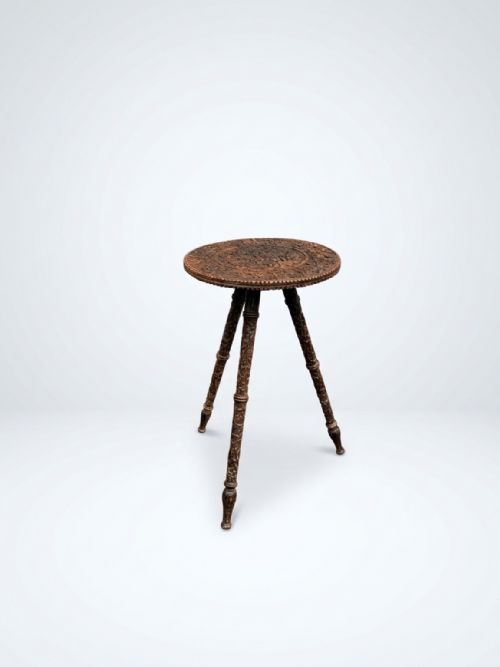
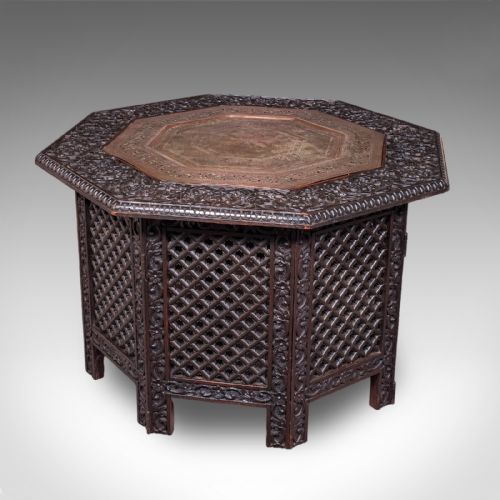
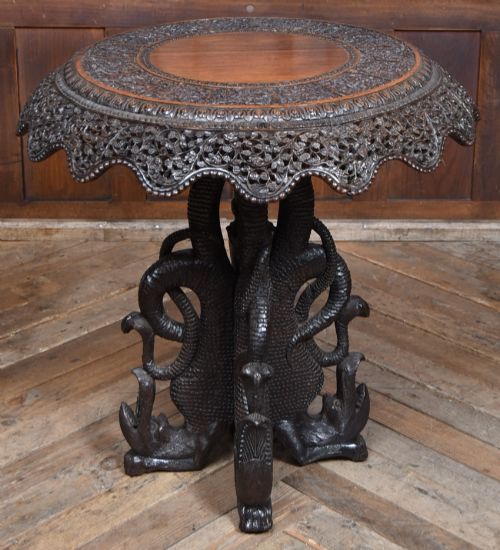
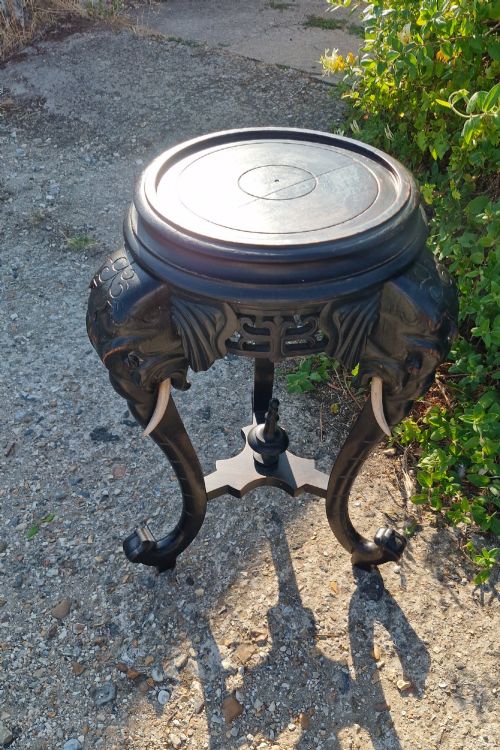
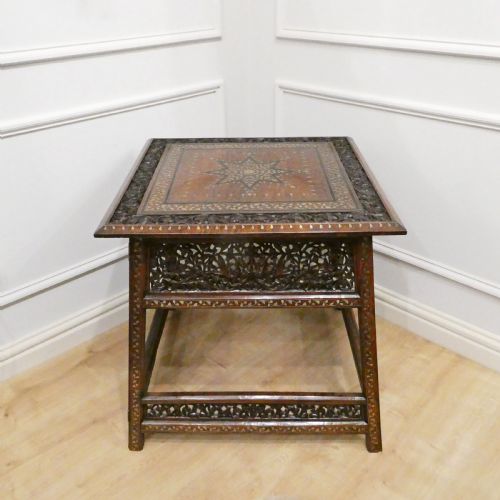
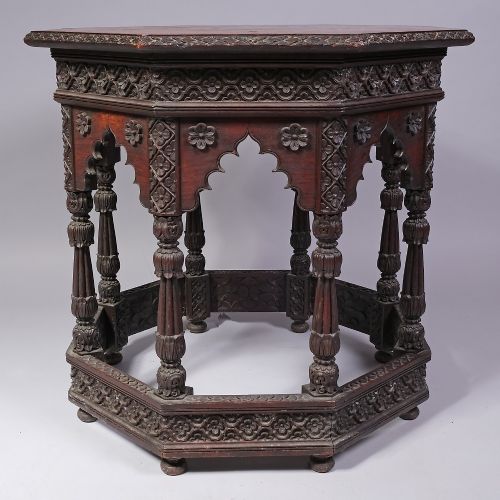
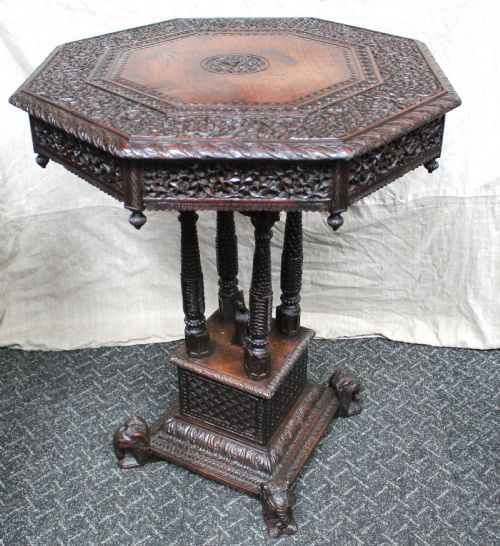
A victorian anglo indian side table brings dense carving and exotic timber into nineteenth-century British interiors, spanning forms from pedestal tables to occasional furniture.
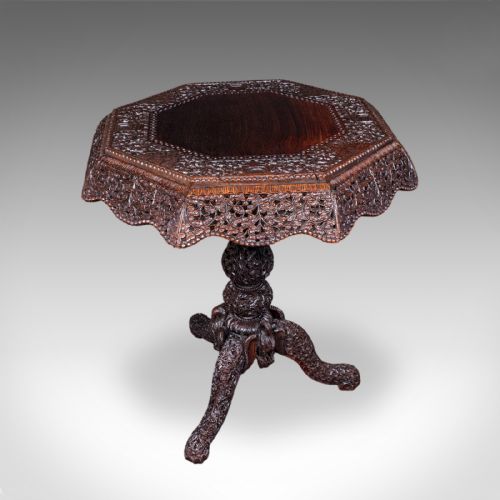
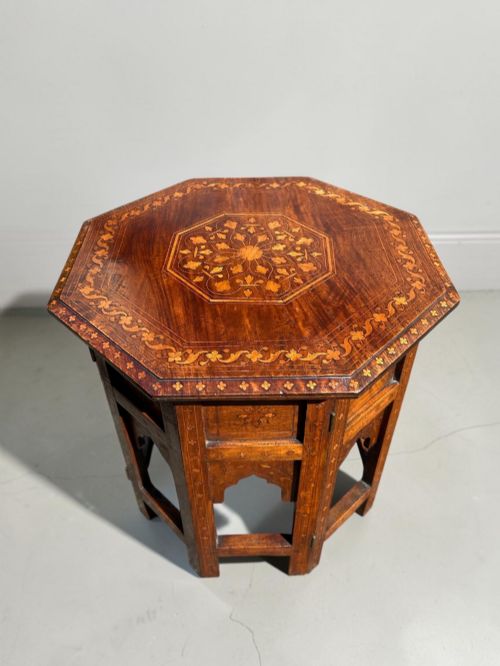
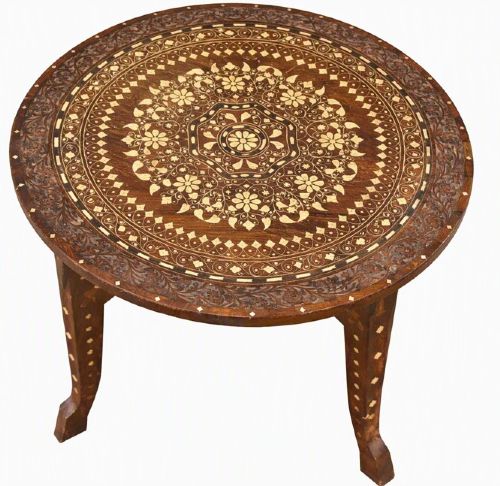
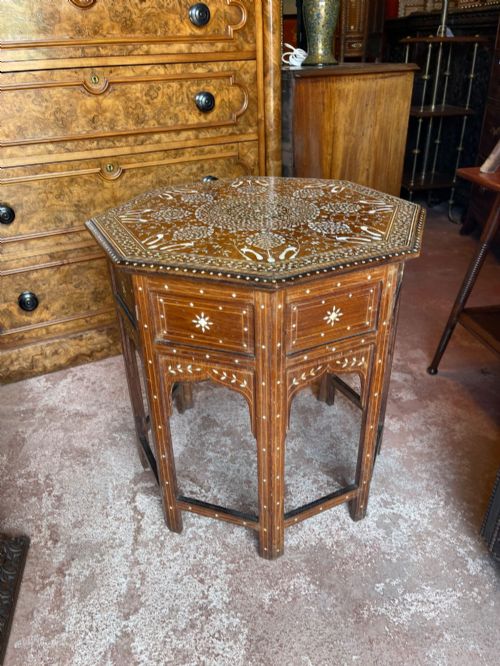
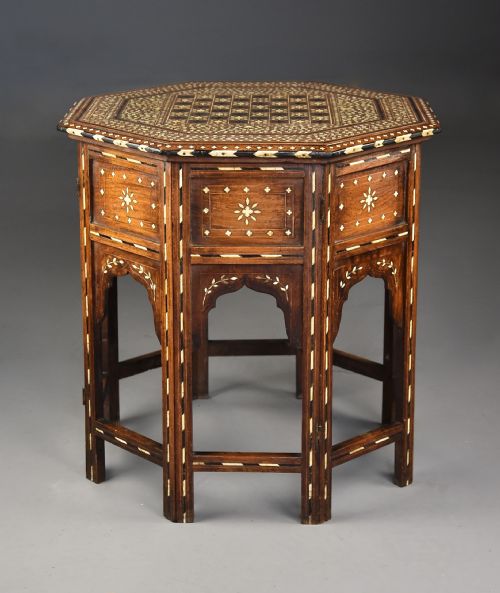
Octagonal and circular tables dominate the selection, often featuring folding or tilt-top mechanisms suited to compact spaces.
The evidence shows production spreading from the Victorian era into the early twentieth century, incorporating regional styles such as Hoshiarpur and Burmese carving.
Materials and construction
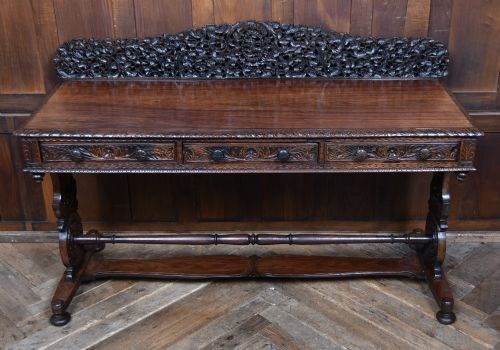
Workshop construction relies on dense tropical hardwoods including teak, padouk, rosewood, and ebony, providing a heavy foundation for elaborate hand carving.
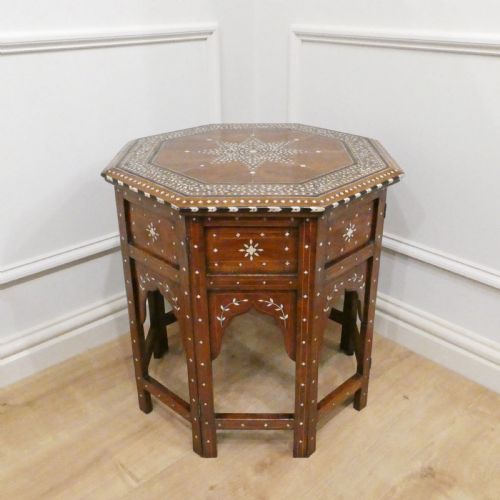
Surface ornamentation incorporates contrasting materials, with bone, brass, copper, and mother-of-pearl set directly into the timber in geometric or botanical patterns.
Materials recorded in these listings include padouk, teak, rosewood, bone, brass, copper, and ebony.
Craftsmanship and detail
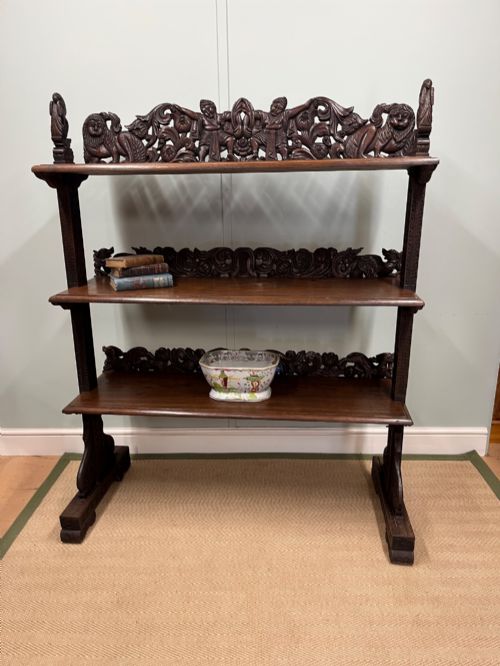
Superior examples demonstrate crisp depth in the carved foliage and figures, whereas lesser pieces display shallow or repetitive stamping.
The precision of the inlay work marks the tier of the piece, with tightly fitted metal and bone segments outlasting loose or crudely glued replacements.
Liberty And Co
The Victorian Anglo Indian Side Table Glossary
- Hoshiarpur
- A style of wood inlay originating from Punjab, defined by dense geometric patterns formed from small pieces of brass and bone.
- Padouk
- A heavy, durable timber with a reddish hue used extensively for carved colonial furniture.
- Tilt-top
- A mechanism allowing the tabletop to pivot vertically for storage when not in use.
- Teak
- A stable, oily hardwood resistant to warping, frequently utilised for structural components and carved surfaces.
Victorian Anglo Indian Side Table: Frequently Asked Questions
How do I clean an inlaid table?
Dust regularly with a dry cloth to prevent particles settling in the recessed carving and inlay.
Avoid liquid polishes that can dislodge loose bone or brass segments over time.
Are these tables sturdy enough for daily use?
Solid hardwood construction provides inherent strength, though folding and tilt-top versions require careful handling.
Use coasters to protect historical polished timber surfaces from moisture rings.
What region did my table come from?
Hoshiarpur tables use intricate geometric brass and bone inlay, whilst Burmese pieces favour deep relief carving.
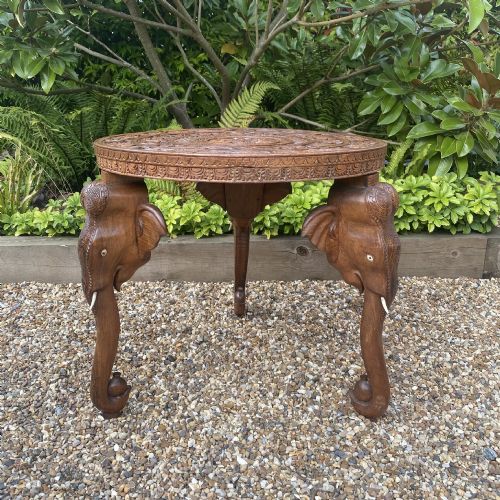
Bombay regional items frequently utilise dense padouk or teak with figural motifs such as elephants.
How do I date a Victorian piece?
Examine the timber species and assembly marks underneath for nineteenth-century indicators.
Stylistic crossover with Aesthetic Movement or Moorish Revival designs often points to the later decades of the era.